Skip to content

A Cross-Layer Review of Intelligent, Secure, and Privacy-Preserving Internet of Vehicles

Sep 2026 · Machine Learning and Knowledge Extraction · 0 citations · 170 references
Vehicular Ad Hoc Networks (VANETs)

TL;DR

This study is intended to serve as a structured reference for the development of scalable, trustworthy, and intelligent IoV systems by highlighting state-of-the-art techniques, open research gaps, and future directions.


Abstract

The Internet of Vehicles (IoV) is revolutionizing intelligent transportation systems by ubiquitous connectivity of vehicles, roadside infrastructure, pedestrians, edge/cloud platforms, and smart-city services. With the IoV evolving towards highly connected, autonomous and data-driven mobility ecosystems, it needs to meet challenging requirements for low latency, scalability, interoperability, security, privacy and trust. This paper presents a comprehensive cross-layer approach for intelligent, secure and privacy-preserving IoV systems. It is built upon an analytical framework and systematically studies the perception, communication, edge/cloud computing, blockchain-enabled trust and application layers of IoV technologies. In addition, the paper presents an in-depth review of the enabling techniques such as machine learning (ML), deep learning (DL), reinforcement learning (RL), federated learning (FL), blockchain, cybersecurity mechanisms, digital twins, edge computing, 6G integration, and resource allocation. Moreover, it discusses the interplay and trade-offs between intelligence, security, privacy, computation, latency, and scalability. The survey also covers other significant challenges like intrusion detection, decentralized authentication, privacy-preserving learning, blockchain overhead, semantic interoperability, post-quantum security, and standardized datasets. This study is intended to serve as a structured reference for the development of scalable, trustworthy, and intelligent IoV systems by highlighting state-of-the-art techniques, open research gaps, and future directions.

Read PDF

Similar papers

Open access Aug 2026

Blockchain Enabled Cybersecurity Frameworks for Intelligent Transportation System

A blockchain-enabled cybersecurity framework for ITS that integrates distributed ledger technology with secure vehicle-to-vehicle, vehicle-to-infrastructure, and vehicle-to-everything communication is proposed that incorporates identity management, consensus-based validation, trust evaluation, secure data sharing, intr...

Rashmi Soni · 0 citations
#reinforcement learning Open access Sep 2026

Blockchain-assisted IoT-based smart electric vehicle network for secure data sharing and authentication

Experiments conducted in a controlled simulation environment show that BFGRL can effectively improve security, trust management, scalability, and operational efficienssssscy in blockchain-assisted smart EV networks.

K. Ambika, R. Gopi, S. S et al. · 0 citations
#artificial intelligence Review Sep 2026

Trust in Edge-Enabled IoT Security: Features, Challenges and Research Directions

A comprehensive taxonomy is proposed that maps physical, network, and application architectural IoT layers against the consumer, commercial, industrial, and infrastructure IoT domains and identifies key gaps in current research and outline future directions for context-aware and adaptive trust management in edge-enable...

Esin Ece Aydin, Şerif Bahtiyar, Gürkan Gür · 0 citations
#reinforcement learning Review Open access Sep 2026

A comprehensive survey of Edge-Fog-Cloud-IoT architectures: Intelligence, Security, and Sustainability

This survey provides an overview of Edge-Fog-Cloud-IoT architectural models and the technologies that have driven them during 2020–2026 and presents a holistic framework and a five-layer reference model that encompass the functional, performance, and trust aspects of distributed systems.

Patrick Effraim, Micheal Mensah, Bismark Budu · 0 citations
Review Open access Sep 2026

A Review of Cyberattacks and Their Recent Defense Methods in the Cloud Computing Environment

A structured review of recent advances in cloud cybersecurity, based on peer-reviewed studies published in scientific databases between 2022 and 2025, shows a clear shift from signature-based security to intelligent, adaptive, and decentralized security architectures that offer better detection precision, faster respon...

Ahmed Thamer Ahmed · 0 citations

Related blog posts

MIT News · Artificial Intelligence Aug 27, 2026

Looking beyond natural sequences

A new machine-learning framework aims to improve the success rate of computational protein design while moving away from results that reproduce sequences found in nature.

Microsoft Research Blog Aug 20, 2026

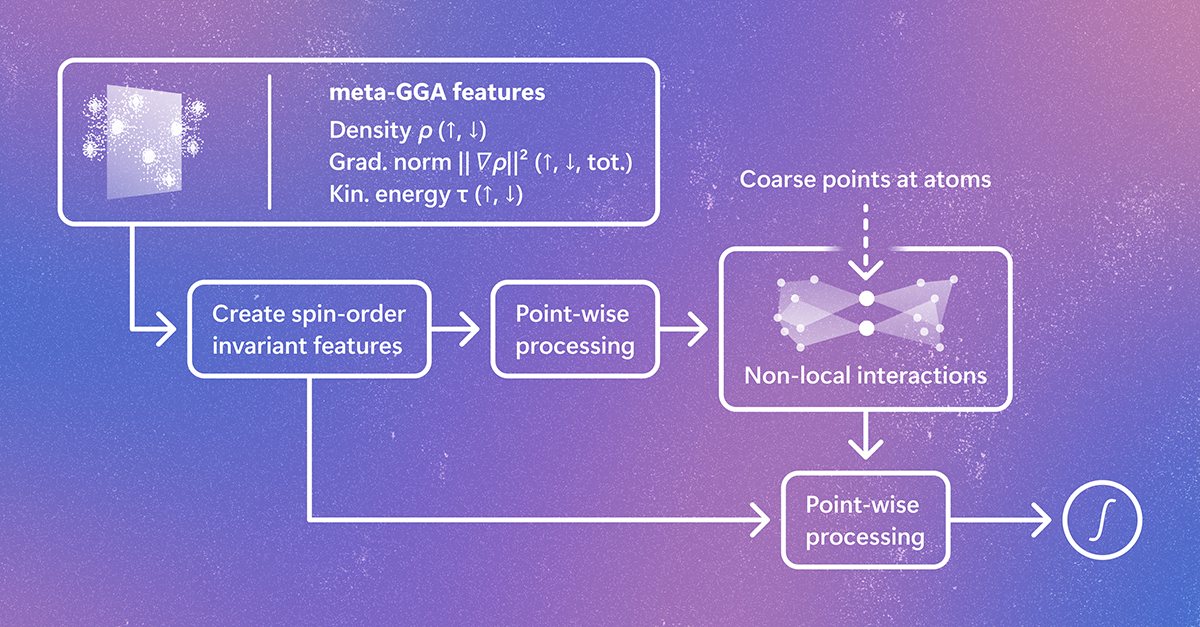
Broadening access to Skala creates a faster path to predictive DFT 

Skala 1.1, the updated deep-learning exchange-correlation functional from Microsoft Research, provides greater accuracy, expanded accessibility across the computational chemistry ecosystem, and a living benchmark to track computational performance. The post Broadening access to Skala creates a faster path to predictive DFT  appeared first on Microsoft Research.

We use cookies to run the site and, with your consent, for analytics and to show ads. See our Cookie Policy.