Heating, Ventilation, and Air Conditioning (HVAC) systems account for 60–70% of residential electricity consumption in Oman, where extreme desert climate, with temperatures regularly exceeding 45 °C create substantial cooling demands. Unlike general reviews of smart HVAC controls, this study specifically evaluates the applicability and performance of advanced control strategies for Omani residential buildings operating under extreme heat conditions, synthesizing evidence from international research, the Gulf Cooperation Council (GCC) region, and Oman. Based on a systematic review of peer-reviewed literature published between 2015 and 2025, this analysis examines Model Predictive Control (MPC), Deep Reinforcement Learning (DRL), Fuzzy Logic Control, and Internet of Things-based integrated approaches. International studies demonstrate that MPC strategies achieve energy savings of 16–40% compared to conventional thermostatic control by utilizing dynamic building thermal models to optimize control sequences over finite prediction horizons. DRL-based controllers achieve energy reductions of 17–23% through adaptive learning of optimal policies without requiring explicit system models, offering adaptability to dynamic occupancy patterns. Real-world implementation case studies from Oman and the GCC region—including the GUtech EcoHaus net-zero energy building and national-scale retrofit programs—demonstrate realized energy savings ranging from 25–75%, with higher savings achieved through comprehensive interventions that combine advanced controls with high-performance building envelopes. These findings suggest that substantial potential for reducing residential energy consumption while maintaining occupant thermal comfort under Oman’s extreme climatic conditions is achieved through the integration of advanced HVAC control strategies with high-performance building envelopes. Future research may address the development of occupant-centric adaptive comfort models calibrated for extreme heat conditions and context-specific control strategies that account for regional occupancy patterns and cultural preferences.

HVAC systems, including heating, ventilation and air-conditioning, have a big impact on the energy use of buildings. In commercial buildings these systems can represent almost 40-60% of the total electricity consumption of the facility. Buildings in general also account for almost a third of the world’s energy consumpt...
G. Murade, Ankit Kumar Sharma, B. Soni et al.· Genetics and Molecular Resea...· 0 citations
The heat pump air conditioning (HPAC) system constitutes a dominant energy-consuming subsystem in electric vehicles (EVs), under winter operating conditions, its energy consumption can account for up to 50% of the total energy consumption of the vehicle. As an environmentally friendly and thermos-dynamically superior a...
Yan Zhang, Xiao-Tao Guo, Liange He et al.· Proceedings of the Instituti...· 0 citations
To address the limitations of existing central air conditioning energy-saving algorithms—such as their inability to achieve conventional optimization or adapt to grid peak shaving, coupled with nonlinear system dynamics, environmental uncertainties, and high-dimensional optimization challenges—we propose an integrated...
Junjie Lin, Zhuo-Fu Deng· International Conference on...· 0 citations
Bio-safety compliance and energy efficiency are still a pressing issue in the management of modern buildings, especially in such a setting as a healthcare facility or a laboratory, where the accuracy of controlling the environmental conditions is the most important factor. Reinforcement Learning (RL) is potentially a s...
T. K. Karuna Kanth Bathula· Natural Resources for Human...· 0 citations
A Smart Air Conditioning Management System based on a Deep Q-Network agent capable of dynamically balancing energy use and thermal comfort and demonstrates that reinforcement learning enables adaptive AC control, offering a scalable approach to energy-efficient building management.
Jason Harvey Lorenzo, Justin Kyle O. Ricafort, E. Q. Macabebe· IOP Conference Series: Earth...· 0 citations
This work investigates a coupling-aware, decentralized formulation of the on-policy SARSA (State–Action–Reward–State–Action) algorithm for real-time HVAC control in multi-zone open-plan offices and indicates that the approach is computationally compatible with resource-constrained building energy management system (BEM...
M. A. Attia, M. A. Abdelaal, E. Sallam· Neural computing & applicati...· 0 citations
Related blog posts
MIT News · Artificial Intelligence· news.mit.eduNov 17, 2026
By studying the computational foundations of language learning, Associate Professor Jacob Andreas builds intelligent systems that can communicate effectively with humans.
MIT News · Artificial Intelligence· news.mit.eduNov 17, 2026
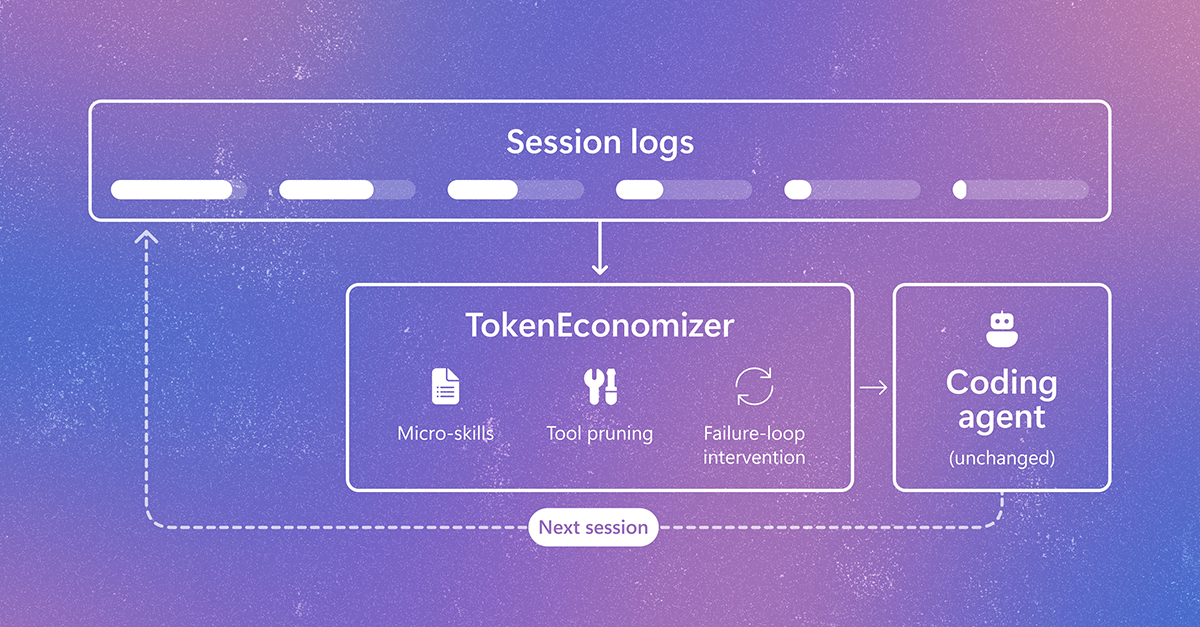
AI coding agents are increasingly help developers fix bugs and build features largely on their own, but every interaction with their models consumes tokens. In each session, an agent sends instructions, tool descriptions, and session history to its model. Most efforts to reduce this cost focus on individual tasks. Yet developers return to the same […] The post TokenEconomizer: Learning from Experience to Make AI Coding Agents More Efficient appeared first on Microsoft Research.
MIT News · Artificial Intelligence· news.mit.eduNov 9, 2026