Oct 2026· Vol 57, pp. 2084 - 2112· 3 citations· 21 references
TL;DR
Extensive experiments ensure that FHGE consistently outperforms state-of-the-art baselines and demonstrate the power of fuzzy-driven learning in improving graph embedding quality and establish FHGE as a promising solution for real-world link prediction tasks.
Graph neural networks lose much of their advantage on heterophilic graphs, where connected nodes often carry different labels. Graph rewiring is a popular remedy, but rewiring methods are usually evaluated with a single classifier, which makes it hard to tell whether the gains come from the new topology or from that pa...
Harshit Kumar, Sujan Chakraborty, Priyanka Saha et al.· 0 citations
This work proposes HAAM, an adaptive node classification approach for multiplex graphs that models per-dimension degrees of homophily and heterophily through dimension-specific compatibility matrices, and shows that HAAM achieves competitive performance compared to representative baseline methods.
K. Abdous, Nairouz Mrabah, M. Bouguessa· 0 citations
A combined HGT-based framework incorporating contrastive representation learning and deep clustering with multi-round training via pseudo-labels is presented, enabling the model to better deal with label scarcity, heterogeneous dependencies, and overlapping semantics in practical, complex, attributed networks.
Hamza Haddad, Hicham Attariuas, A. Younes· Edelweiss Applied Science an...· 0 citations
Graph condensation aims to produce a small surrogate graph that preserves the downstream node-classification performance of a much larger original graph. Existing methods rely on Weisfeiler-Lehman neighbourhood aggregation or gradient-based distribution matching, both of which assume that adjacent nodes share the same...
Sujan Chakraborty, Priyanka Saha, S. Bej· 0 citations
With the increasing heterogeneity of social networks and online interaction systems, generalist graph anomaly detection (GAD) has become essential for identifying abnormal and fraudulent behaviors in complex environments. However, most existing GAD approaches rely heavily on domain-specific semantic alignment, which su...
Xiang-Ping Zheng, Xuan Feng, Bo Wu et al.· Proceedings of the 32nd ACM...· 0 citations
Related blog posts
MIT News · Artificial Intelligence· news.mit.eduJul 15, 2026
Assistant Professor Pat Pataranutaporn describes a new interface that lets everyday users glimpse inside an AI's neural network before their chatbot ever says a word.
Microsoft Research Blog· microsoft.comJul 13, 2026
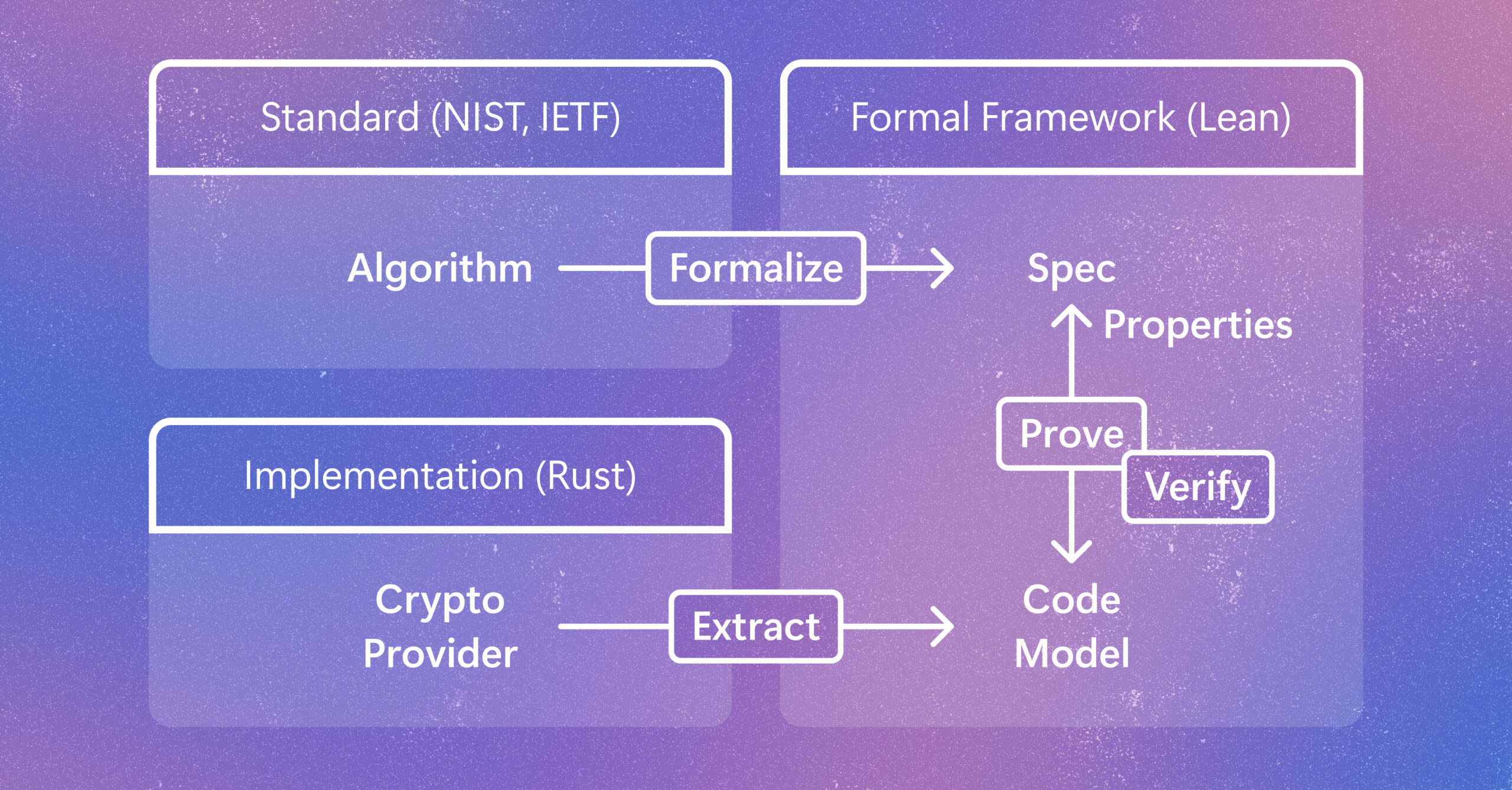
Cryptographic code supports vital protections in modern computing systems. Learn how a new method helps verify code as developers write it while preserving speed and adaptability as it gets implemented and evolves. The post Verifying Rust cryptography in SymCrypt, from standards to code appeared first on Microsoft Research.
MIT News · Artificial Intelligence· news.mit.eduJul 6, 2026
PhD student Rachel Sava, winner of the Envisioning the Future of Computing Prize, explores transformative improvements and dystopian risks of neural technology.