It is found that cache performance depends on transfer granularity, intermediate memory use, and when transfers enter the request schedule, not only on device bandwidth, not only on device bandwidth.
Abstract
Prefix caching can reduce the time to first token (TTFT) of long-context LLM requests by reusing previously computed key-value (KV) states, but for short prefixes or fast GPUs, recomputation can be faster than loading from an external cache. We characterize this tradeoff in vLLM across GPU, CPU, and NVMe tiers using synthetic workloads, long-context benchmarks, production traces, and find that cache performance depends on transfer granularity, intermediate memory use, and when transfers enter the request schedule, not only on device bandwidth. These findings motivate py-kvcache, a vLLM KV Offload connector with asynchronous direct I/O, bounded shared staging, and scheduler-aware preloading, which starts disk reads while requests are still waiting, overlapping with compute. At 80k tokens, py-kvcache loading from disk is 2.0x faster than LMCache, with preloading contributing 1.34x. With GPU, CPU, and disk caching enabled, it is 1.23x faster than LMCache and within approximately 4% of the native vLLM KV Offload implementation. LongBench and SCBench show that these benefits extend to irregular prefix chains and multi-turn workloads. Bailian trace replays improve TTFT on a weaker GPU, but on an H100 the average request falls below the break-even point and GPU memory alone retains enough prefixes. External KV caching should therefore be treated as a setup specific admission decision. The py-kvcacheimplementation is available at: https://github.com/atlarge-research/py-kvcache.
This work compares recency, reuse frequency, predicted reuse, and an EWMA predictor with prefetch lookahead across chat, agent, and document question answering workloads, and concludes that reuse frequency performs best for agents and document question answering and prefetching does not justify its bandwidth cost.
Srikanta Datta Tumkur, Jay Iyer, Mehar Simhadri et al.· 0 citations
This model reveals one key opportunity: dividing a restore request proportionally between the storage path and the GPU can improve inference performance while still meeting SLOs, and reduces the KV-cache storage stack to a performance model based on per-tier capacity, per-tier and interconnect bandwidth, and GPU arithm...
The challenges of the restoration-recomputation trade-off are investigated and its impact on inference performance when left unaddressed, and an I/O-aware KV-cache management policy is presented that dynamically navigates this trade-off.
Amirhossein Najafizadeh, Vasily Tarasov, Alex Merenstein et al.· Proceedings of the 18th ACM...· 0 citations
Large language model serving faces a critical memory bottleneck: the KV cache grows with sequence length and batch size. PagedAttention uses fixed-size memory blocks to reduce allocator-level fragmentation, but recent KV eviction algorithms operate at a token granularity finer than block-level management. This mismatch...
Yuanhang Gao, Xiangrui Yang, Yuan-Feng Chen et al.· 1 citation
On-device large language model (LLM) serving is a cornerstone of local-first personal intelligence, offering users data sovereignty, strong privacy guarantees, and freedom from cloud API latency and cost. Although KV caching is widely used to reduce latency in long-context inference, existing designs were primarily opt...
Zheng-Xiang Huang, Sheng-Heng Chen, Chao-Yue Niu et al.· 0 citations
The authors' elastic KV cache lends the reserve to the KV pool during decode and returns it before prefill, driven by the scheduler's one-step-ahead view of the next batch, driven by the scheduler's one-step-ahead view of the next batch.
S. Sivashanmugam· 0 citations
Related blog posts
MIT News · Artificial Intelligence· news.mit.eduOct 2, 2026
Martin Trust Center Managing Director Bill Aulet introduces Dear Dreamer, a free platform for middle and high school students who want to learn about entrepreneurship.
Microsoft Research Blog· microsoft.comSep 30, 2026
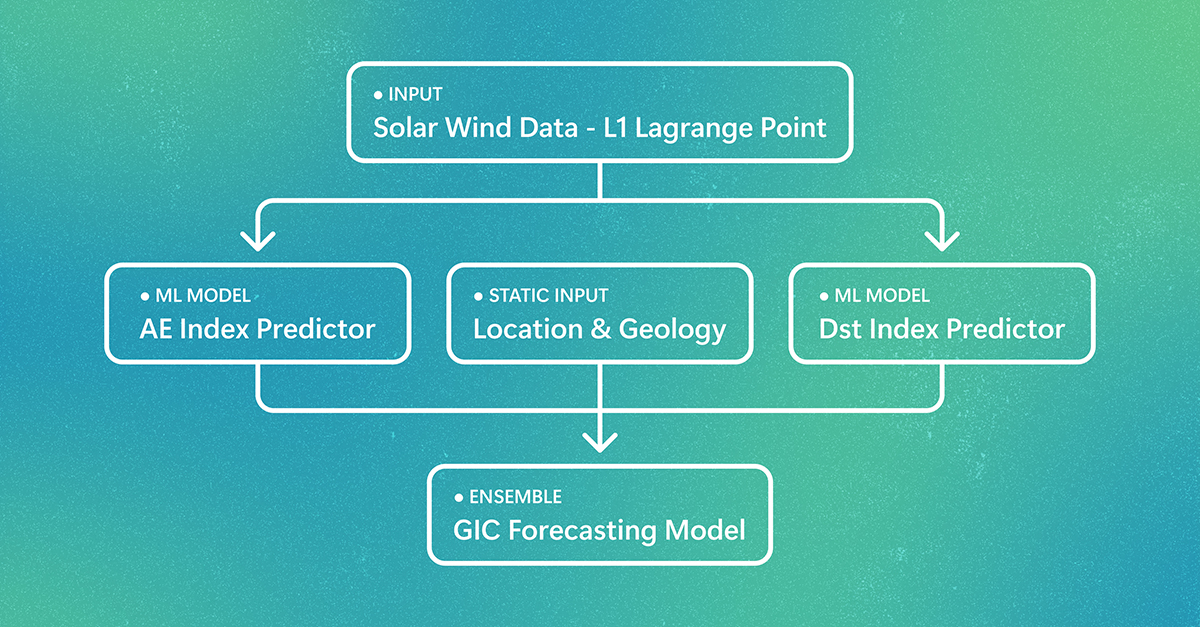
Extreme space-weather events can damage power systems on Earth and degrade GPS accuracy and satellite operations. A new machine learning system can predict where damage is likely to occur 30-60 minutes before a storm arrives. The post Forecasting space weather risks on power grids appeared first on Microsoft Research.
We use cookies to run the site and, with your consent, for analytics and to show ads.
See our Cookie Policy.