Skip to content

Cross-Property Transfer Learning and Generative Crystal Design for Accelerated Discovery of Low-Thermal-Conductivity Materials.

Sep 2026 · ACS Applied Materials and Interfaces · 0 citations · 60 references
Medicine

Abstract

Identifying crystalline materials with intrinsically low lattice thermal conductivity (κL) remains a major challenge in thermoelectric design due to complex phonon transport mechanisms and the limited availability of high-quality datasets. Although first-principles methods provide accurate κL predictions, their high computational cost limits large-scale screening. Here, we present a unified deep learning framework that combines graph neural networks (GNNs), cross-property transfer learning (TL), and transformer-based generative crystal modeling for accelerated κL prediction and materials discovery. Benchmarking CGCNN, DeeperGATGNN, and ALIGNN on a curated dataset of 3925 materials identifies ALIGNN as the best-performing model, emphasizing the importance of capturing local bonding environments, bond-angle correlations, and many-body interactions. Cross-property TL across six auxiliary properties further reveals that energy-based source tasks provide the most transferable latent representations for κL prediction. To explore materials beyond existing databases, the transformer-based generative model CrystaLLM is employed to generate 10,000 unique crystal structures. Subsequent thermodynamic and phonon stability screening identifies dynamically stable compounds, with 17 materials exhibiting ultralow κL ≤ 0.50 W m-1 K-1. Overall, this work demonstrates that integrating cross-property TL with generative crystal modeling provides a robust and computationally efficient pathway for overcoming data scarcity and accelerating the discovery of next-generation thermoelectric materials.

View source

Similar papers

Jul 2025

Enhancing Materials Discovery with Valence Constrained Design in Generative Modeling

CrysVCD is a modular framework that integrates chemical rules directly into the generative process, enabling orders-of-magnitude more efficient chemical valence checking compared with pure data-driven approaches with post-screening.

Mou-Yang Cheng, Wei-Liang Luo, Hao Tang et al. · 8 citations
Open access Aug 2026

Transfer Learning across Material Properties Using Center-Environment Features: From Energetics to Mechanical Properties in Multicomponent Mo Alloys.

Transfer learning (TL) provides a viable approach to mitigate data scarcity in materials informatics. While conventional TL focuses on predicting identical properties across different systems, this work demonstrates a cross-property extension of TL from energy to mechanical properties via end-to-end model weight pre-tr...

Li-Qin Qin, Yu-Chao Tang, Li-Meng Zhang et al. · 0 citations
#graph neural networks Open access Sep 2026

Pformer: a plug-and-play periodicity-aware embedding for crystal property prediction

Predicting macroscopic properties of crystalline materials from atomic structure remains a central challenge in computational materials science. We introduce Pformer, a modular crystal representation framework built around a Fourier-inspired source encoder. The source model is trained by supervised scalar-property regr...

Te-Shu Yao, Yun-Fei Zhao, Jiajun Bie et al. · 0 citations
Open access Oct 2026

Enhanced Generalization through Atomic Embeddings and Cross-Element Parameterization

The limited transferability of machine-learned interatomic potentials (MLIPs) to unseen chemical compositions constrains their utility in computational materials discovery. We present a systematic investigation into two interdependent design principles─learned atomic representations and cross-element parameterization...

M. Taleblou, Franco Pellegrini, Stefano de Gironcoli · 0 citations
Preprint Aug 2026

Deep-Learning-Accelerated Dopant Selection for High-k HfO2 Dielectrics: A Disorder-Resolved Study of Y, Si and Al

Hafnium oxide (HfO2) is the cornerstone high-k dielectric in modern silicon technology. Since the constraints of silicon device fabrication rule out replacing the material itself, dopant incorporation is the principal means available to engineer its band gap and dielectric constant within existing process flows. Howeve...

Zunair Masroor, B. Gu, Wonjoong Kim et al. · 0 citations

Related blog posts

Microsoft Research Blog Jul 13, 2026

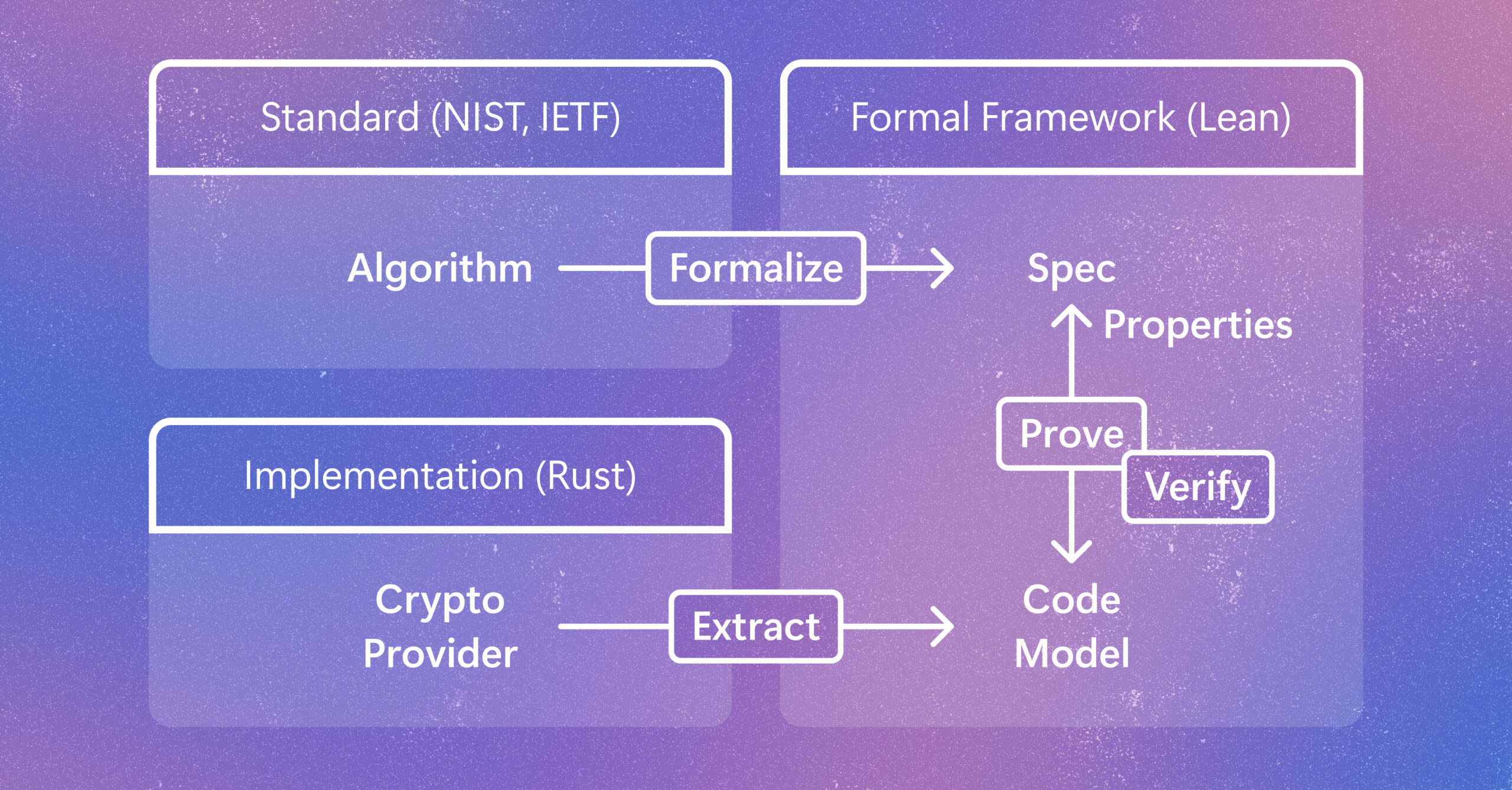
Verifying Rust cryptography in SymCrypt, from standards to code

Cryptographic code supports vital protections in modern computing systems. Learn how a new method helps verify code as developers write it while preserving speed and adaptability as it gets implemented and evolves. The post Verifying Rust cryptography in SymCrypt, from standards to code appeared first on Microsoft Research.

We use cookies to run the site and, with your consent, for analytics and to show ads. See our Cookie Policy.