Skip to content

STLC-Net: Skin Transfer Learning Classification Framework for Multi-Class Skin Cancer Detection and Clinical Decision Support

Sep 2026 · Interdisciplinary Journal of AI, Machine Learning & Data Science · 0 citations · 27 references
Cutaneous Melanoma Detection and Management

TL;DR

STLC-Net (Skin Transfer Learning Classification Network) is introduced, a robust, zero-data-leakage framework for automated seven-class skin lesion classification using the benchmark HAM10000 dataset and integrated into an interactive web deployment for real-time, interpretable clinical decision support.
Abstract

Skin cancer remains one of the most widespread and fatal malignancies globally, making early, accurate diagnosis essential for improving patient survival rates. While deep Convolutional Neural Networks (CNNs) have advanced automated dermoscopic image analysis, practical clinical adoption is hindered by severe dataset class imbalance, data leakage, and diagnostic opacity. To overcome these challenges, this study introduces STLC-Net (Skin Transfer Learning Classification Network), a robust, zero-data-leakage framework for automated seven-class skin lesion classification using the benchmark HAM10000 dataset. The methodology integrates in-graph dynamic data augmentation to eliminate framework shape-locking errors during deployment, and incorporates a log-smoothed class-weighting strategy to stabilize gradient descent against severe minority class scarcity. Under a strict zero-leakage evaluation protocol (2,003 isolated test samples), three distinct architectural paradigms—DenseNet121 (dense feature concatenation), EfficientNetB3 (compound scaling), and MobileNetV2 (inverted residuals)—were trained via a two-stage transfer learning protocol. DenseNet121 emerged as the superior standalone backbone, achieving an accuracy of 79.73%, precision of 83.02%, and an ROC-AUC of 0.9398. To further eliminate individual architectural blind spots, a soft-voting STLC-Ensemble was constructed, achieving peak performance with 80.38% accuracy, 83.53% weighted precision, 79.85% F1-score, and an ROC-AUC of 0.9492. The complete pipeline is integrated into an interactive web deployment for real-time, interpretable clinical decision support.

Read PDF

Similar papers

#explainable ai Open access Sep 2026

Explainable ensemble transfer learning for skin lesion classification with multi-method explainability validation

Quantitative evaluation using TMAI and complementary XAI methods provides additional evidence that the model's predictions are grounded in clinically relevant lesion regions rather than background artefacts, supporting the potential of the framework for accurate and interpretable automated skin lesion classification.

NE. Sravani, Srinivas Koppu · 0 citations
Open access Aug 2026

A practical deep learning framework for multi-class skin cancer detection using U-Net segmentation and ResNet50 transfer learning

An integrated deep learning framework for multi-class skin cancer detection that combines lesion segmentation using U-Net with transfer-learning classification of seven skin-lesion classes using ResNet50 is proposed.

Mahesh Kumar Singh, Arun Kumar Singh, Pushpa Choudhary et al. · 0 citations
Review Open access Aug 2026

AI-Based Skin Disease Classification Using Deep Learning Techniques

This paper presents a comprehensive deep learning-based framework for the automated detection and classification of skin diseases from dermoscopic and clinical images, built on the ResNet50 convolutional neural network architecture and evaluated using standard classification metrics.

Nisha Rajodiya, Shailendra Mishra, Sumitra Menaria et al. · 0 citations

Deep Learning-Based Automated Skin Cancer Detection Using Dermoscopic Images

The results demonstrate that deep learning techniques can significantly assist in early detection and classification of skin cancer, thereby supporting dermatologists in clinical decision-making and improving diagnostic efficiency and mortality rates associated with skin cancer.

A. Star, Gibi Linza, Siva Durshika et al. · 0 citations
Open access 2026

Towards Transparent Decisions: CNN Ensemble with XAI-Driven Interpretations

A comprehensive deep learning-based framework that leverages three benchmark datasets—PH2, ISIC (Benign vs Malignant), and HAM10000—using transfer learning and ensemble techniques is presented, demonstrating a notable increase in classification accuracy.

A. D. Hayder, J. Saeed · 0 citations

Related blog posts

Microsoft Research Blog Jul 13, 2026

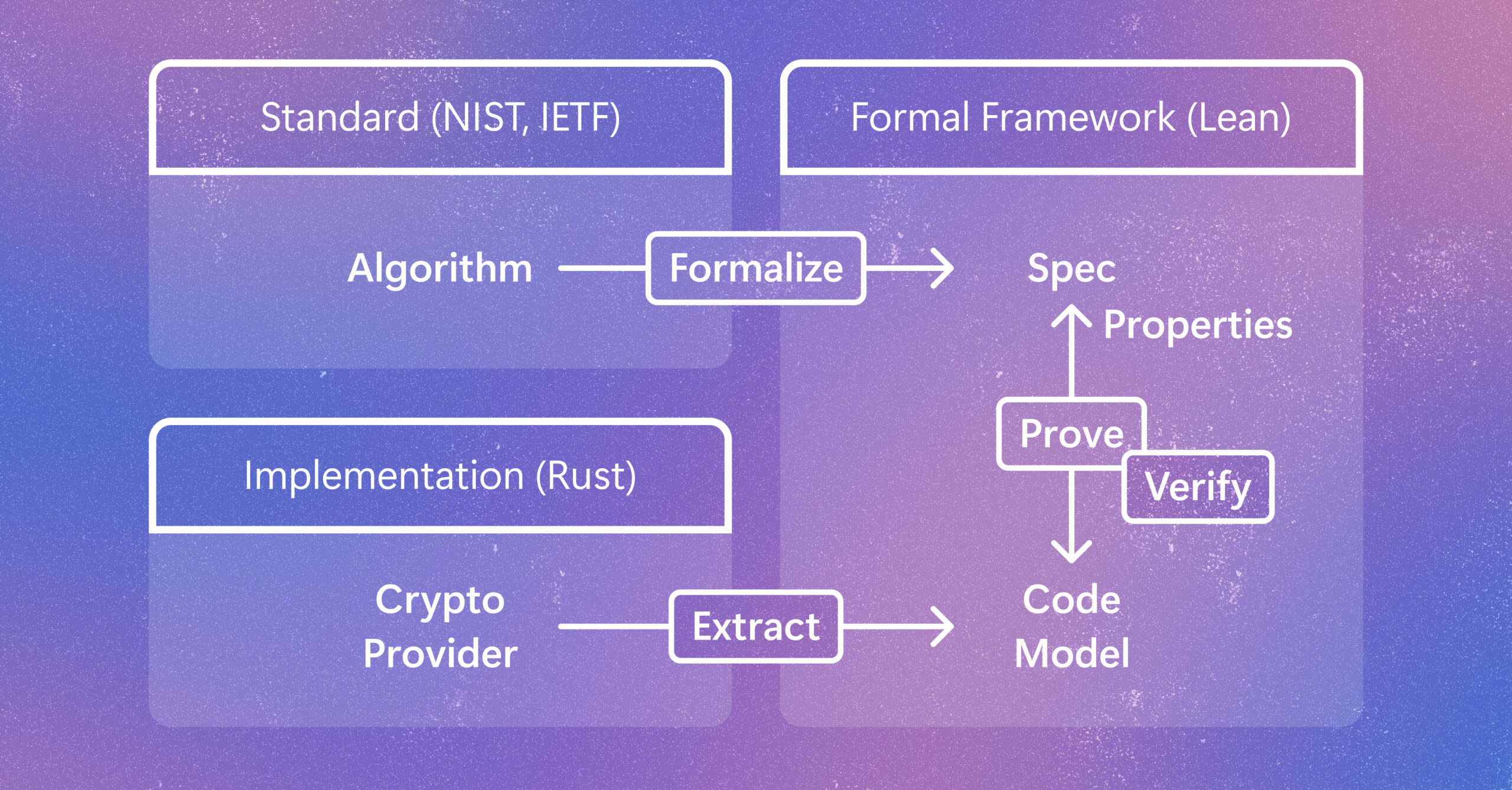
Verifying Rust cryptography in SymCrypt, from standards to code

Cryptographic code supports vital protections in modern computing systems. Learn how a new method helps verify code as developers write it while preserving speed and adaptability as it gets implemented and evolves. The post Verifying Rust cryptography in SymCrypt, from standards to code appeared first on Microsoft Research.

We use cookies to run the site and, with your consent, for analytics and to show ads. See our Cookie Policy.