A novel neural network called the Co-occurrence Graph Neural Network (CoGNN), which utilizes two co-occurrence graphs to establish user and item relationships and outperforms various baseline models in terms of recommendation accuracy and algorithm convergence.
A novel BADLGRS model is evaluated across four datasets and demonstrates superior performance when compared to existing methods, and consistently outperform existing models in group recommendation tasks.
Gopisetty Rathnamma, Kommanaboyina Sai Vijaya Lakshmi, Vadige Sathish Kumar et al.· Cognitive Computation· 0 citations
Recommendation systems play a crucial role in efficiently filtering vast amounts of information, and supporting businesses across various domains such as e-commerce, social media, and online entertainment. Traditional recommendation methods, including collaborative filtering, often suffer from data sparsity issues, lim...
GALLM constructs a collaborative graph over text tokens and item tokens, and models three types of relations that are transformed into lightweight learnable attention biases and incorporated into the LLM attention mechanism, enabling collaborative-aware token interactions without introducing an additional graph encoder...
Fenglin Yan, Bo-Hao Wang, Jian Zhang et al.· 0 citations
A social relationship adjustment loss function, which dynamically adjusts the weights of social connections, and the Hilbert-Schmidt independence criterion loss function, which reduces the dependence between pre- and post-adjusted user/item embeddings, thereby amplifying the effect of adjusted social relationships on t...
Assistant Professor Pat Pataranutaporn describes a new interface that lets everyday users glimpse inside an AI's neural network before their chatbot ever says a word.
Microsoft Research Blog· microsoft.comJul 13, 2026
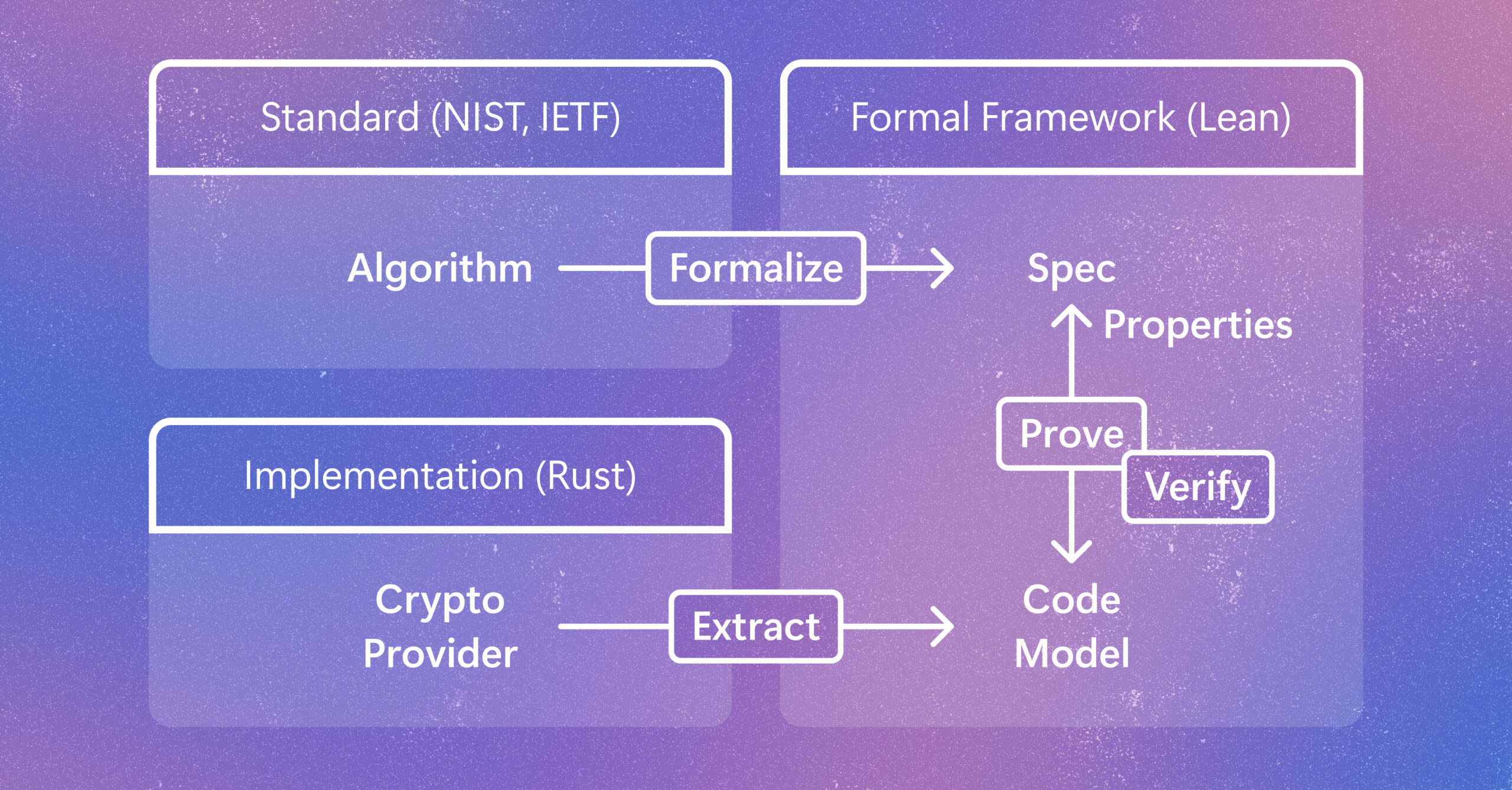
Cryptographic code supports vital protections in modern computing systems. Learn how a new method helps verify code as developers write it while preserving speed and adaptability as it gets implemented and evolves. The post Verifying Rust cryptography in SymCrypt, from standards to code appeared first on Microsoft Research.
MIT News · Artificial Intelligence· news.mit.eduJul 6, 2026
PhD student Rachel Sava, winner of the Envisioning the Future of Computing Prize, explores transformative improvements and dystopian risks of neural technology.