An entity-only external interface with task-conditioned relation materialization during inference with two-layer index separates global routing from local entity focus is proposed and evaluated on DeepSeek-V4-Flash and SWE-bench Verified.
Abstract
Large software repositories are often beyond model context limits. Training repository knowledge into models is costly and quickly stale, while local retrieval can miss scattered requirements, and explicit relation graphs add ongoing maintenance burden. We propose an entity-only external interface with task-conditioned relation materialization during inference. A two-layer index separates global routing from local entity focus and is evaluated on DeepSeek-V4-Flash and SWE-bench Verified. The base, one-layer, and two-layer conditions achieve 92.1%, 94.2%, and 95.6% success, respectively, under zero pre-built entity-relation edges.
This work presents an evidence-carrying validation interface: every selected node-shape check returns either a satisfaction trace or failure witness, and shows how programs combine passing and failing evidence to diagnose missing information and guide repair.
SEGRA is introduced, an experience-guided agent for enterprise text-to-Gremlin question answering that integrates intent routing, schema- and taxonomy-grounded query generation, multi-shot decomposition, execution-aware verification, and a curriculum-bootstrapped skill library that reuses verified query patterns.
Saiyue Lyu, Mariam Dundua, Vishaal Kapoor et al.· 0 citations
This tutorial offers a high-level view of KG data quality at scale, organized along KG lifecycle stages, covering efficient quality estimation, as well as the role of Large Language Models as validators and auxiliary signals.
RAGU, an open-source modular GraphRAG engine, addresses extraction from consolidation by separating extraction from consolidation: entities and relations pass through two-stage typed extraction, DBSCAN-backed deduplication, LLM summarization, and Leiden community detection.
Mikhail Komarov, Ivan Bondarenko, Stanislav Shtuka et al.· arXiv.org· 0 citations
FITTER consistently outperforms inductive baselines without retraining, indicating that vocabulary-agnostic structural learning is a viable foundation for inference over the heterogeneous knowledge graphs of the Semantic Web.
Jia-Xin Pan, M. Nayyeri, Osama Mohammed et al.· 0 citations
The REAP system combines structured chain-of-thought reasoning, relation-specific query strategies, and a reasoning-based empty-set gate to elicit parametric knowledge, followed by direct extraction into valid JSON arrays for AKBC Shared Task 2026.
T. Bùi, T. Do, Tuan-Phong Nguyen· 0 citations
Related blog posts
MIT News · Artificial Intelligence· news.mit.eduOct 22, 2026
“X-Hinges” helps design and 3D print items like lamps and gloves with an interactive twist: automatically embedded sensors that perceive and adaptively respond to human contact.
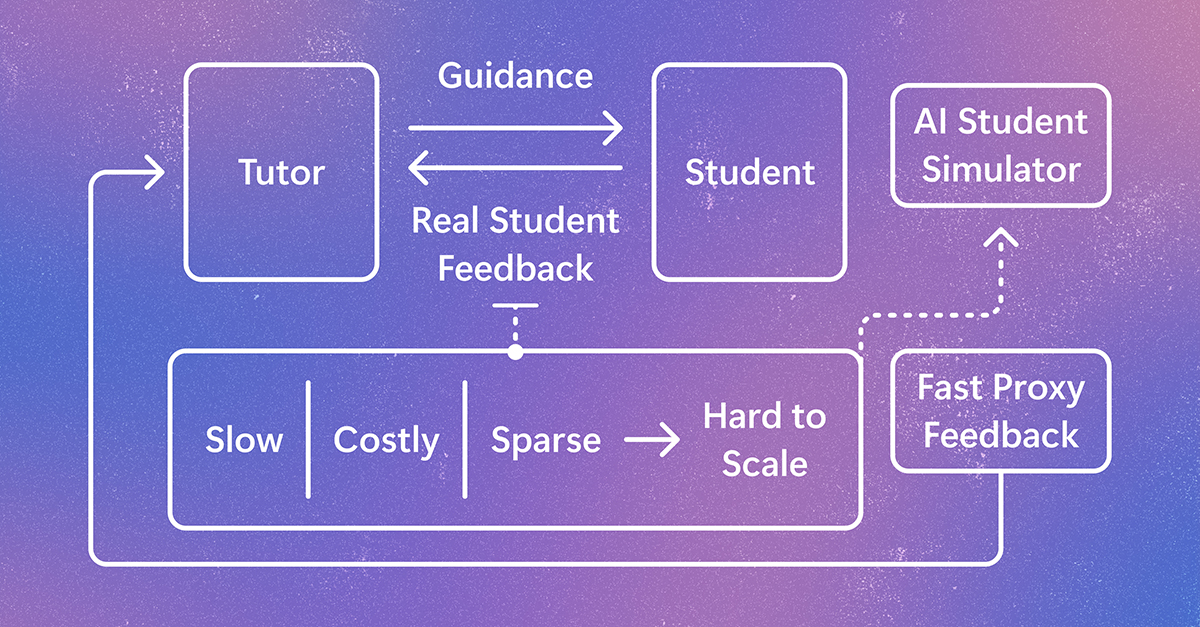
StudentSim is a research system for evaluating and improving AI tutoring tools before they are tested with learners. It models how individuals may engage with tutors, giving feedback to improve tutor performance across subjects like chess, writing, and mathematics. The post Simulating student learning for better AI tutoring appeared first on Microsoft Research.
MIT News · Artificial Intelligence· news.mit.eduOct 6, 2026