Inspired by Muon, this work adopts the spectral view for unlearning and proposes Spectral Saliency Unlearning (SSU), a thresholding approach that thresholds weak singular components and updates only those directions supported by a confident unlearning signal.
Abstract
Machine unlearning (MU) aims to remove the influence of specific training data while preserving model utility. As the name suggests, MU can be viewed as the inverse of learning, using gradient-based updates to reduce the influence of a forget-set by counteracting the previously learned behavior. Recently, Muon, a gradient descent variant, has been introduced. Muon applies spectral magnitude normalization to encourage exploration of rare directions and demonstrates promising performance. Inspired by Muon, we adopt the spectral view for unlearning and propose Spectral Saliency Unlearning (SSU). SSU thresholds weak singular components and updates only those directions supported by a confident unlearning signal. We further provide theoretical justification for this thresholding approach from the perspective of the forgetting-retention trade-off. Experiments across image classifiers, diffusion models, and LLMs demonstrate SSU's effectiveness.
Machine unlearning (MU) aims to remove the influence of selected data from trained models, offering an efficient alternative to full retraining. With the rise of increasingly stringent privacy regulations, including the right to be forgotten, machine learning models must incorporate mechanisms that ensure compliance wh...
This work introduces SCALPEL, a contrastive sparse autoencoder designed to learn more selective forget features and shows theoretically that contrastive training promotes target-selective features and that the selection score controls expected background knowledge perturbation.
This paper studies what happens to the rest of the model when a class is forgotten, using a label-conditioned energy-based model (EBM) that assigns per-class energies, making the effect directly observable.
Syed Ali Ahmed, Syed Bilal Ahsan, Muhammad Zaigham Zaheer National University of Computer et al.· 0 citations
Approximate machine unlearning seeks to remove the influence of a forget set from a trained model without full retraining. Existing gradient-based methods require data-dependent hyperparameter search, struggle when forget and retain knowledge are entangled, and offer little insight into where unlearning actually happen...
Hao-Ran Tang, Andrew Tan, Rajiv Khanna· 0 citations
We explore catastrophic forgetting in the context of large pre-trained models. By considering forgetting as a geometric problem in the input space of each weight matrix, we uncover a natural retention objective under which updates produced by gradient-based optimizers are suboptimal. Following this observation, we prop...
Assaf Ben-Kish, Akarsh Kumar, James R. Glass et al.· 0 citations
This work conducts a comparative empirical study of five MU methods across symmetric, asymmetric, instance-dependent, and open-set noise on CIFAR-10, CIFAR-100, and the real-world noisy dataset Food-101N and finds that the appropriate unlearning strategy is conditioned on the noise structure.
J. L. Sant'Ana, Filipe R. Cordeiro· 0 citations
Related blog posts
MIT News · Artificial Intelligence· news.mit.eduOct 2, 2026
Martin Trust Center Managing Director Bill Aulet introduces Dear Dreamer, a free platform for middle and high school students who want to learn about entrepreneurship.
Microsoft Research Blog· microsoft.comSep 30, 2026
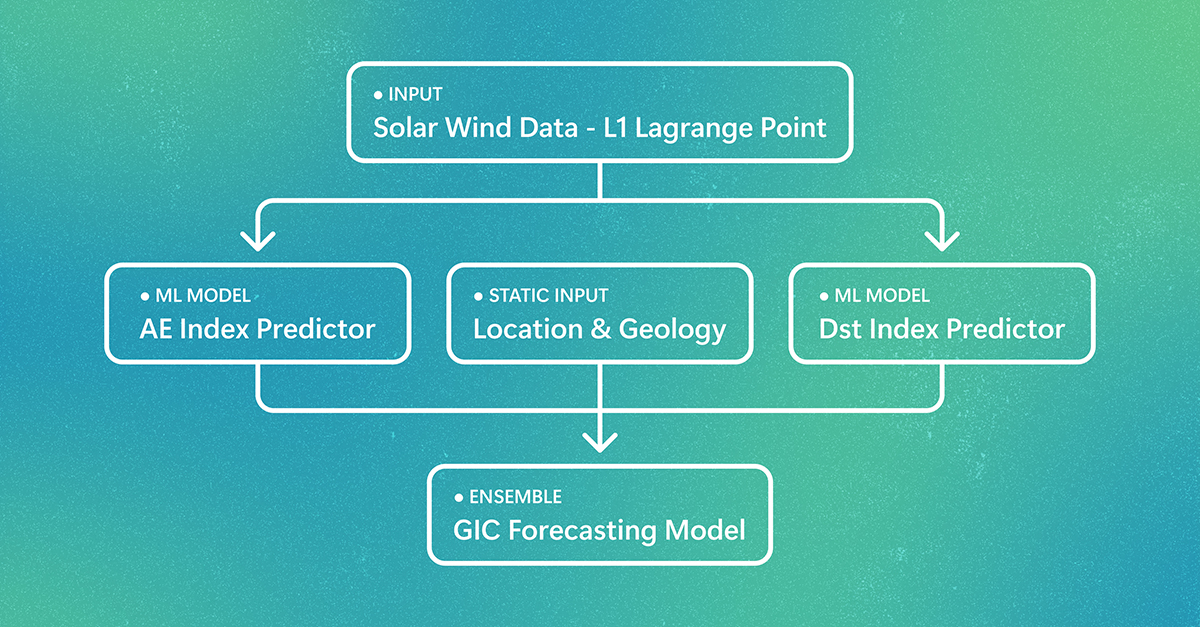
Extreme space-weather events can damage power systems on Earth and degrade GPS accuracy and satellite operations. A new machine learning system can predict where damage is likely to occur 30-60 minutes before a storm arrives. The post Forecasting space weather risks on power grids appeared first on Microsoft Research.
We use cookies to run the site and, with your consent, for analytics and to show ads.
See our Cookie Policy.