Aug 2026· Proceedings of the 20th ACM Conference on Recommender Systems· 0 citations· 26 references
Computer Science
Abstract
Recommendation systems thrive on personalization, where “correctness” is rarely a binary truth but a matter of subjective human preference. As Large Language Models (LLMs) are deployed as autonomous verifiers of safety and quality guidelines, they face a distinctive challenge: context-aware preference alignment. Recent gains in Reinforcement Learning with Verifiable Rewards (RLVR) are indexed mostly on objective, mathematical tasks. Through a large-scale study spanning both proprietary and open-source models on four real-world verification tasks from a production recommender platform, we ask whether explicit reasoning generalizes to subjective, human-centric industry rubrics. We expose a fundamental vulnerability: rigid, math-centric reasoning traces actively degrade verification, and applying standard RLVR triggers a phenomenon we term reasoning collapse, in which the policy abandons deliberation in favor of rapid heuristic guessing. We introduce a conditional length-penalized post-training algorithm that intertwines verification accuracy with bounded reasoning length, halting collapse and recovering performance. Finally, we show that a reasoning trace’s efficacy is tightly coupled with its socio-linguistic framing: across 1,500 synthesized personas, verification accuracy swings by nearly 0.38 macro-F1 depending solely on the adopted reasoning persona—evidence that much subjective-verification error is really reasoning-style mismatch. This observation motivates a mid-training architecture that routes reasoning through contextually aligned personas. This work offers both a scalable algorithmic patch and a long-term architectural blueprint for aligning reasoning models with real-world subjective constraints.
The results indicate that software engineering work practices are chosen opportunistically, adapted and configured to provide value under the constrains imposed by the startup context.
Nicolò Paternoster, Carmine Giardino, M. Unterkalmsteiner et al.· Information and Software Tec...· 394 citations· ⚡54
This state-of-practice investigation was performed using a literature review followed by a multiple-case study approach and presents how inconsistency between managerial strategies and execution can lead to failure by means of a behavioral framework.
Carmine Giardino, Xiaofeng Wang, P. Abrahamsson· International Conference on...· 175 citations· ⚡19
This study conducts a case survey study based on the secondary data of the major pivots happened in 49 software startups, and demonstrates that customer need pivot is the most common among all pivot types.
Sohaib Shahid Bajwa, Xiaofeng Wang, Anh Nguyen-Duc et al.· Empirical Software Engineeri...· 127 citations· ⚡15
It is found that roles of MVPs in startups were not fully aware by entrepreneurs, and entrepreneurs should consider a systematic approach to fully explore the value of MVP, as a multiple facet product (MFP).
Anh Nguyen-Duc, P. Abrahamsson· International Conference on...· 93 citations· ⚡9
It is found that what perceived as biggest challenges by software startups do vary across different life cycle stages, even though its significance decreases when the learning focuses of the startups move from problem to solution and their products mature.
Xiaofeng Wang, Henry Edison, Sohaib Shahid Bajwa et al.· International Conference on...· 62 citations· ⚡6
A comprehensive overview of how enhanced sampling methods are reshaping the field, with a particular focus on the data-driven construction of collective variables, is provided.
Kai Zhu, Enrico Trizio, Jintu Zhang et al.· Chemical Reviews· 58 citations
Related blog posts
MIT News · Artificial Intelligence· news.mit.eduOct 2, 2026
Martin Trust Center Managing Director Bill Aulet introduces Dear Dreamer, a free platform for middle and high school students who want to learn about entrepreneurship.
Microsoft Research Blog· microsoft.comSep 30, 2026
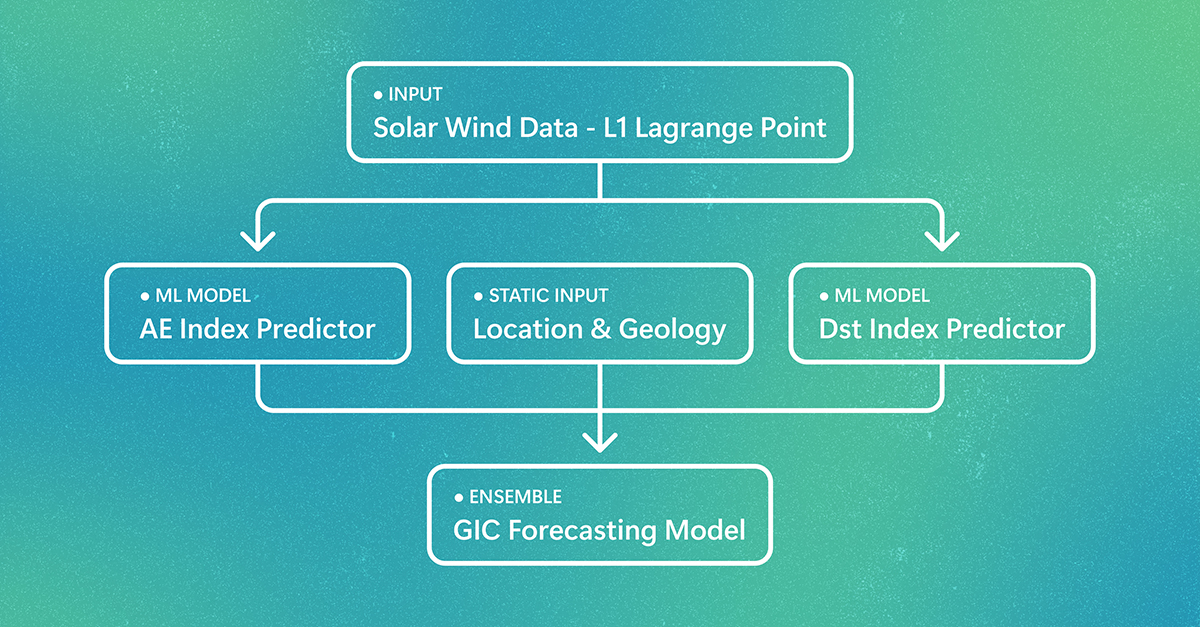
Extreme space-weather events can damage power systems on Earth and degrade GPS accuracy and satellite operations. A new machine learning system can predict where damage is likely to occur 30-60 minutes before a storm arrives. The post Forecasting space weather risks on power grids appeared first on Microsoft Research.
We use cookies to run the site and, with your consent, for analytics and to show ads.
See our Cookie Policy.