Multimodal Large Language Models have shown strong performance across multimodal tasks, and recent personalized MLLMs can recognize user-specific concepts and generate contextual captions. However, existing personalized MLLMs mainly focus on isolated concepts, often lacking relational training data, neglecting connections among personalized concepts, and evaluating mostly on recognition or captioning. To address these limitations, we introduce ReGraP, a dataset of 120 personalized knowledge sets, each containing images, knowledge graphs, and Chain-of-Thought Question-Answering pairs. Based on ReGraP, we propose Reasoning enabled Graph-based Personalized Large Language and Vision Assistant ReGraP-LLaVA, a personalized MLLM that incorporates KGs and CoT QA pairs through soft and/or hard graph prompting to align structured relational knowledge with the model's semantic space. We further establish the ReGraP Benchmark, covering multiple-choice, fill-in-the-blank, true/false, and descriptive questions in both open- and closed-ended settings, to evaluate personalized relational reasoning and knowledge-connection capabilities. Experimental results show that ReGraP-LLaVA effectively learns personalized knowledge and performs relational reasoning, achieving the best overall performance among competitive baselines. Code and data are available at: https://github.com/xyfyyds/ReGraP
Yifan Xiang, Zhenxi Zhang, Bin Li et al.· 0 citations
Peripheral neuroblastic tumors (pNTs) are among the most common extracranial solid tumors in children, and accurate pathological subtyping is important for risk stratification and treatment planning. However, pNT subtyping on hematoxylin-eosin whole-slide images (WSIs) remains challenging because of limited pediatric tumor cohorts, marked histological heterogeneity, inter-observer variability, and the computational burden of existing WSI classifiers. To address these challenges, we propose CoPath, a framework consisting of CoHisNet and PathVote. CoHisNet is a lightweight multi-scale feature-fusion network for patch-level histopathological classification. By replacing the multilayer perceptron components in Swin Transformer blocks and the classification head with Kolmogorov-Arnold Network layers, CoHisNet improves nonlinear feature modeling under a compact architecture. Its multi-scale interaction and contrast-driven feature-enhancement design enables the model to capture both tissue-level structures and fine-grained cellular morphology. PathVote further incorporates pathology-informed tissue-component priors to aggregate patch-level predictions into WSI-level decisions. We validated CoPath on a private two-branch PpNTs cohort and the public BreakHis breast cancer histopathology dataset. Experimental results show that CoPath achieves competitive or superior performance compared with general image classifiers, pathology foundation models under linear probing, and pathology-specific classification models, while maintaining substantially lower computational complexity. The source code is available at https://github.com/JSLiam94/CoPath.
Zhu Zhu, Shuo Jiang, Jingyuan Zheng et al.· 0 citations
In this paper, we aim to build an adversarially robust zero-shot image classifier. We ground our work on CLIP, a vision-language pre-trained encoder model that can perform zero-shot classification by matching an image with text prompts ``a photo of a <class-name>.''. Purification is the path we choose since it does not require adversarial training on specific attack types and thus can cope with any foreseen attacks. We then formulate purification risk as the KL divergence between the joint distributions of the purification process of denoising the adversarial samples and the attack process of adding perturbations to benign samples, through bidirectional Stochastic Differential Equations (SDEs). The final derived results inspire us to explore purification in the multi-modal latent space of CLIP. We propose two variants for our CLIPure approach: CLIPure-Diff which models the likelihood of images' latent vectors with the DiffusionPrior module in DaLLE-2 (modeling the generation process of CLIP's latent vectors), and CLIPure-Cos which models the likelihood with the cosine similarity between the embeddings of an image and ``a photo of a.''. As far as we know, CLIPure is the first purification method in multi-modal latent space and CLIPure-Cos is the first purification method that is not based on generative models, which substantially improves defense efficiency. We conducted extensive experiments on CIFAR-10, ImageNet, and 13 datasets that previous CLIP-based defense methods used for evaluating zero-shot classification robustness. Results show that CLIPure boosts the SOTA robustness by a large margin, e.g., from 71.7% to 91.1% on CIFAR10, from 59.6% to 72.6% on ImageNet, and 108% relative improvements of average robustness on the 13 datasets over previous SOTA. The code is available at https://github.com/TMLResearchGroup-CAS/CLIPure.
Mingkun Zhang, Keping Bi, Wei Chen et al.· 0 citations
Visual grounding is typically evaluated as a one-shot mapping from an informative referring expression to a visual target. This formulation misses a central property of real-world reference: initial referring expressions are often incomplete or ambiguous, requiring participants to establish shared understanding through interaction. We introduce a controlled evaluation framework for interactive visual grounding in large vision-language models (LVLMs), varying how much target information is provided upfront and how much must be acquired through dialogue. Across four human-grounded visual contexts and four interaction protocols, current LVLMs perform significantly below task-level human baselines. Interaction can help when follow-up questions refine or repair an initial target description. Performance is lowest when no initial description is provided and target information must be acquired through questions, indicating that proactive question-driven grounding remains difficult. LVLMs are also poorly calibrated, often reporting confidence that exceeds their empirical accuracy. Follow-up studies confirm these patterns across varied description sources (human versus AI), reasoning efforts, repeated interactions, description providers, and visual contexts. Overall, interactive visual grounding remains challenging, requiring visual matching, information seeking and synthesis.
Zhengxiang Wang, Owen Rambow· 0 citations
Reach audiences
Advertise in front of researchers, engineers, and readers.
Active inference offers a unified framework for perception, learning, and action, but scaling discrete active-inference models to rich spatial and temporal domains remains difficult. Renormalising generative models (RGMs) address this challenge by composing discrete generative models across spatial and temporal scales, coarse-graining lower-level states and paths into higher-level causes for objects, events, and action. However, fully reproducing and adapting the framework remains difficult: the mathematical exposition is compact, and the reference implementations are deeply integrated within specialized software environments, leaving many algorithmic details implicit. This paper addresses these challenges by providing a self-contained, derivation-oriented account of RGMs together with an open, verified implementation. We explain how the hierarchy is built, how beliefs and actions are updated within it, and how information is passed between levels. Where the published equations and implementation differ in emphasis, we make those choices explicit and explain their modelling consequences. By clarifying the theory and separating it from its original implementation context, this work lowers practical barriers to entry and makes RGMs more transparent, auditable, and reproducible, providing a foundation for future quantitative evaluation and development on machine-learning benchmarks.
Karim Zaghw, Andrew Pashea, Marc Pritsch et al.· 0 citations
Computer-Aided Design is pivotal in modern manufacturing, yet existing automated methods predominantly rely on open-loop, one-shot generation, creating a mismatch with iterative real-world practices. In this paper, we present IterCAD, a unified multimodal agent framework for closed-loop, interactive CAD generation and editing. We formulate the task as a multi-turn interaction between a multimodal agent and an executable CAD sandbox, covering three tasks: Drawing-to-Code, Text-to-Code, and Interactive Editing. To support this, we develop a data synthesis pipeline incorporating advanced industrial manufacturing features to generate standard-compliant multi-view engineering drawings, complex code-editing tasks, and high-fidelity interaction trajectories. We optimize the agent via progressive SFT followed by geometry-aware reinforcement learning with viable-prefix masking to enhance code executability and geometric fidelity. Finally, we introduce the IterCAD-Bench evaluation suite and propose the Chamfer Distance Tolerance-Recall (CD-TR) curve alongside its AUC-TR metric, establishing a survivor-bias-free standard that unifies code validity and geometric precision. Extensive experiments demonstrate that IterCAD achieves highly competitive performance across multiple benchmarks, significantly outperforming existing approaches in both code executability and geometric precision, while exhibiting superior capabilities in closed-loop iterative refinement.
Tao Hu, Jiaxin Ai, Licheng Wen et al.· 0 citations
We propose a lightweight two-stage framework for real-time video anomaly detection. The first stage employs YOLO v11n-pose to detect persons and extract seventeen skeletal keypoints in a single forward pass. The second stage encodes each cropped person region through CLIP ViT-B/32 and computes cosine similarity against predefined textual descriptions of anomalous behaviors. This architecture eliminates the need for optical flow, standalone pose estimators, and density-based scoring modules. Experiments on CUHK Avenue, ShanghaiTech Campus, and a custom indoor dataset collected at Chulalongkorn University demonstrate an end-to-end throughput of approximately 51 FPS on an NVIDIA Titan XP GPU, a 3.36x speedup over the multi-feature baseline, while maintaining frame-level AUROC values of 89.26%, 70.26%, and 84.13%, respectively.
Vanodhya G. Warnasooriya, Amir Hajian, Watchara Ruangsang et al.· 0 citations
Cardiac magnetic resonance imaging (CMR) produces rich sequential data such as temporal cine videos and spatial LGE/mapping stacks, yet most deep learning approaches process individual 2D slices, discarding this context. We present MR-JEPA, a self-supervised video foundation model for CMR that extends LeJEPA to 3D spatiotemporal inputs through tubelet tokenization, spatiotemporal masking augmentation, and initialization from a 2D CMR foundation model. Unlike prior CMR video models limited to cine data, MR-JEPA is pretrained on multi-sequence data (cine, LGE, mapping) from 10,505 patients across two centers without annotations. We evaluate the frozen encoder on six downstream tasks using a unified multi-view gated attention architecture: LV ejection fraction, RV ejection fraction, three myocardial strains (GLS, GCS, GRS), and four-class disease detection. MR-JEPA outperforms other compared methods on all five regression tasks, including both a domain-specific CMR model pretrained on more data with text supervision and a natural-video foundation model, achieving an LV EF MAE of 4.79% (r =0.764) and a GLS MAE of 1.87 (r=0.805), with 21-27% MAE reductions over baselines on strain tasks. For disease detection, MR-JEPA achieved a macro AUG of 0.868, remaining competitive with the domain-specific baseline despite using a fully self-supervised pretraining objective. These results demonstrate the potential of a unified video encoder for robust, multi-view utilization of diverse CMR sequences in clinical cardiac quantification and diagnosis.
Athira J. Jacob, Puneet Sharma, D. Comaniciu et al.· 0 citations
Vision-Language Models (VLMs) still struggle on tasks requiring complex visual understanding. We argue that the core issue is not high-level reasoning, but instead failing to locate critical details in the image. Due to this shortcoming, VLMs generate often plausible but incorrect reasoning based on flawed perceptual grounding. To address this, we propose Locator-Critic (LOCI), a training-free framework that decouples visual search from evidence verification. LOCI employs a Locator agent to propose candidate visual evidence and a separate Critic agent to evaluate its relevance and sufficiency. These agents engage in an iterative refinement loop, progressively improving the evidence until it is adequate to answer the given question. This decoupled, self-correcting process yields substantial performance gains, achieving state-of-the-art results on multiple complex visual benchmarks. LOCI improves accuracy for both open-weight models like Qwen3-VL (+12.1 on V*, +5.8 on HR-Bench and +11.2 on VisualProbe-Hard) and proprietary models like Gemini 2.5 Pro (+8.9 on V*, +4.3 on HR-Bench, +4.8 on VisualProbe-Hard).
Walid Bousselham, Mathilde Caron, Arsha Nagrani et al.· 0 citations
Depression and anxiety in older adults with Mild Cognitive Impairment (MCI) are frequently underdiagnosed due to limited access to care. Multimodal analysis of remote clinical interviews is a scalable screening approach, but existing methods have three limitations. First, they do not correct temporal misalignment across multimodal features extracted at different resolutions, inducing spurious cross-modal associations. Second, remote recordings exhibit uneven modality dropout, but missing values are often zero-filled, making them indistinguishable from valid near-zero measurements. Finally, they do not jointly attribute predictions to modalities, questions, and interview moments, limiting fine-grained clinical interpretation. We propose a Temporally-Aligned, Missingness-Aware, Interpretable (TAMI) multimodal fusion framework. TAMI aligns speech, language, facial, and physiological features within question-answer segments on a shared timeline, encodes modality-level missingness over time, and conditions fusion on question context. In interviews with 49 older adults with MCI, TAMI achieved area under the receiver operating characteristic curve (AUROC) scores of 0.68 (depression) and 0.69 (anxiety). Fine-grained temporal alignment of multimodal features produced the largest performance gain ($\Delta{\geq}0.1$). Multi-level interpretability analysis revealed that depression classification relied on eyegaze and open-ended questions, while anxiety classification depended on eyegaze and head pose, with attribution uniformly distributed across questions. Using only responses to the open-ended questions (5.1min), the depression model achieved an AUROC score of 0.67, which was not significantly different from using the full interview (19min) ($p>0.05$). Our findings support designing interview protocols centered on open-ended questions for depression screening in older adults with MCI.
Merna Bibars, Bolaji Omofojoye, Allan I. Levey et al.· 0 citations
Interactive lesion segmentation in whole-body PET/CT requires a model to provide a strong initial prediction while also responding efficiently to sparse corrective scribbles during inference. This setting is particularly challenging because tracer distributions, physiological uptake patterns, lesion appearance, and acquisition characteristics differ substantially between FDG and PSMA studies. We present TRIAGE, Tracer-aware Refinement via Interactive Anatomy-Guided sEgmentation. The core backbone is a 3D STU-Net initialized through masked autoencoding pre-training with an asynchronous masking strategy, aiming to learn transferable anatomical and cross-modal representations before task-specific fine-tuning. In parallel, we train an auxiliary organ segmentation model whose predictions provide explicit anatomical context and help distinguish physiological uptake from malignant lesions. A dedicated tracer classifier first routes each study to an FDG- or PSMA-specific branch. Within each branch, a first-stage segmentation model consumes CT, PET, and organ context to generate an initial lesion mask. The initial prediction is then combined with cumulative foreground/background scribbles and refined by a second interactive segmentation network. The FDG and PSMA branches share the same overall processing pipeline but are trained independently to account for tracer-specific appearance and error modes. We additionally employ curriculum-style training and model ensembling to improve robustness across interaction steps and heterogeneous cohorts. Experiments are conducted using the official AutoPET V data and ten-fold split; quantitative results, ablations, and final test-set performance are left as placeholders to be completed after the challenge evaluation. Code: https://github.com/Liiiii2101/AUTOPET2026-MEDAI.
Xinglong Liang, Chunyao Lu, Tianyu Zhang et al.· 0 citations
Background and Objective: Quality control is a prerequisite for whole-slide image analysis, yet the benchmarks on which quality-control methods are compared share four properties that make their reported differences hard to interpret: few independent slides, annotation concentrated in a minority of them, pooled ratio metrics with no closed-form standard error, and a single inherited train/test partition. We propose a reliability protocol for such benchmarks. Methods: The protocol quantifies four sources of variability - test-set sampling, training stochasticity, partition composition, and undocumented preprocessing - a claim is reportable only if it survives all four; three of the four cost minutes of compute. We apply it to an independent reconstruction of a published diffusion-based artifact detector, evaluated on the original 24-slide partition and against a supervised baseline. Results: The method's central mechanism reproduces: the auxiliary contrastive term improves pooled F1 from 0.673 to 0.688 and replicates under a second seed (+0.0156, p = 0.031; +0.0190, p = 0.005), although it acts on pen marking rather than the artifact types cited to motivate it. Its comparative claims do not: differences between design variants, and against the supervised baseline, fall inside the uncertainty of the evaluation. Four of 24 slides carry 70% of scored annotated pixels, giving an effective sample size of 6.2, and the inherited partition sits at the 7th percentile. An unreported tissue-restriction step excludes 41.4% of out-of-focus annotation against 2.6% of air bubble; such a gate is confounded with blur by construction. Conclusions: Small-cohort benchmarks support far weaker conclusions than current reporting implies. The four checks are cheap enough to accompany any evaluation on such a resource and separate reproducible effects from differences the evaluation cannot resolve.
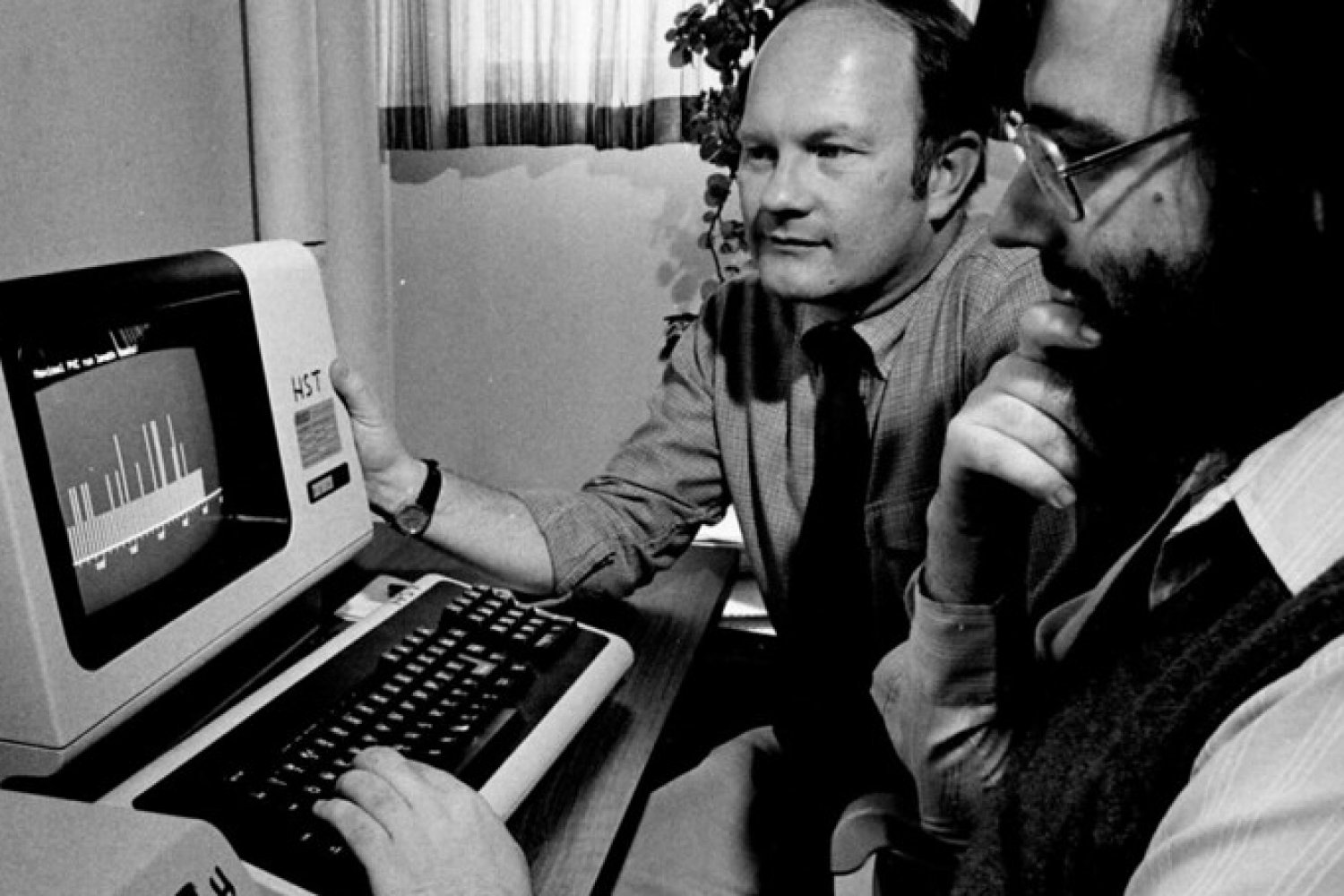
The visionary PhysioNet platform launched 25 years ago, based on a system developed at MIT in the 1970s. It has become one of the most comprehensive biomedical and clinical data repositories in existence.
Known for his clear and elegant writing style, Bertsekas shaped fields from control and optimization to large-scale computation and artificial intelligence.
MIT News · Artificial Intelligence· news.mit.eduJul 6, 2026
PhD student Rachel Sava, winner of the Envisioning the Future of Computing Prize, explores transformative improvements and dystopian risks of neural technology.
MIT News · Artificial Intelligence· news.mit.eduJun 30, 2026
Computer scientist Phillip Isola cuts through the hype to explain how AI agents work and what the future might hold for this rapidly advancing technology.