Abstract. Simulating urban airflow and pollutant dispersion requires resolving multiscale physical processes, from large-scale meteorological forcing to highly localized building-induced turbulence. To accurately capture these multiscale urban flow fields, this study introduces FluidUrban v1.0, an advanced modelling system built upon the Fluidity solver and centred on a three-dimensional Dynamic Adaptive Mesh Optimization (DAMO) framework. By dynamically adapting mesh resolution in response to the evolution of flow physics and scalar gradients, DAMO concentrates computational resources on critical high-gradient regions such as building wakes, shear layers and scalar sharp plume. The model's performance is systematically evaluated against high-fidelity “WOTAN” wind-tunnel experimental data under varying surface roughness conditions and inflow directions. The results demonstrate that the FluidUrban with DAMO framework consistently outperforms traditional non-uniform fixed meshes (FIXM) by accurately capturing complex urban wind fields and pollutant concentration. For normalized wind speed, FluidUrban with DAMO achieved a Mean Absolute Error (MAE) of 0.187, representing a notable reduction from the 0.214 simulated by FIXM. In terms of wind direction, the model reduced the MAE by up to 38.4 % in medium roughness and 36.1 % in high roughness conditions, respectively, during realistic oblique inflow scenarios. Furthermore, for pollutant dispersion, the model effectively suppresses numerical diffusion and maintained sharply plume gradients, achieving an 89 % compliance rate with established atmospheric model evaluation standards (FB, NMSE, and MG), compared to only 50 % for FIXM. While DAMO introduces runtime cost for mesh regeneration, this cost is strategically offset by the optimization of the accuracy-efficiency balance. Following the systematic evaluation, FluidUrban v1.0 was applied to a realistic urban scenario, demonstrating its robust capability to resolve the complex flow fields and spatial heterogeneity within real urban morphologies. Thus, FluidUrban v1.0 demonstrates to be a robust aerodynamic tool for resolving the transient, small-scale flow structures critical to pollutant transport, establishing a solid foundation for the future integration of comprehensive urban physical components, including radiation, vegetation, and full energy-balance physics.
This paper develops a structural framework for understanding the Gaussian distribution through its simultaneous closure and stability under fundamental mathematical operations. It organizes classical Gaussian phenomena into a Gaussian Structural Atlas spanning local differential operators, Hermite polynomial calculus, Stein identities, Ornstein–Uhlenbeck dynamics, convolution semigroups, heat flow, entropy, Fisher information, Fourier duality, statistical inference, multivariate Gaussian geometry, conditioning, Gaussian processes, and diffusion-based generative modeling. The paper emphasizes the distinction between exact closure, closure after enlargement, asymptotic attraction, extremal characterization, and model-dependent consequences. Classical results—including Hermite calculus, the heat kernel, Gaussian maximum entropy, the central limit theorem, Stein's identity, and de Bruijn's identity—are treated as established results and connected through an explicit dependency structure rather than presented as new theorems. The paper further introduces the Gaussian Structural Signature (GSS) as a quantitative diagnostic framework for measuring how learned representations and stochastic trajectories move through a structural space defined by score affinity, information deficit, and semigroup consistency. It also proposes a Gaussian Structural Module (GSM) for diffusion models, decomposing a learned score into an analytic moment-matched Gaussian reference component and a trainable non-Gaussian residual component with structurally controlled gating. The GSS/GSM framework is presented as a testable methodological contribution rather than as a claim that Gaussian representations are universally optimal. The mathematical development includes scalar and multivariate formulations, reconstruction results based on affine scores and self-similar convolution semigroups, information-theoretic and Fourier perspectives, and connections to score matching, denoising, diffusion models, variational autoencoders, and natural-gradient methods. The paper also identifies limitations and specifies empirical and theoretical directions for testing approximate Gaussian structure in learned systems. Keywords: Gaussian distribution; Gaussian Structural Atlas; Gaussian Structural Signature; Gaussian Structural Module; Hermite polynomials; heat semigroup; convolution semigroup; Fisher information; entropy; Fourier analysis; Stein's identity; Ornstein–Uhlenbeck process; score matching; denoising; diffusion models; generative modeling; statistical learning; learned representations
abhishek chaudhary· Zenodo (CERN European Organi...· 0 citations
Artificial intelligence is increasingly discussed through the lenses of safety, capability and employment disruption. This report examines a broader question: how should economies, organisations and institutions adapt if machine intelligence becomes progressively more capable, scalable and economically consequential? It proposes an AI Transition Architecture connecting technological safety with human capability, workforce transition, economic participation, organisational adaptation, social resilience, institutional and legal adaptation, and international coordination. The analysis develops three diagnostic transition gaps—the AI Transition Gap, Governance Capability Gap and Economic Participation Gap—and examines how increasing AI capability may interact with labour markets, productivity, ownership, institutional competence and concentrations of technological, economic and political power. The report develops an integrated set of frameworks including a Six-Dimensional Concentration-Diffusion Model; Capability-Authority-Accountability; competence-floor subsidiarity; a Legislative Control Stack; Human Capability Stack; Automate-Augment-Reserve-Develop; Transition Financing Stack; Universal Economic Participation trigger system; and Human Prosperity Test. The central proposition is that AI should decentralise human capability faster than it centralises institutional power. Rather than treating its principal diagnoses as predetermined conclusions, the report specifies evidence and indicators capable of weakening or falsifying them. It draws on institutional, academic and frontier research current through August 2026 and distinguishes observed evidence from scenarios and normative recommendations. The report concludes that AI safety is essential but insufficient as a complete transition strategy. The wider challenge is architectural: designing institutions, economic mechanisms and capability systems through which increases in machine intelligence can contribute to broadly distributed human capability, agency, opportunity and prosperity while maintaining effective accountability and constraints on concentrated power.
Mark Lamont· Zenodo (CERN European Organi...· 0 citations
This paper investigates the potential of quantum-enhanced diffusion processes to revolutionize generative modeling. Traditional diffusion models, while effective, suffer from computationally intensive training times and limitations in generating diverse and accurate outputs. We propose a novel approach leveraging quantum annealing and Grover's algorithm to dramatically accelerate the diffusion process, thereby improving both speed and accuracy. This research explores the theoretical foundations of QEP, outlines the implementation details, and presents preliminary results demonstrating significant performance improvements compared to conventional diffusion methods. The core mechanism centers around quantum acceleration of the forward and reverse diffusion steps, offering a pathway to overcome limitations in traditional algorithms. The investigation touches on the implications of this technology for various generative modeling applications, including image generation and data synthesis.
Jincheng Zhang· Zenodo (CERN European Organi...· 0 citations
Reach audiences
Advertise in front of researchers, engineers, and readers.
Face recognition has gone from scientific novelty to one of the most pervasive biometric modalities used by people around the world. Today, face recognition systems power everything from our smartphone lock screens to border checkpoints at airports, analysis of shopper demographics in retail stores, and citywide security camera networks. In this survey, we chronicle recent advances in automatic face recognition technology, covering research from approximately the past 20 years. We divide the related literature into three main periods: work in the classical era up until 20 10 focused on techniques such as statistical models and texture descriptors, research from 2010 - 2020 centered around deep convolutional models and margin-based losses, and finally methods from the past few years based on transformers and diffusion models as well as a re-focus on fairness and efficiency. Within each of these broad categories, we highlight key ideas behind each family of algorithms including how their objective function helps them learn a useful representation and what tradeoffs that might introduce. We also aggregate many of the reported benchmarks, dataset information, and loss functions in tables for convenient comparison. Finally, we discuss areas of concern that still remain such as biases, adversarial examples, and data privacy laws, and highlight promising directions for future work including self-supervised learning, interpretability, and data generation.
Sadique Nayeem· International Journal of Glo...· 0 citations
This paper proposes a novel approach to simulating complex biological systems utilizing graph-based modeling and simulation techniques. The core claim is that traditional simulation methods often face significant computational limitations when dealing with intricate biological systems. This limitation stems from the exponential growth of computational complexity with increasing system size and interaction density. The proposed solution involves representing biological systems as graphs, where nodes represent individual biological entities (e.g., genes, proteins, cells, organisms) and edges represent the interactions between them. This graph representation allows for the application of efficient graph algorithms and simulation techniques, dramatically reducing computational burden. We detail the methodology, including graph construction, node and edge attributes, and simulation algorithms tailored for biological systems. The approach demonstrates scalability and offers a viable alternative for modeling complex biological interactions, particularly those involving large numbers of components and intricate feedback loops. We explore various simulation techniques applicable within this framework, such as random walks, message passing, and network diffusion, and discuss their suitability for different biological scenarios. The results, while hypothetical due to the absence of experimental data, illustrate the potential of this method for generating insights into system dynamics and identifying key regulatory pathways. The ultimate goal is to provide a robust and scalable platform for understanding the behavior of complex biological systems.
Jincheng Zhang· Zenodo (CERN European Organi...· 0 citations
Abstract Ischemic stroke (IS) is one of the primary causes of global mortality and permanent neurological disability, and its clinical treatment is severely constrained by the intricate ischemic pathological cascade and the impermeable blood‐brain barrier (BBB). Cerebral ischemia and reperfusion trigger a series of pathological events including energy depletion, excitotoxicity, calcium overload, oxidative stress and neuroinflammation, accompanied by progressive BBB damage. These pathological processes exacerbate secondary brain injury and severely block the delivery of therapeutic drugs to lesion sites. Carbon dots (CDs), with their ultrasmall particle size, adjustable surface properties, excellent biocompatibility, inherent fluorescence feature and multi‐therapeutic bioactivity, have evolved into an advanced nanoplatform for targeted IS treatment. This review systematically outlines the structural characteristics and transport rules of the BBB, illustrates the pathological cascade of IS and its destructive effects on BBB integrity, and elaborates three major pathways for CDs to penetrate the BBB: passive diffusion, carrier‐mediated transport and endocytosis‐dependent transcytosis. It further highlights the therapeutic roles of CDs in IS‐associated pathological cascades, including reactive oxygen species elimination, mitochondrial protection, inflammasome modulation, programmed cell death suppression, and BBB integrity maintenance. In addition, iron‐associated oxidative stress modulation, mainly supported by ICH‐related models, is discussed as mechanistic evidence for stroke‐associated oxidative injury rather than as direct proof of IS therapy. Collectively, CDs serve as a flexible theranostic candidate for IS management. Nevertheless, more in‐depth research is required to clarify underlying mechanisms, optimize biosafety and promote future clinical translation.
Yanhan Huang, Xuan Hou, Haiping Zhao et al.· Responsive materials· 0 citations
This study examines how cultural resistance shapes the diffusion of social innovation and develops a mechanism-based framework for overcoming such resistance. Moving beyond economic and technological interpretations of innovation, the analysis conceptualizes resistance as a structured sociocultural phenomenon emerging from misalignments between innovation initiatives and historically embedded symbolic, normative, and institutional orders. Drawing on cultural sociology, institutional theory, and innovation diffusion research, the study introduces the concept of the “tragedy of innovation” to explain why socially beneficial initiatives may generate opposition despite their functional merits. This tragedy arises from perceived cultural distance—that is, the degree of misalignment between innovation and prevailing evaluative frameworks across value systems, identity structures, institutional routines, and trust relations. Through structured literature synthesis, the study identifies four interrelated mechanisms of cultural resistance: value incongruence, symbolic threat and identity protection, institutional inertia and path dependence, and trust and legitimacy deficits. Rather than interpreting resistance as irrational opposition, the framework understands it as a stabilizing response aimed at preserving normative coherence and institutional continuity. Building on this diagnosis, the paper proposes a differentiated strategy framework linking each resistance mechanism to targeted intervention pathways, including participatory co-design, cultural framing, coalition-building, pilot implementation, and transparency mechanisms. By integrating multiple theoretical traditions into a unified explanatory model, the study offers both conceptual clarification and strategic guidance for managing cultural alignment in social innovation processes.
Mustafa Kaya, Hamza ÖZÇİFTÇİ, Ersel ERTÜRK· Karamanoğlu Mehmetbey Üniver...· 0 citations
Building upon the continuous momentum space observations of metallic mean Vogel arrays, this report investigates the quantum mechanical properties of the Golden Ratio (m=1) substrate. Using a tight-binding Hamiltonian model with exponentially decaying hopping integrals, we analyze the energy spectrum, state localization, defect tolerance, and quantum diffusion dynamics of this deterministic aperiodic lattice.
Yaron Admon Hefetz· Zenodo (CERN European Organi...· 0 citations
A self-contained 1-D drift-diffusion solver for ETL/perovskite/HTL solar cells, written in pure NumPy/SciPy. It couples Poisson's equation with the electron, hole and mobile-ion continuity equations and supports photoinduced halide-segregation (band-gap-coupled) modelling, steady-state J-V curves, scan-rate hysteresis and small-signal impedance spectroscopy.
Eka Nurfani· Zenodo (CERN European Organi...· 0 citations
Electromagnetic interference (EMI) shields are limited by a severe impedance mismatch with free space, leading to strong reflections and secondary radiation. Here, we introduce ultralight all-polymer aerogels featuring a continuous through-thickness conductivity gradient (MCAs), fabricated in a single step via diffusion-driven oxidative polymerization of pyrrole within aramid nanofiber scaffolds. An exponentially decaying conductivity profile enables ultrabroadband, low-reflection performance in 5-mm-thick samples, achieving reflection power coefficient R < 0.1 across 10.2-40.0 GHz, while maintaining shielding effectiveness > 30 dB under low-conductivity face incidence. Waveguide measurements and simulations show that progressive impedance transition and internal field redistribution drive absorption-dominated ohmic loss rather than surface reflection. A gradient-stratified electromagnetic model delineates an optimal design window for key gradient parameter. Beyond EMI protection, this nanofibrous architecture provides mechanical robustness and facile processability, establishing a diffusion–reaction strategy for spatially programmed conductive networks relevant to electromagnetic, electronic, and energy systems. Electromagnetic interference shields can be limited by impedance mismatch with free space, leading to strong reflections and secondary radiation. Here, the authors introduce lightweight all-polymer aerogels with a continuous through-thickness conductivity gradient, fabricated in a single step via diffusion-driven oxidative polymerization of pyrrole within aramid-nanofiber scaffolds.
Yaqing Chen, Huimin He, Na Wu et al.· Nature Communications· 0 citations
**Axon Diameter Mapping** **Overview:** Multi-shell diffusion-weighted MRI of the human brain that was optimized for axon diameter mapping using the power-law approach of Veraart et al. (2020) **Hardware requirements:** The modeling approach leverages (a) high *b*-values to suppress extra-axonal signal, and (b) strong diffusion-weighted strengths to maximize the sensitivity of diffusion-weighted MRI signal to restricted diffusion within micrometer-thin axons. Therefore, axon diameter mapping is currently limited to MRI scanners that are equipped with ultra-strong diffusion-weighting gradients, i.e. 300mT/m. Examples include Siemens 3T Connectom, Siemens 3T Connectom.X, and GE 3T Magnus. The protocol was optimized and tested on Siemens 3T Connectom. **Code:** Code to analyze the data is provided in https://github.com/NYU-DiffusionMRI/AxonRadiusMapping. **Supporting data:** Rician signal biases impact the accuracy of Axon Diameter Mapping. Therefore it is important to collect supporting data from which a noise map can be derived. **References:** *Model:* Veraart J, Nunes D, Rudrapatna U, Fieremans E, Jones DK, Novikov DS, Shemesh N. Noninvasive quantification of axon radii using diffusion MRI. Elife. 2020 Feb 12;9:e49855. doi: 10.7554/eLife.49855. *Reproducibility and protocol:* Veraart J, Raven EP, Edwards LJ, Weiskopf N, Jones DK. The variability of MR axon radii estimates in the human white matter. Hum Brain Mapp. 2021 May;42(7):2201-2213. doi: 10.1002/hbm.25359. *Interpretation:* Karat BG, Wren-Jarvis J, Raven EP, Khan AR, Jones DK, Palombo M, Veraart J. Revisiting the interpretation of axon diameter mapping using higher-order signal representations. Imaging Neurosci (Camb). 2026 Jan 9;4:IMAG.a.1080. doi: 10.1162/IMAG.a.1080. This is a dicompare validation schema. View, browse, and use it at https://dicompare.neurodesk.org/schema/Axon_diameter_mapping_v1.2.
Jelle Veraart, Erika Raven· Zenodo (CERN European Organi...· 0 citations
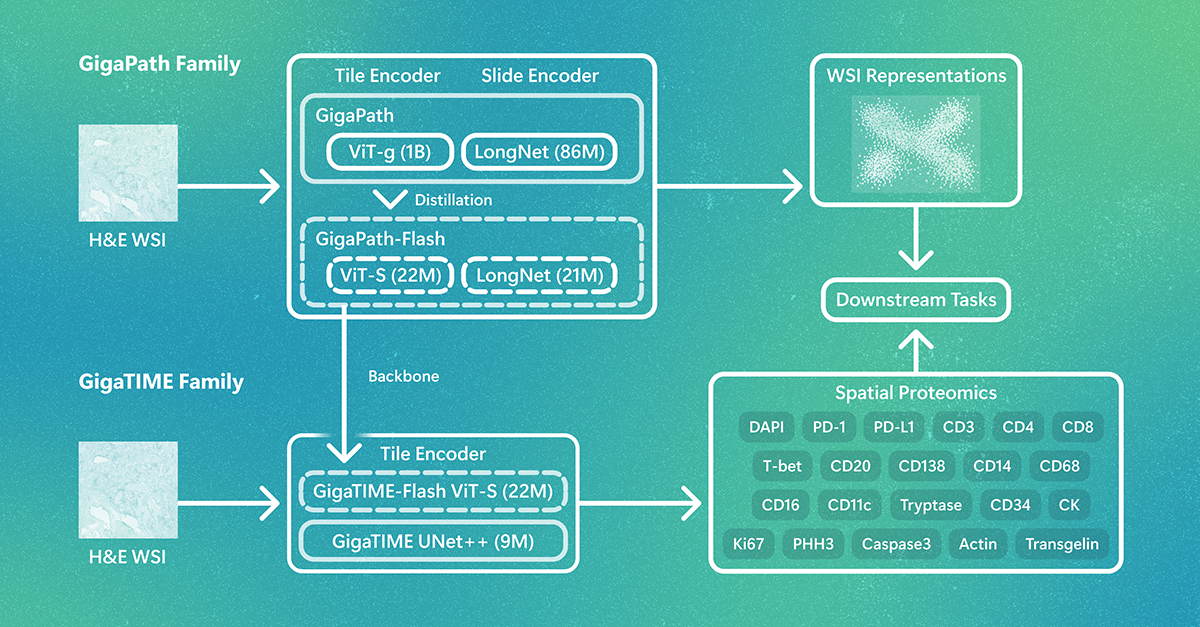
What if pathology foundation models could do more with less? GigaPath-Flash and GigaTIME-Flash cut computational demands while maintaining strong performance, opening the door to larger studies and broader exploration. The post GigaPath-Flash and GigaTIME-Flash: Toward population-scale discovery with efficient pathology foundation models appeared first on Microsoft Research.
We use cookies to run the site and, with your consent, for analytics and to show ads.
See our Cookie Policy.