A proof-of-concept, mechanism-grounded framework that treats trust as a bounded, directed, and diffusible state on a temporal heterogeneous graph and couples that state to learned influence pathways and budget-constrained intervention optimization and demonstrates internal feasibility rather than established real-world superiority.
Differentiating tumor recurrence from radiation necrosis (RN) after stereotactic radiosurgery (SRS) remains a major diagnostic challenge in brain metastasis. We aimed to validate established MRI-based tumor habitat analysis for distinguishing tumor from RN in an independent cohort with histopathological ground truth. This retrospective study included 104 patients (104 lesions) with pathologically confirmed recurrent metastatic tumors (n = 68) or RN (n = 36) who underwent structural and physiologic MRI. Tumor habitats were generated using an established unsupervised clustering model applied to normalized T1-weighted enhanced, T2-weighted, apparent diffusion coefficient, and cerebral blood volume maps. Structural habitats (enhancing tissue, solid low-enhancing, nonviable) and physiologic habitats (hypervascular, hypovascular cellular, nonviable) were quantified as absolute volumes and volume fractions. Logistic regression and receiver operating characteristics analysis evaluated the ability to differentiate tumor and RN. Composite habitat scores integrating structural and physiologic habitats were also developed. Recurrent metastatic tumors showed higher contrast-enhancing volume (P = .006), higher solid low-enhancing habitat volume (P = .029) and fraction (P = .04), higher hypervascular habitat volume (P = .02) and fraction (P = .03), and lower nonviable tissue habitat fractions on structural (P = .003) and physiologic MRI (P = .015), compared with RN. The combined structural and physiologic MRI habitat score showed the highest diagnostic performance (AUC, 0.80; 95% CI: 0.71–0.87; sensitivity, 89.7%; specificity, 58.3%). MRI-based tumor habitat analysis provides a pathology-validated approach to distinguish tumor recurrence from radiation necrosis in patients with prior radiation therapy. In patients with brain metastases and prior radiation therapy, histologically validated voxel-based MRI habitat analysis improves differentiation of tumor recurrence from radiation necrosis after stereotactic radiosurgery, with solid low-enhancing and hypervascular regions indicating viable tumor. In patients with prior radiation therapy, structural and physiologic tumor habitat analysis distinguishes tumor from radiation necrosis in BM in an independent cohort with histological ground truth. A high fraction of solid low-enhancing or hypervascular habitat and a low fraction of nonviable tissue habitat favored tumor recurrence in the post-radiation setting. A composite habitat score combining structural and physiologic MRI achieved the highest diagnostic performance in the prior-radiation cohort.
Ji Eun Park, Guowen Shao, S. Baisiwala et al.· Journal of Neuro-Oncology· 0 citations
This work proposes GSPotential, a framework that quantifies view-space supervision imbalance using a Camera Potential Field, and uses the potential field to guide reconstruction from two complementary aspects.
Zeyuan An, Yang Xiao, Zhiying Leng et al.· 0 citations
The Region Token Interface (\method{}) adapts a diffusion model to these tokens, with the region count drawn at random during fine-tuning so one checkpoint serves every budget.
Eduard Zamfir, C. Reisswig, Zongwei Wu et al.· 0 citations
Reach audiences
Advertise in front of researchers, engineers, and readers.
DReSG represents attention-guided diffusion proposals as residual targets relative to the current render, and progressively absorbs these residuals into a shared Gaussian scene through multi-view Gaussian feedback.
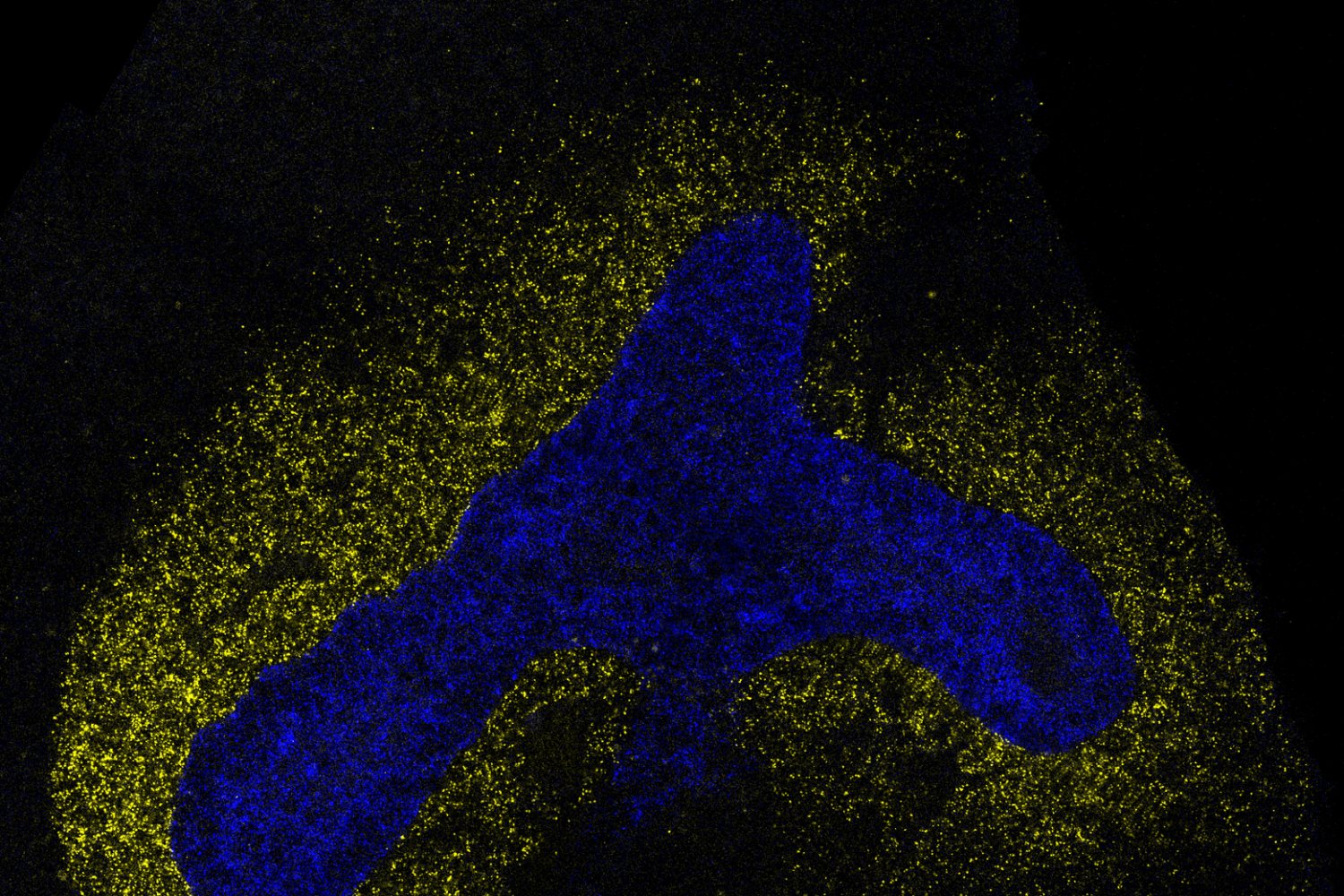
The proposed intravoxel diffusivity probability distribution (IDPD) model enables noninvasive cellular-level microstructure imaging, offering a promising avenue to evaluate living cell functions in vivo.
Xiao-Dong Li, Jing Zhao, Bao-lan Lu et al.· 0 citations
The results revealed a pronounced non-linear increase in scorpionism, with a structural breakpoint around 2011 indicating accelerated expansion, and highlighted the need for integrated, climate-informed public health strategies and predictive modeling approaches to mitigate future risk.
Elania Barros da Silva, J. F. de Oliveira, Amaury de Souza et al.· International journal of bio...· 0 citations
Urban gas pipeline networks generate continuous monitoring time series from pressure sensors, flow meters, valve states, compressor stations, regulator stations, gas concentration sensors, and customer-demand meters. These signals are noisy because of daily demand fluctuation, regulator adjustment, compressor vibration, sensor drift, weather effects, and telemetry packet loss. Leakage, valve malfunction, regulator instability, and abnormal pressure drops may therefore be masked by normal operational noise. This study develops a diffusion-recovered pressure dynamics model for gas pipeline network anomaly detection. The proposed method reconstructs clean pressure-flow trajectories using a conditional diffusion process constrained by pipeline topology and operating states. A disentanglement module separates demand-driven variation, control-operation fluctuation, and fault-related pressure residuals. Experiments are conducted on a gas network dataset containing 1,280 pipeline zones, 5,640 pressure sensors, 930 flow meters, 460 regulator stations, and 31 monitoring variables collected every 30 seconds over 15 months. The dataset contains 864 million timestamped records and 1,960 verified abnormal episodes, including small leakage, regulator oscillation, valve blockage, compressor instability, and abnormal pressure loss. The proposed method shortens median leakage detection delay from 4.6 hours to 47 minutes compared with a Kalman-smoothed recurrent baseline. False dispatch alerts are controlled at 2.0 cases per pipeline zone per quarter. Diffusion recovery reduces normalized pressure reconstruction error from 0.158 to 0.061, and topology-guided denoising restores 23.4 million incomplete pressure windows during evaluation. Full city-level assessment is completed in 13.5 minutes with median scoring latency of 45 ms per zone window. These findings indicate that diffusion-guided signal recovery can improve robust anomaly detection in noisy gas pipeline operation time series.
W. Tan, J. Lim, Arun Kumar· The Journal of Applied Engi...· 0 citations
Chloride diffusion in reinforced concrete is a crucial factor in assessing infrastructure degradation, especially in marine environments where prolonged exposure to chloride-rich seawater accelerates deterioration. However, obtaining accurate time-dependent measurements of chloride concentration in RC presents a significant challenge due to constraints in both available workers and advanced instrumentation; in addition, replicating real-world environmental conditions in a laboratory setting is inherently difficult. The inherent complexity of concrete mixture designs—coupled with the variability of environmental parameters—further complicates the development of a practical model capable of reliably estimating chloride concentration at varying concrete depths. This study develops a data-driven approach to predict chloride concentrations at different depths and chloride diffusion coefficients in marine concrete formulated with common supplementary cementitious materials under varied environmental conditions and exposure durations. Additionally, a transfer learning technique is developed to accurately predict the compressive strength of marine concrete using a limited data set. This approach allows the model to extract broad correlations from a comprehensive concrete database while simultaneously capturing customized patterns specific to marine concrete. By doing so, it enhances the generalizability of existing models while significantly reducing the time required to develop new ones. Furthermore, this study leverages capillary porosity—obtained from thermodynamic simulations—as a critical intermediary for establishing correlations between compressive strength and chloride diffusion coefficients. This feature can be integrated into existing machine learning models for concrete compressive strength to enable prediction of both compressive strength and chloride diffusion coefficients.
Joy Das, Bryan K. Aylas‐Paredes, D. Vo et al.· Journal of materials in civi...· 0 citations
Cannabis use prevalence surpassed tobacco use prevalence as the dominant substance among U.S. adolescents, and patterns resemble tobacco uptake in early stages, underscoring the urgency of recalibrating youth prevention strategies.
Joanne Constantin, J. Jayawardhana· Addictive Behaviours· 0 citations
What if pathology foundation models could do more with less? GigaPath-Flash and GigaTIME-Flash cut computational demands while maintaining strong performance, opening the door to larger studies and broader exploration. The post GigaPath-Flash and GigaTIME-Flash: Toward population-scale discovery with efficient pathology foundation models appeared first on Microsoft Research.