Vehicular edge computing (VEC) is viewed as an important component for vehicle networks due to the prevalence of smart vehicles. However, stringent requirements such as ultralow latency and minimal energy consumption should be achieved for the emerging transmission-and-computation-intensive applications due to the limited communication and computing resources. To address these challenges, this article proposes a multiagent priority-based twin-delayed deep deterministic policy gradient (MAPTD3) approach for the joint optimization of task offloading and power allocation in a VEC system at the millimeter-wave (mmWave) band. First, the joint task offloading and power allocation problem is formulated as a nonconvex mixed-integer nonlinear program (MINLP) with a multiplicative objective function subject to delay and power constraints. Second, the proposed approach integrates two key techniques: a dynamic variance noise (DVN) mechanism for adaptive exploration and prioritized experience replay (PER) to enhance sample efficiency. Finally, it is shown in the simulation results that MAPTD3 consistently outperforms existing benchmarks with 96%–99% optimality ratios (ORs) under various load scenarios.
Zhaobin Li, Qiqi Zhang, Ziqiang Zhang et al.· IEEE Internet of Things Jour...· 0 citations
Passenger demand prediction is essential for intelligent transportation systems (ITSs) and the Internet of Vehicles (IoV), supporting efficient transit management, network bandwidth allocation, onboard content distribution, and edge computing scheduling. With buses increasingly equipped with wireless connectivity, passengers frequently access onboard networks, generating traffic patterns closely tied to their mobility behavior—especially during midday and evening peaks, when spatiotemporal movement and communication demand in vehicular social networks surge. While this data-rich environment provides unprecedented opportunities for network optimization, the inherent complexity of passenger mobility makes high-fidelity modeling a nontrivial task. Specifically, passenger flow at bus stops exhibits both macrolevel spatial clustering and microlevel periodic temporal variations, which existing studies seldom model within a unified framework. To address this gap, we proposed MPGNet, a multipattern and multiperiod transit demand prediction framework. MPGNet leverages deep clustering on stop distance networks and stop-specific attributes to extract IoV-relevant mobility patterns, capturing regional group-level travel dynamics. It then applies temporal variation modeling to project 1-D flow sequences into a 2-D structural space and integrates a spatiotemporal module (STBlock) to learn coupled periodic dependencies across stops. Extensive experiments on a real-world bus dataset demonstrate that MPGNet achieves strong performance in both short- and long-term forecasting, underscoring its practical value for IoV-based network traffic management and its potential to enhance the integration of IoV technologies with intelligent public transportation systems. The code is available at https://github.com/switchsky/MPGNet
Xiangjie Kong, Hao Tan, Zhehui Shen et al.· IEEE Internet of Things Jour...· 0 citations
The Intelligent Internet of Things (IIoT) is transitioning from a data-centric to a human-centric paradigm, creating an urgent demand for reliable human–machine interaction. While transformer-based brain foundation models have emerged to decode human intentions, most existing studies focus on improving performance for individual tasks on a single device, and the deployment in real-world IIoT scenarios remains largely unexplored. Specifically, there are three primary challenges for deployment in IIoT: deployment on resource-constrained edge devices, efficient cloud–edge collaborative scheduling, and online update for new users. To address these challenges, this study introduces the edge brain computing (EBC) framework. The framework consists of three key components: 1) a hierarchical cloud–edge split decoding architecture; 2) a game theory-based dynamic self-supervised distillation strategy; and 3) an online updating mechanism to meet the requirements for deployment in IIoT. The experimental results demonstrate that EBC achieves a 97.88% reduction in model parameters and outperforms centralized deployment strategies in inference latency, power consumption, and communication cost, providing a robust pathway for deployment of brain foundation models in human-centric IIoT.
Ang Li, Zhenyu Wang, Tianheng Xu et al.· IEEE Internet of Things Jour...· 0 citations
The consumer Internet of Things (CIoT) enables large-scale sensing and data-driven services by connecting billions of devices. However, the privacy-preserving data aggregation in mobile edge computing (MEC)-enabled CIoT remains challenging when the edge aggregator is malicious, rather than simply honest-but-curious. Specifically, a malicious MEC server can selectively drop user reports or tamper with ciphertexts, undermining data integrity and ownership. To address this, we propose a verifiable and fault-tolerant privacy-preserving aggregation scheme. By substituting computationally intensive homomorphic encryption (HE) with a double-masking mechanism and integrating bilinear pairing-based accumulators, the proposed scheme provides resilience against tampering and deletion attacks while ensuring data privacy. The design supports user dropouts within a single reporting round without requiring interactive recovery, enabling each device to locally audit the inclusion of the corresponding ciphertext via a compact membership witness. Theoretical analysis and experimental results demonstrate that the proposed scheme reduces communication overhead and payload size. It satisfies the security requirements of CIoT ecosystems and offers a practical tradeoff between security and efficiency for latency-sensitive deployments.
Jianhong Zhang, Miao Xue, Xinyu Bai· IEEE Internet of Things Jour...· 0 citations
Reach audiences
Advertise in front of researchers, engineers, and readers.
The growing demand for efficient deep-learning inference on edge platforms requires hardware that is both energy-efficient and practically implementable. This work presents a 16-Kb all-digital static random-access memory (SRAM)-based compute-in-memory (CIM) macro for low-bit CNN inference, featuring a hierarchical adder-tree-based accumulation architecture. The design integrates a nor-enabled SRAM compute cell, column-wise rearrangement network, sparsity-aware compression, and multistage hierarchical accumulation within a 64-bank $64 \,\, \times \,\, 4$ architecture, enabling scalable bit-serial processing and utilization-aware mapping. Implemented in 65-nm CMOS, the macro achieves 8.19 TOPS effective throughput at 1.0 V and a peak energy efficiency of 586 TOPS/W at 0.9 V under practical operating conditions. Hardware-compatible CNN mapping is demonstrated using LeNet-5, VGG-8, and ResNet-8. The design achieves 98.1% and 72.3% accuracy on MNIST and CIFAR-10, respectively, with 1-bit activations and 4-bit weights, while 4-bit configurations on deeper networks show only 3%–4% degradation from FP32 baselines. CNN inference is evaluated using a hardware-compatible post-training quantization (PTQ) flow without retraining. These results demonstrate that the proposed SRAM-CIM architecture provides an efficient and scalable accumulation solution with a practical tradeoff among throughput, energy efficiency, and implementability for edge-oriented deep neural network (DNN) inference.
Vikash Vishwakarma, Gopal R. Raut, Amit Mittal et al.· IEEE Transactions on Very La...· 0 citations
Edge computing has gradually become a critical means of addressing the latency and bandwidth bottlenecks inherent in cloud computing. By deploying computing and storage resources at network edge nodes, edge computing is capable of providing low-latency and high-bandwidth services to Internet of Things (IoT) devices. To handle heterogeneous computing tasks at edge nodes, the corresponding services should be preplaced in advance, including image installation and data caching. In this study, we focus on the edge computing system that considers service placement. Taking into full account the latency and energy consumption incurred during task offloading and execution, as well as the additional cost introduced by service deployment, the joint optimization of service placement and task offloading decisions becomes exceedingly complex. Based on deep reinforcement learning (DRL), we propose a novel method that integrates double deep Q-network (DQN), dueling networks, and prioritized experience replay (PER) to make service placement and task offloading decisions, aiming to minimize the long-term weighted sum of task latency and energy consumption. Extensive simulation experiments demonstrate that our proposed method achieves stable convergence and outperforms other baseline methods.
B. Su, Ren-Cong Lin, Zhenxing Li et al.· IEEE Internet of Things Jour...· 0 citations
As computing demands continue to grow, a single server is no longer sufficient to meet user requirements, leading to increasing interest in multiserver collaborative edge computing. However, load imbalance is a prevalent issue in multiserver edge computing systems, resulting in inefficient resource utilization and degraded service quality. To address this issue, a multiserver collaborative edge computing architecture is established, and a joint optimization problem is formulated to minimize task latency and energy consumption under latency constraints. Considering the dynamic nature of task arrivals and queue evolution, the problem is further modeled as a Markov Decision Process (MDP). To characterize more accurately the dynamic evolution of computation queue states in the MDP during task transmission, an arrival order-based queue state (AOBQS) model is introduced to capture the impact of transmission delay on task execution order. Furthermore, as transmission delay alters the task execution order in the computation queue and thus invalidates the system’s Markov property, the task waiting time and a virtual queue are introduced to reconstruct the queue state. Based on the reconstructed state representation, a queue-aware twin-delayed deep deterministic policy gradient (QATD3) algorithm is developed to solve the task scheduling and resource allocation problem, thereby achieving load balancing in multiserver collaborative edge computing systems. Extensive simulation results demonstrate that the proposed method effectively achieves joint optimization of task latency and energy consumption, significantly improving overall system performance. Compared with baseline algorithms, the proposed QATD3 reduces average task delay by 24.53%, reduces normalized energy consumption by 16.06%, and improves average reward by 5.27%.
Jingzhe Wang, Si-yu Lin, Qingqing Pan et al.· IEEE Internet of Things Jour...· 0 citations
The rapid growth of cloud-edge collaborative computing and its increasing electricity demand are forging strong interdependencies between computing and power markets. This paper proposes a market-driven joint trading strategy that coordinates computing services and electricity procurement within a cloud-edge collaborative system. To capture heterogeneous operational characteristics, we introduce a differentiated modeling paradigm, combining a task-queuing model for the cloud data center with an empirically-grounded nonlinear delay model for edge servers to characterize its performance saturation. These models are then embedded in a unified trading framework that explicitly characterizes the bidirectional interaction between computing and electricity markets, where the cloud acts as a price-making participant. The resulting large-scale, non-convex problem is transformed into a tractable mixed-integer second-order cone program by applying targeted convexification techniques—specifically, second-order cone relaxation for nonlinear delay constraints and special ordered sets of type 2 for bilinear market-clearing terms. Numerical case studies demonstrate that the differentiated modeling paradigm reduces the overall operational cost of the test system by 16.3%, including both electricity and delay costs. Furthermore, the solution methodology ensures high scalability and computational efficiency for large-scale instances while maintaining an optimality gap below 0.3%.
Lirong Deng, Yi Sun, Yang Fu· IEEE Transactions on Smart G...· 1 citation
Federated learning (FL) is a distributed machine learning (ML) paradigm that has been widely used to train ML models on massive amounts of data in edge computing (EC) environments. However, FL faces significant challenges from device heterogeneity, edge dynamics, and limited communication resources. To address these challenges, we propose a communication-efficient semi-asynchronous FL (CSFL) framework. First, the work introduces a threshold adaptive gradient compression (TAGC) algorithm, which can reduce redundant communication rounds and accelerate model convergence by appropriately increasing local computation. Second, we propose an adaptive weight adjustment mechanism (AWAM), which employs a staleness-based decay function and, based on varying data distributions, sets different weight coefficients to mitigate the impact of statistical and system heterogeneity. To tackle edge dynamics, a dynamic node selection algorithm based on deep reinforcement learning (DRL) is proposed. This algorithm enables adaptive adjustment of the number of local models participating in global model aggregation according to environmental changes. Finally, we analyze the convergence bound of CSFL theoretically and conduct extensive experiments on classical datasets to demonstrate the effectiveness of our algorithm. Compared with baseline algorithms, the experimental results indicate that CSFL can effectively decrease bandwidth resource consumption and total training time during the training of edge intelligence models across various datasets and data distributions.
Junyi Deng, Jiahua Liu, Yanheng Liu et al.· IEEE Internet of Things Jour...· 0 citations
A novel AI-driven distributed NIDS that considers the computing capabilities of resource-constrained nodes while enabling efficient learning in distributed environments is proposed and can achieve accuracy comparable to a centralized model while reducing local computational overhead and maintaining stable convergence under realistic data distribution scenarios.
Cheolhee Park, Kyungmin Park, Jihyeon Song et al.· IEEE Internet of Things Jour...· 0 citations
This article introduces KirchhoffNet, a novel class of neural network models inspired by the principles of analog electronic circuitry, specifically Kirchhoff’s laws. KirchhoffNet operates as an analog circuit, where the network input is represented by initial node voltages, and the output corresponds to the node voltages at a specific time. The dynamics of the node voltages are governed by learnable parameters on the edges, and the evolution of these voltages follows a system of ordinary differential equations (ODEs). Despite the absence of traditional neural network components such as convolutional layers, KirchhoffNet achieves outstanding performance across a wide range of machine-learning tasks. We further demonstrate that KirchhoffNet is capable of computing diffusion models, making it a promising candidate for accelerating modern generative AI applications. Most notably, KirchhoffNet can be implemented as a high-speed & low-power analog integrated circuit, which introduces a compelling advantage: irrespective of the number of parameters in the network, its on-chip forward calculation can always be completed within a short time. This property makes KirchhoffNet a highly attractive and scalable paradigm for implementing large-scale neural networks, opening new avenues in the realm of analog neural networks for artificial intelligence (AI).
Su Zheng, Zhengqi Gao, Fan-Keng Sun et al.· IEEE Transactions on Compute...· 0 citations
The analysis shows that services with stringent latency deadlines and larger computing demands are more sensitive to temporal variabilities, making local execution the preferred option, and that effective service offloading must jointly consider service requirements and sources of temporal variability to guarantee deterministic service levels.
K. Aghababaiyan, Javier Gozálvez, B. Coll-Perales· 0 citations
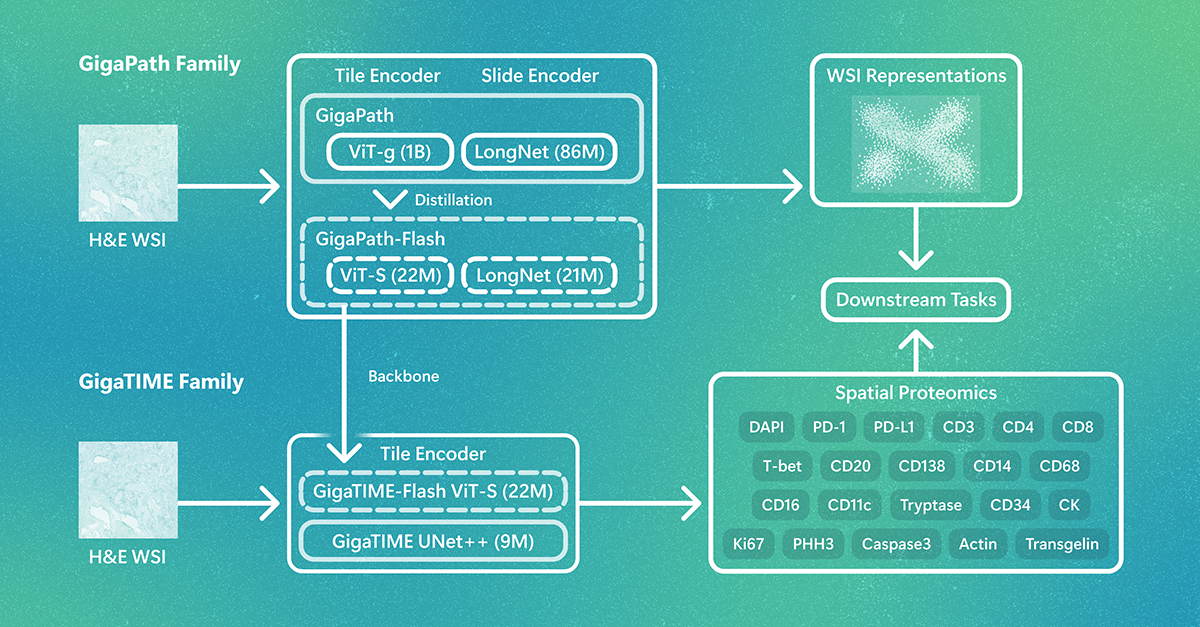
What if pathology foundation models could do more with less? GigaPath-Flash and GigaTIME-Flash cut computational demands while maintaining strong performance, opening the door to larger studies and broader exploration. The post GigaPath-Flash and GigaTIME-Flash: Toward population-scale discovery with efficient pathology foundation models appeared first on Microsoft Research.
MIT News · Artificial Intelligence· news.mit.eduAug 31, 2026
With millions of users across the world, Julia has been used to conduct cutting-edge research and to design new drugs, jet engines, heat pumps, and more.
MIT News · Artificial Intelligence· news.mit.eduAug 27, 2026
A new machine-learning framework aims to improve the success rate of computational protein design while moving away from results that reproduce sequences found in nature.