A novel AI-driven distributed NIDS that considers the computing capabilities of resource-constrained nodes while enabling efficient learning in distributed environments is proposed and can achieve accuracy comparable to a centralized model while reducing local computational overhead and maintaining stable convergence under realistic data distribution scenarios.
Cheolhee Park, Kyungmin Park, Jihyeon Song et al.· IEEE Internet of Things Jour...· 0 citations
This article introduces KirchhoffNet, a novel class of neural network models inspired by the principles of analog electronic circuitry, specifically Kirchhoff’s laws. KirchhoffNet operates as an analog circuit, where the network input is represented by initial node voltages, and the output corresponds to the node voltages at a specific time. The dynamics of the node voltages are governed by learnable parameters on the edges, and the evolution of these voltages follows a system of ordinary differential equations (ODEs). Despite the absence of traditional neural network components such as convolutional layers, KirchhoffNet achieves outstanding performance across a wide range of machine-learning tasks. We further demonstrate that KirchhoffNet is capable of computing diffusion models, making it a promising candidate for accelerating modern generative AI applications. Most notably, KirchhoffNet can be implemented as a high-speed & low-power analog integrated circuit, which introduces a compelling advantage: irrespective of the number of parameters in the network, its on-chip forward calculation can always be completed within a short time. This property makes KirchhoffNet a highly attractive and scalable paradigm for implementing large-scale neural networks, opening new avenues in the realm of analog neural networks for artificial intelligence (AI).
Su Zheng, Zhengqi Gao, Fan-Keng Sun et al.· IEEE Transactions on Compute...· 0 citations
The analysis shows that services with stringent latency deadlines and larger computing demands are more sensitive to temporal variabilities, making local execution the preferred option, and that effective service offloading must jointly consider service requirements and sources of temporal variability to guarantee deterministic service levels.
K. Aghababaiyan, Javier Gozálvez, B. Coll-Perales· 0 citations
This paper presents MetaSieve, a metapath selection layer that determines which metapaths to retain and which to prune, and shows that MetaSieve consistently reduces per-epoch training time by large margins while maintaining and often improving accuracy.
Fahim Shahriar Khan, Ashraf Aboulnaga· 0 citations
Reach audiences
Advertise in front of researchers, engineers, and readers.
This study investigated the neural and molecular bases of individual differences in adolescent MDD patients by integrating a novel edge-centric brain connectome with transcriptomic and neurotransmitter profiles, and identified two robust adolescent MDD subtypes.
Yingbo Shao, Baolin Wu, Xun Zhang et al.· European Child and Adolescen...· 0 citations
This work develops a multi-agent reinforcement learning (MARL) algorithm, termed Multi-Agent Proximal Policy Optimization with Dirichlet Modeling (MAPPO-DM), which follows the centralized-training-and-decentralized-execution framework and models continuous traffic-splitting actions using a Dirichlet distribution.
Zhenyu Zhao, Tiankui Zhang, Xiaoxia Xu et al.· 0 citations
This work shows that one can extract LLM assets during inference, namely embeddings, attention, and quantized MLP weights, activations, and other inference states, from localized memories and compute subcircuits from localized memories and compute subcircuits by deploying laser voltage imaging.
Dev M. Mehta, Lily Dukette, William Folan et al.· 0 citations
A real-time status monitoring and traceability system based on the edge nodes of the Internet of Things is constructed, providing a replicable technical paradigm for the digital protection of intangible cultural heritage processes.
MHA-CSP achieves robust structured reasoning via synthetic distance rectification---powered by Mahalanobis-based attention---and efficient information bypass inherited from the CSP backbone, highlighting the effectiveness of complex-valued state propagation with collaborative multi-head rectification in capturing symbolic structures.
The notion of a pseudo e-net is introduced, which decomposes the surface into e-thin cylinders together with a Delaunay triangulation over an e-net of the remaining thick part of the hyperbolic surface.
V. Delecroix, Vincent Despré, Camille Lanuel et al.· 3 citations
The design is ~82x faster than MedSOM, the CUDA implementation behind the authors' earlier MEDLINE atlases and, at 128x128, 621x faster than the best available multicore-CPU library.
The Sparse-Activation-ReLU (SAR) layer is proposed, a single-step alternative that promotes activation sparsity without surrogate-gradient training while remaining compatible with event-based computing and is a step towards energy-efficient virtual sensing.
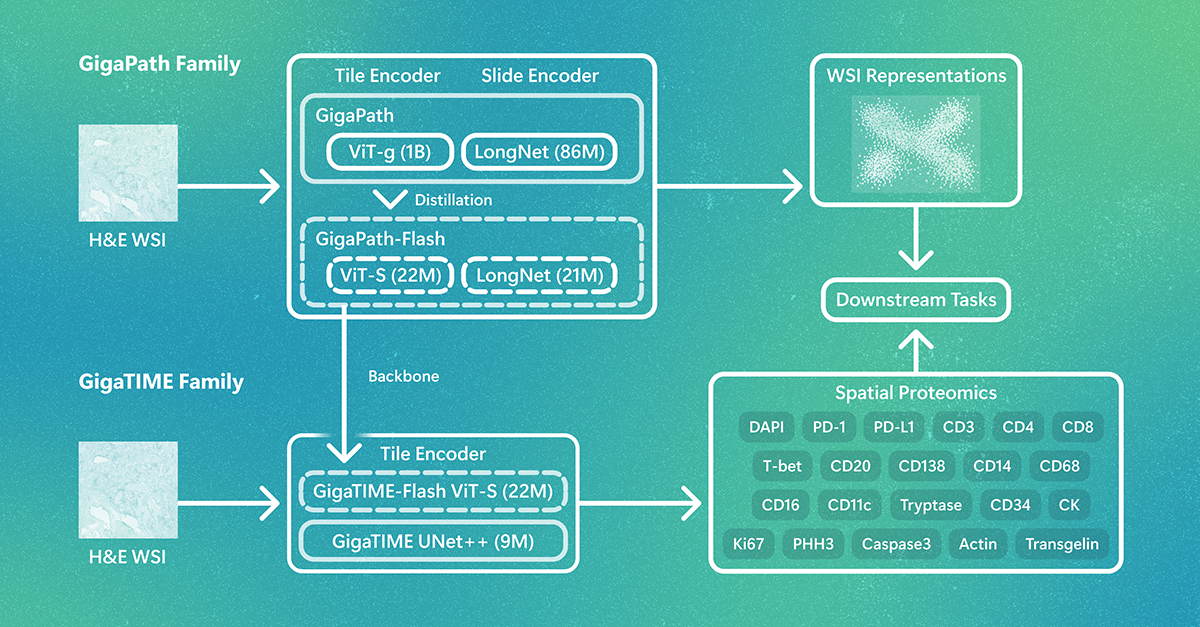
What if pathology foundation models could do more with less? GigaPath-Flash and GigaTIME-Flash cut computational demands while maintaining strong performance, opening the door to larger studies and broader exploration. The post GigaPath-Flash and GigaTIME-Flash: Toward population-scale discovery with efficient pathology foundation models appeared first on Microsoft Research.
MIT News · Artificial Intelligence· news.mit.eduAug 31, 2026
With millions of users across the world, Julia has been used to conduct cutting-edge research and to design new drugs, jet engines, heat pumps, and more.
MIT News · Artificial Intelligence· news.mit.eduAug 27, 2026
A new machine-learning framework aims to improve the success rate of computational protein design while moving away from results that reproduce sequences found in nature.