Breast cancer continues to be a major contributor to global cancer mortality, driven by pronounced molecular diversity and the frequent emergence of drug resistance, which together highlight the pressing demand for innovative treatment approaches. This review offers a thorough appraisal of CRISPR-Cas9-based functional...
Shiva Fallahianshafiei, Elaheh Ferdosi-Shahandashti, Mohammad Reza Ataherian et al.· Discover Oncology· 0 citations
Recent advances at the interface of nanotechnology, epigenetics, and neurobiology have created new opportunities to address the blood–brain barrier (BBB), a major challenge in the treatment of central nervous system disorders. Two complementary strategies are gaining increasing attention: the epigenetic modulation of B...
R. Duarte, Anielle Christine Almeida Silva· Next Nanotechnology· 0 citations
The guide RNA is a drug substance or a critical component with its own manufacturing requirement. It is not just a reagent and should not be treated as such. Abi Pinchbeck, Commissioning Editor, Cell & Gene Therapy Insights, speaks with Kok-Seong Lim, Principal, Eight Crest Strategies, about the analytical characteriza...
K. Lim· Cell and Gene Therapy Insigh...· 0 citations
Reach audiences
Advertise in front of researchers, engineers, and readers.
Recent developments in the field of xenotransplantation have attracted considerable attention and constitute a major turning point for this scientific discipline. These recent investigations illustrate the major progress that has taken place in the last decade. In particular, advances in genetic-engineering techniques...
Emanuele Cozzi, D. K. C. Cooper· Transplant International· 0 citations
Agrobacterium
‐mediated transformation followed by regeneration without antibiotics‐dependent selection offers a a straightforward and effective approach for generating transgene‐free edited plants in grapevine, and the use of CRISPR/LbCas12a enables the simultaneous editing of multiple genes, thereby facilitating...
C. Ren, Yan-Ping Lin, Chen-Cong Liu et al.· Plant, Cell and Environment· 0 citations
Introduction Plants of the genus Woodwardia have a long history of medicinal use in China. Among these plants, Woodwardia japonica, Woodwardia unigemmata, and Woodwardia prolifera are the primary source species of Guan Zhong, a traditional Chinese medicine. However, because of morphological similarity among their dried...
Yu-Tong Huang, Li Feng, Yan-Ping Xing et al.· Frontiers in Plant Science· 0 citations
Genome editing is becoming an important tool for crop improvement by enabling precise modification of genetic variation. CRISPR-Cas technologies have expanded beyond nuclease-induced mutations to include base and prime editing, transcriptional and epigenetic regulation, multiplex editing, organelle editing and targeted...
The role of molecular markers in accelerating the development of climate-smart rice, with emphasis on marker-assisted selection, marker-assisted backcrossing, quantitative trait locus mapping, and gene pyramiding is synthesised.
Christina Joseph, Veena Vighneswaran, Anu J. Prakash· Journal of Advances in Biolo...· 0 citations
Porcine deltacoronavirus (PDCoV) is a globally circulating coronavirus of swine that causes severe enteric disease and mortality in neonatal piglets. Its broad host range and zoonotic potential raises concerns about continued spillover into human populations. However, the host factors that govern PDCoV infection remain...
Thamonpan Laocharoensuk, Patricia A. Boley, Rosemary A. Blake et al.· bioRxiv· 0 citations
Since ancient times, human societies have relied on plants not only as a source of food but also for flavors, remedies, and a variety of other purposes. Historical accounts from various civilizations such as the Egyptians, Romans, and Chinese clearly documented the diverse applications of medicinal and aromatic plants...
MATRIN3 (MATR3) is a broadly expressed nuclear RNA-binding protein. However, the mechanisms by which MATR3 maintains human cellular health remain poorly understood. In this study, we employed gene editing to model MATR3 deficiency in human induced pluripotent stem cells (iPSCs) and the HAP1 haploid cell line. To invest...
Zohirul Islam, A. Polash, Colin L. Sweeney et al.· Proceedings of the National...· 0 citations
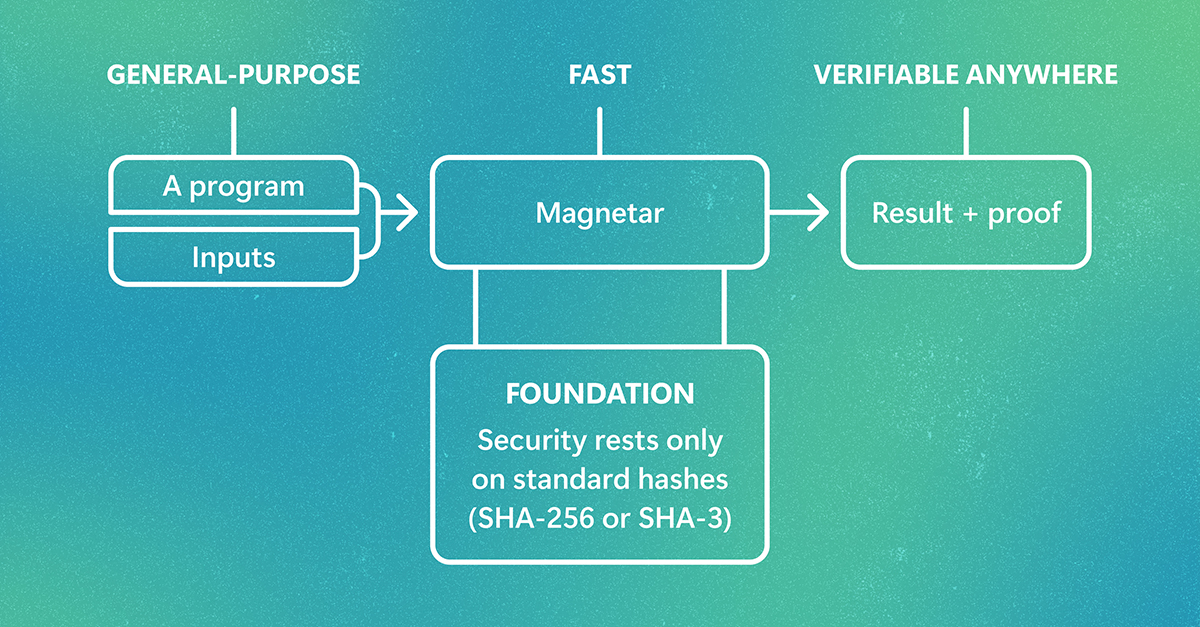
Zero-knowledge proofs can verify computing results without rerunning workloads or exposing sensitive data. Magnetar helps bring them into the mainstream with support for standard programming languages, major speed gains, and quantum-resistant security. The post Proof-based general-purpose computing with Magnetar appeared first on Microsoft Research.