Multiple Sclerosis (MS) is a chronic inflammatory and neurodegenerative disease of the central nervous system affecting approximately 3.1 million people worldwide and predominantly women. The major genetic risk factor for the disease is the Human Leukocyte Antigen (HLA) locus, while environmental and epigenetic factors...
Given the growing emphasis on the efficient application of CRISPR/Cas9 in plant genome editing, there is a need for methodologies that enhance targeted mutagenesis efficiency. In the present study, we utilized stable transgenic maize callus tissues harboring active CRISPR/Cas9 vector systems targeting either the
abn...
B. Nagy, Aysha Jameel, G. Horváth et al.· Frontiers in Genome Editing· 0 citations
Promoters are core cis-regulatory elements that determine gene expression levels and dynamic responses, and their quantitative engineering directly dictates the performance of synthetic biological systems such as whole-cell biosensors. However, the transcriptional output of complex inducible systems, exemplified by σ...
Yu-Xi Xu, Ming-Xuan Song, Wen-Long Xing et al.· Frontiers in Microbiology· 0 citations
Cadmium (Cd) is an emerging environmental risk factor for cognitive decline and Alzheimer’s disease, and few interventions limit its effects on the brain. Akkermansia muciniphila, a human gut commensal, is neuroprotective through mechanisms that remain unclear. Building on our finding that A. muciniphila prevented Cd-i...
Zachary Kowash, J. Lim, Andrew J. Annalora et al.· bioRxiv· 0 citations
Reach audiences
Advertise in front of researchers, engineers, and readers.
It was found that the regulatory documentation of the Russian Federation and the EAEU lacks criteria for applying the platform approach to mRNA vaccines and gene therapy products, which hinders the accelerated introduction of innovative personalized medicinal products into clinical practice.
N. S. Pokrovsky, E. Melnikova, V. Merkulov· Biological Products. Prevent...· 0 citations
Advances in β-thalassaemia treatment over the past decade are discussed, including newly approved and late-stage therapies and their future implications, and remaining research gaps are highlighted.
K. Musallam, Sujit Sheth, Franco Locatelli et al.· The Lancet Haematology· 2 citations
Bu bölüm, kromozomların hücresel ve mikroskobik düzeyde incelenmesini konu alan sitogenetik bilim dalını ele almaktadır. Hücre döngüsü ve kromozom organizasyonundan başlanarak, karyotipleme, kromozom bantlama teknikleri (G-, Q-, R-, C-bantlama) ve floresan in situ hibridizasyon (FISH) gibi temel sitogenetik yöntemler a...
Hasan Basri İla, Rumeysa Mese· Akademisyen Kitabevi eBooks· 0 citations
Tumor-associated macrophages (TAMs) integrate multiple microenvironmental signals, including lectin-mediated recognition of tumor-associated glycans. Although several myeloid lectins have been implicated in tumor–macrophage interactions, their contributions to immunosuppressive TAM phenotypes remain poorly defined. We...
Gonçalo Trindade, M. Pinto, G. Domenici et al.· bioRxiv· 0 citations
As a powerful gene-editing tool, the clustered regularly interspaced short palindromic repeats (CRISPR)/CRISPR-associated (Cas) system features simple construction, precise targeting, and higher editing efficiency, bringing prospects of radical cures for numerous critical illnesses at the genomic level. To date, ex v...
"Photoperiod_Editing_GH24-25_Analysis.Rmd" is an R markdown file with R script to analyze trait data from greenhouse trial."qRT-PCR_Chapter2.Rmd" is an R markdown file with R script to analyze gene expression data."Photoperiod Editing Field 2025 Analysis NatComms.Rmd" is an R markdown file with R script to analyze trai...
James Brendan Holland, Destiny Tyson· Figshare· 0 citations
Parasitic plants are important agricultural pests and fascinating examples of plant evolution. Cuscuta campestris is able to locate other plants, coil around them, and produce haustoria that form vascular connections with a host plant. This obligate parasite feeds on the host and exchanges molecules that function in si...
Hope A. Gruszewski, Matilda Cashman, Joseph S. Taylor et al.· Plant Methods· 0 citations
Introduction Sporadic colorectal cancers (CRCs) form following initiating APC mutations, inducing constitutive β-catenin/TCF signaling. Similarly, the guanylyl cyclase C (GUCY2C) tumor suppressor axis is universally silenced in CRC. While the GUCY2C receptor is retained, loss of its paracrine hormones guanylin (GUCA2A)...
A. Entezari, Adi Caspi, Jasmine R. Alvarez et al.· bioRxiv· 0 citations
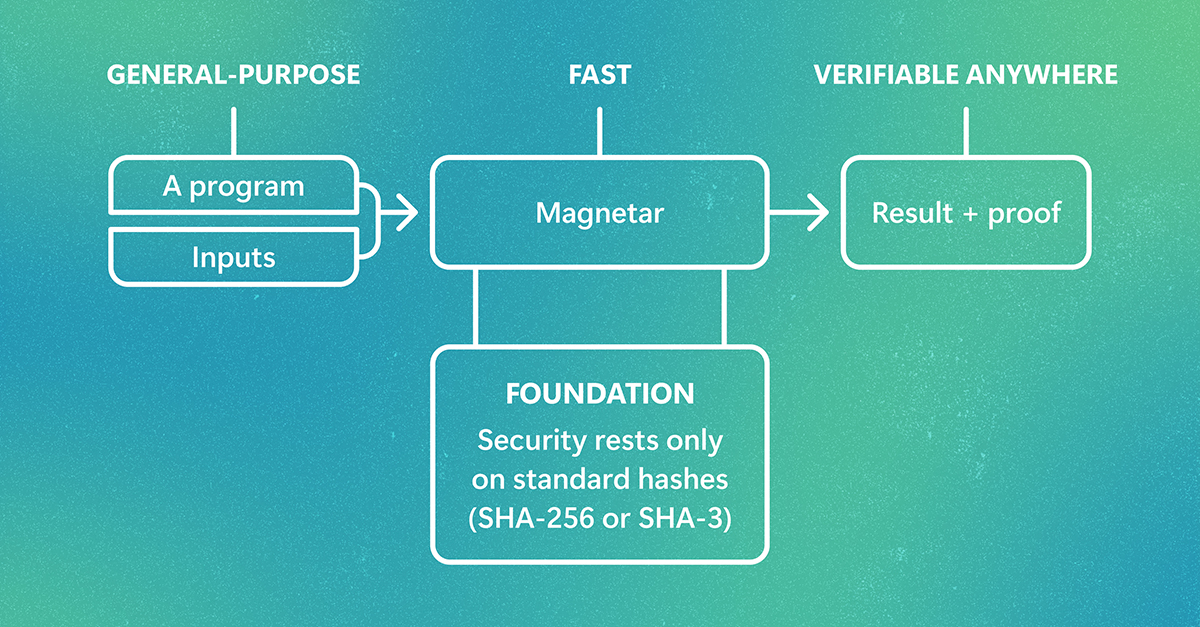
Zero-knowledge proofs can verify computing results without rerunning workloads or exposing sensitive data. Magnetar helps bring them into the mainstream with support for standard programming languages, major speed gains, and quantum-resistant security. The post Proof-based general-purpose computing with Magnetar appeared first on Microsoft Research.