Designing polymeric membranes for diverse gas-separation applications remains a critical challenge. Machine learning (ML) models can significantly accelerate this effort by capturing complex relationships between polymer-gas pairs and enabling permeability prediction over an extended chemical space of gases and polymer...
Krishnendu Mukherjee, Zidan Zhang, Mohammed Alshammasi et al.· ChemRxiv· 0 citations
Traditional network economics relying on finite graphs and spectral linearizations fails to scale in large-scale heterogeneous limits, while computational economics faces severe curses of dimensionality and approximation disconnects. This paper establishes Non-Commutative Rough Network Economics and Computational Dynam...
Seonggil Lee· Zenodo (CERN European Organi...· 0 citations
Datasets reporting the comparisons shown in Response to comments on "SpatialDG: a novel spatial domain identification method for spatially resolved transcriptomics data based on dual-graph neural network"
Code, simulator, analysis scripts and raw outputs for the manuscript 'Niche-Aware Heterogeneous Graph Neural Networks with Counterfactual Perturbation for Discovering Cell-State-Specific Druggable Targets in the Tumor Microenvironment' (Computers in Biology and Medicine, submitted). Includes the simulation benchmark, t...
Dokyun Na, Pradnya N. Ghorpade· Zenodo (CERN European Organi...· 0 citations
Abstract Hydrodynamic simulations of multi-phase flow in porous media are essential for oil production forecasting but require significant computational resources. Traditional approaches lead to high memory and time demands, restricting multi- scenario analysis. We propose a learnable coarsening algorithm based on grap...
Viacheslav Naumov, Nikolay B. Yavich, Alexander A. Ryabov et al.· Machine Learning Science and...· 0 citations
Screening ionic liquids (ILs) is a ranking problem before it is a prediction problem: among millions of cation–anion combinations, what matters is which candidates reach the laboratory, not the value assigned to each. Models are nevertheless compared almost exclusively on absolute error. We benchmark six physics-based...
M. L. Alcantara, E. T. Souza Jr., J. G. Rittig et al.· Zenodo (CERN European Organi...· 0 citations
Biomedical Knowledge Graphs (KGs) such as PrimeKG and Hetionet offer vast structured repositories for clinical discovery; however, conventional Graph Neural Networks (GNNs) suffer from black-box opacity, while standard Retrieval-Augmented Generation (RAG) paradigms face catastrophic hallucinations and biological implau...
Ali Asghari, Abbas Barzegarinezhad· Preprints.org· 0 citations
We propose Fractal Information AI (FIAI), a graph-based architecture for adaptive learning in which knowledge is represented as recursively organized information structures and learning actions are prioritized by validated information gain, uncertainty reduction, network propagation, and decision relevance. The framewo...
Darko Kantoci· Zenodo (CERN European Organi...· 0 citations
We introduce Fractal Information AI, a proof-of-concept framework for structured knowledge representation and selective multi-agent learning. Knowledge is represented by recursively nested tree structures whose nodes carry uncertainty, entropy-like information measures, and a model-defined provability score. A Learning...
Darko Kantoci· Zenodo (CERN European Organi...· 0 citations
The rapid advancement of semiconductor technology demands electromagnetic (EM) solvers that are both accurate and computationally efficient, while artificial intelligence (AI) offers new opportunities for accelerating physics-based modeling and optimization. This work develops robust numerical solvers, physics-informed...
Abstract—The relentless exponential scaling of foundation models and transformer architectures has pushed conventional silicon complementary metal-oxide-semiconductor (CMOS) digital accelerators (GPUs, TPUs) toward fundamental thermodynamic and interconnect boundaries. Joule heating, resistance-capacitance (RC) interco...
Dhruv Agarwal, Surendra Singh Shekhawat, Dr. Vishal Shrivastava et al.· Zenodo (CERN European Organi...· 0 citations
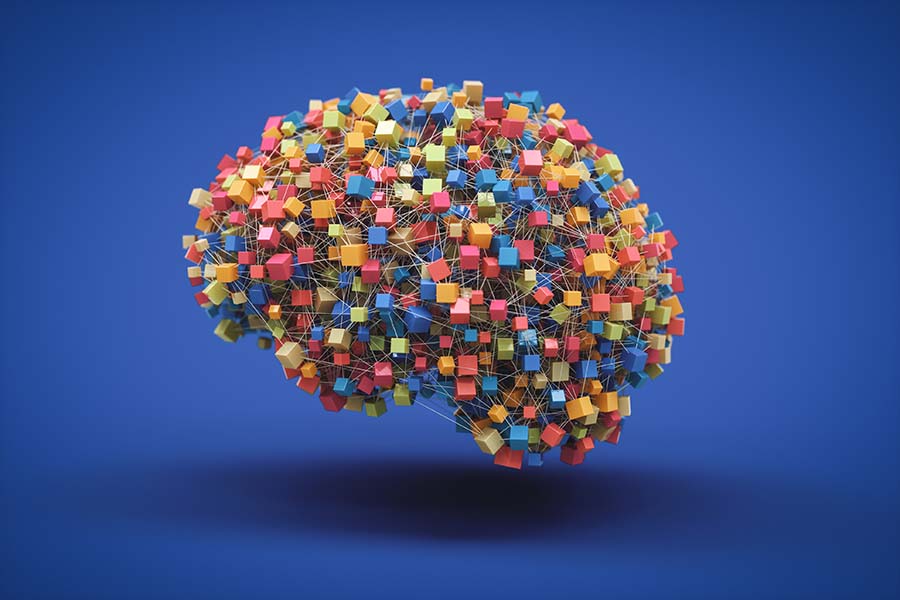
Machine-learning networks can learn without detailed instructions from a designer. Those that do may offer insight into how the brain reorganizes itself during learning.
MIT News · Artificial Intelligence· news.mit.eduJul 15, 2026
Assistant Professor Pat Pataranutaporn describes a new interface that lets everyday users glimpse inside an AI's neural network before their chatbot ever says a word.
Microsoft Research Blog· microsoft.comJul 13, 2026
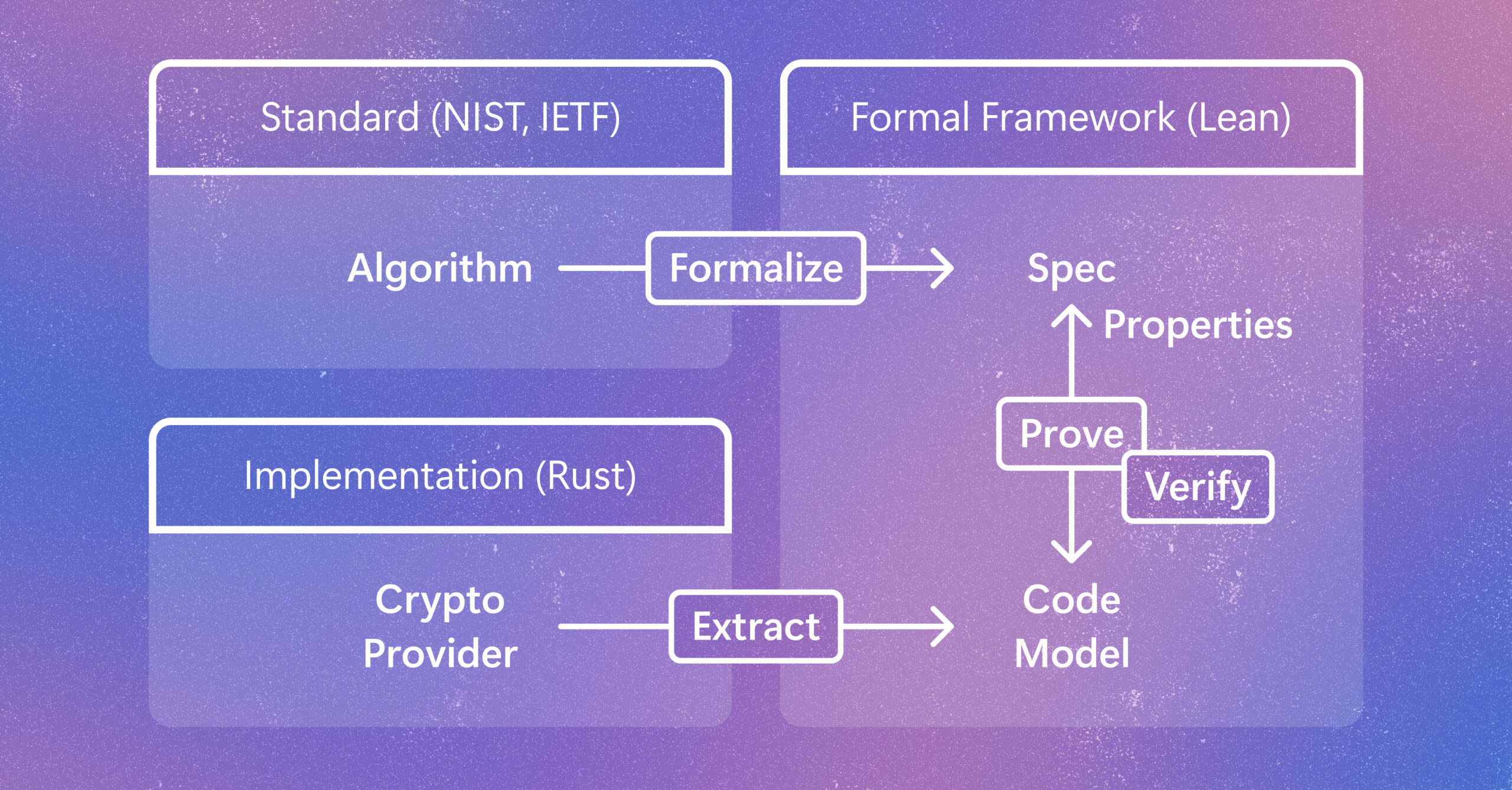
Cryptographic code supports vital protections in modern computing systems. Learn how a new method helps verify code as developers write it while preserving speed and adaptability as it gets implemented and evolves. The post Verifying Rust cryptography in SymCrypt, from standards to code appeared first on Microsoft Research.
MIT News · Artificial Intelligence· news.mit.eduJul 6, 2026
PhD student Rachel Sava, winner of the Envisioning the Future of Computing Prize, explores transformative improvements and dystopian risks of neural technology.