A multi-species model for the acute and chronic aquatic toxicity of organic chemicals, developed for the NORMAN network. It predicts toxicity values (log10 µg/L) for 121 species-and-endpoint combinations (heads), of which 82 are released for use (59 acute: LC50/EC50; 23 chronic: NOEC/EC10), covering fish, crustaceans,...
Peter C. von der Ohe· Zenodo (CERN European Organi...· 0 citations
We derive the governing equation of neural cycle topology (NCT) computing from Maxwell’s equations and set what follows from it against measurements of a 362-cavity lattice read by a pickup on every cavity. In the magnetoquasistatic limit, charge conservation confines the conductor currents to the cycle space of the ne...
Eric Johnston· Zenodo (CERN European Organi...· 0 citations
Functional magnetic resonance imaging (fMRI) provides whole-brain measurements that can be converted into functional connectivity networks for quantitative analysis. Graph-based methods represent brain regions as nodes and statistical relationships among regional blood oxygen level-dependent signals as edges in this re...
Teng-Yue Pan· Theoretical and Natural Scie...· 0 citations
Reach audiences
Advertise in front of researchers, engineers, and readers.
Supporting dataset for a nine-ligand EDC/NHS–gallic acid type I collagen crosslinking study that maps non-covalent binding with SMINA/Vinardo docking and evaluates a post-hoc HeteroGNN surrogate under leave-one-ligand-out (LOLO) hold-out. Contents. (i) Collagen docking score tables (~6,156 poses across 76 boxes × 3 pH...
Nattapak Darumas, Supaporn Klabklaydee, Noppakorn Subsa-ard et al.· Zenodo (CERN European Organi...· 0 citations
The growing interest in k -mer-based methods across bioinformatics calls for compact k -mer set representations that can be optimized for specific downstream applications. Recently, masked superstrings (MS) have provided such flexibility by moving beyond de Bruijn graph paths to general k -mer superstrings equipped wit...
Ján Plachý, Ondřej Sladký, Karel BŘinda et al.· Journal of Computational Bio...· 0 citations
The growing demand for personalized design has driven the development of advanced models for visual design element association and style transfer. However, existing methods struggle to capture complex relationships among design elements and maintain aesthetic coherence during style transfer. The research proposes a nov...
Lin-Juan Gao· Discover Internet of Things· 0 citations
Abstract Differentiating pulmonary arterial hypertension (PAH) from pulmonary hypertension associated with left heart disease (PH-LHD) is clinically important because management differs substantially, but definitive classification requires invasive haemodynamic assessment together with clinical evaluation. We retrospec...
Yingran Shen, Jie Mi, Xiaogang Zhao et al.· npj Digital Medicine· 0 citations
Objective This study combined independent component analysis (ICA)-derived dynamic functional connectivity (dFNC) with dynamic graph theory analysis methods to analyze the changes in dFNC and dynamic graph theoretic indicators in different motor subtypes of Parkinson’s disease (PD)—tremor-dominant (TD) subtype and post...
Jia Tang, Shaoge Gao, Yichen Lv et al.· Frontiers in Neurology· 0 citations
Recommendation quality in open-network commerce is conventionally measured through offline ranking metrics that implicitly assume reliable upstream retrieval, stable item identities, and consistent catalog availability. In open networks such as India's Open Network for Digital Commerce (ONDC), these assumptions are rou...
Rish Praveen S, Vani Rajasekar· Frontiers in Big Data· 0 citations
Extracting stable individual-level representations from noisy and variable trial-wise EEG remains a major challenge in computational cognitive neuroscience. We developed a spatiotemporal graph attention network to analyze Go/NoGo EEG from children and adolescents with and without ADHD. The framework combines ERP-inform...
Rishabh Tiwari, Christian Beste, Negin Gholamipourbarough· bioRxiv (Cold Spring Harbor...· 0 citations
Machine-learning networks can learn without detailed instructions from a designer. Those that do may offer insight into how the brain reorganizes itself during learning.
MIT News · Artificial Intelligence· news.mit.eduJul 15, 2026
Assistant Professor Pat Pataranutaporn describes a new interface that lets everyday users glimpse inside an AI's neural network before their chatbot ever says a word.
Microsoft Research Blog· microsoft.comJul 13, 2026
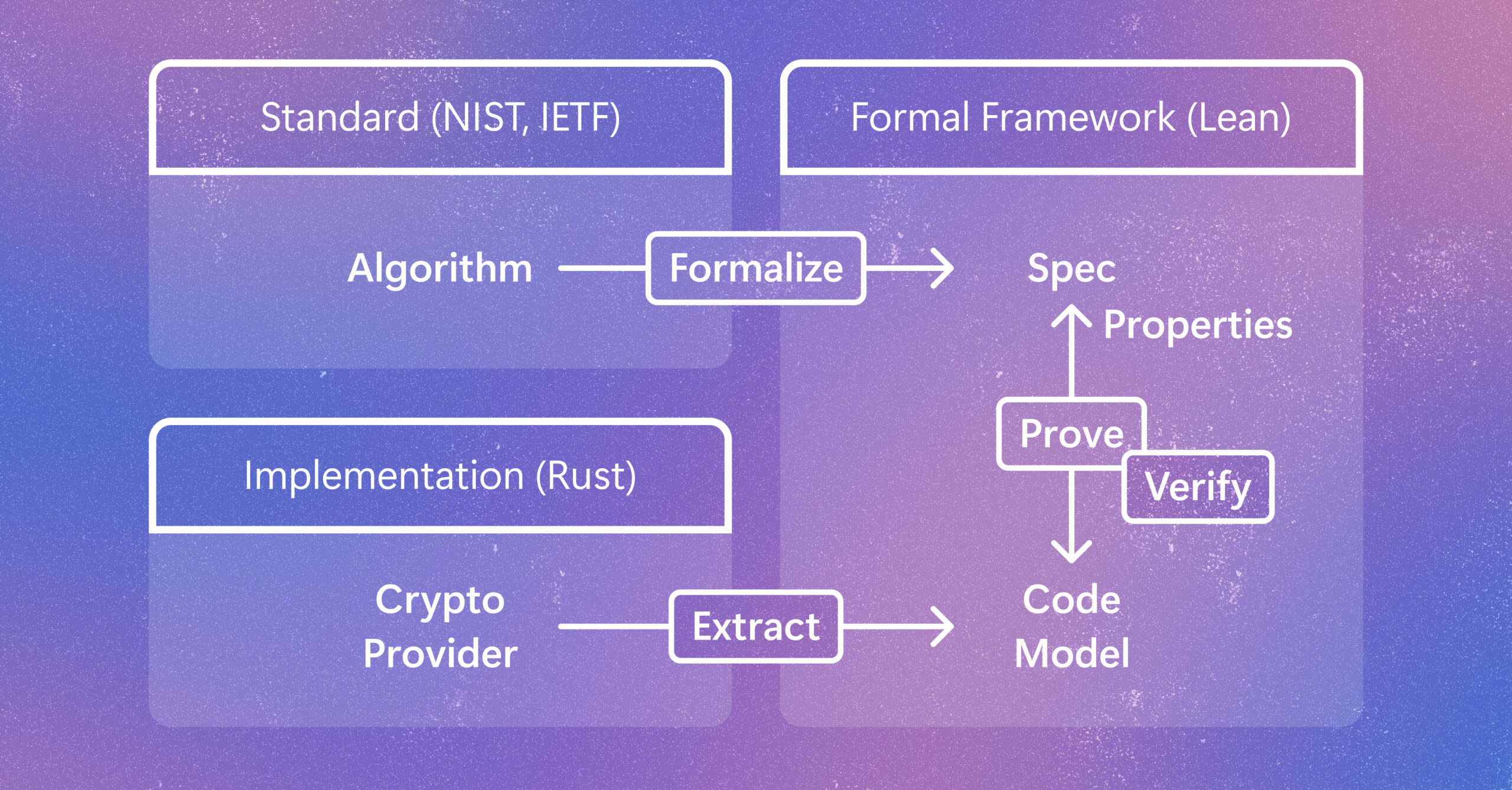
Cryptographic code supports vital protections in modern computing systems. Learn how a new method helps verify code as developers write it while preserving speed and adaptability as it gets implemented and evolves. The post Verifying Rust cryptography in SymCrypt, from standards to code appeared first on Microsoft Research.
MIT News · Artificial Intelligence· news.mit.eduJul 6, 2026
PhD student Rachel Sava, winner of the Envisioning the Future of Computing Prize, explores transformative improvements and dystopian risks of neural technology.