Rather than performing a single fair, reliable, and authoritative voice, AI that speaks from specific viewpoints triggers cognitive agency and elevates human-AI performance in judgment, decision-making, and problem-solving.
Shiyang Lai, Jiwoong Choi, Junsol Kim et al.· 4 citations· ⚡2
A novel incomplete multi-dimensional emotion feature selection framework integrating Adaptive Dual Self-Expression Learning (ADSEL) with least squares regression is proposed, which could establish a bidirectional pathway between sample-level and dimension-level self-expression learning processes within the label space.
Xue-Yuan Xu, Tian-Ze Yu, Jun-Ming Zhang et al.· 0 citations
A layered visibility framework is synthesized that shows how register records reflect disclosure arrangements and why interoperability requires shared concepts, clear definitions, and preserved provenance.
Body-cue recognition can support assistive robots, but benchmark accuracy does not guarantee reliable behavior under a robot-camera viewpoint. We present Nuni, a bedside robot prototype that treats a detected distress cue as a reason to ask rather than a reason to alert. We compare two X3D-UGT RGB appearance classifier...
Dongsik Yoon· 0 citations
Reach audiences
Advertise in front of researchers, engineers, and readers.
Listener Differences in Human-Robot Interaction (LD-HRI), a game, dataset, and benchmark that evaluates speakers through human listener performance, is introduced, providing a foundation for designing more robust communication in human-robot and human-agent interaction.
Promise Ekpo, T. Vijay, Dhruv Mandalik et al.· 0 citations
The paper argues for evaluation procedures that disclose the tested configuration, validate questions and successful task completion, report performance alongside cost and execution time, and make the scope of generalization explicit, and discusses Isotanta, a crowdsourced benchmarking platform, as a practical example...
A dual contribution: a PRISMA 2020 review synthesizing 130 empirical studies, and the Strategic AI Governance Ex-Ante Framework (SAGE-X), which delivers an operational Enterprise Lifecycle Audit Instrument on Stanford WebProt, ensuring exponential progress never outpaces deliberative moral judgment, human agency, and s...
This study reframes dementia-related crash severity modeling as a decision-aware triage problem in which a system must classify crashes into no-injury/property-damage-only (O), minor or moderate injury (BC), and fatal or severe injury (KA), while also controlling outcome leakage.
Broad public adoption of head-mounted displays using video passthrough remains elusive despite significant market investment. A precise understanding of why users experience persistent discomfort even as hardware factors such as resolution and latency have dramatically improved remains an open issue. This paper investi...
M. Solbach, Mohit Goyal, Sakar Khattar et al.· 0 citations
AI auditing increasingly incorporates AI agents to expand the scale and breadth of audit coverage, yet little is known about how auditing work should be divided without displacing human judgment. We introduce Human-Agent Audit Collaboration (HAAC), a workflow and system for structuring human-AI collaboration in AI audi...
Eunkyu Park, Markelle Roesti, Wesley Hanwen Deng et al.· 0 citations
Visual instructions for physical tasks are typically authored in one context and followed in another, requiring users to translate demonstrated tools, materials, and spatial relationships into their own environment. We introduce Generative Tutorial, a conceptual framework for live visual instruction that depicts intend...
LLM benchmarks function as evaluation instruments, informing decisions that affect education, labor, and public services worldwide. Drawing on Hood, Kirkhart, and Hopson's culturally responsive evaluation (CRE) frameworks, this paper applies a six-dimension CR rubric to audit OpenAI's SimpleQA (N = 4,326 items) and the...
AI agents can generate code at a scale that’s hard for humans to review line-by-line. PDD Kit helps ensure the code is doing what the developer intended by creating formal specifications and testing against them. It converts developer intent into a Verus specification, proves AI-generated code meets it for every input, and uses tests where proofs aren't practical. Developers review intent, not every line. The post Formally verifying agent-written full-stack web apps with PDD Kit appeared first o…
Professor Paris Smaragdis develops computers with superhuman hearing for applications like speech recognition, music understanding, and environmental monitoring.
MIT News · Artificial Intelligence· news.mit.eduOct 23, 2026
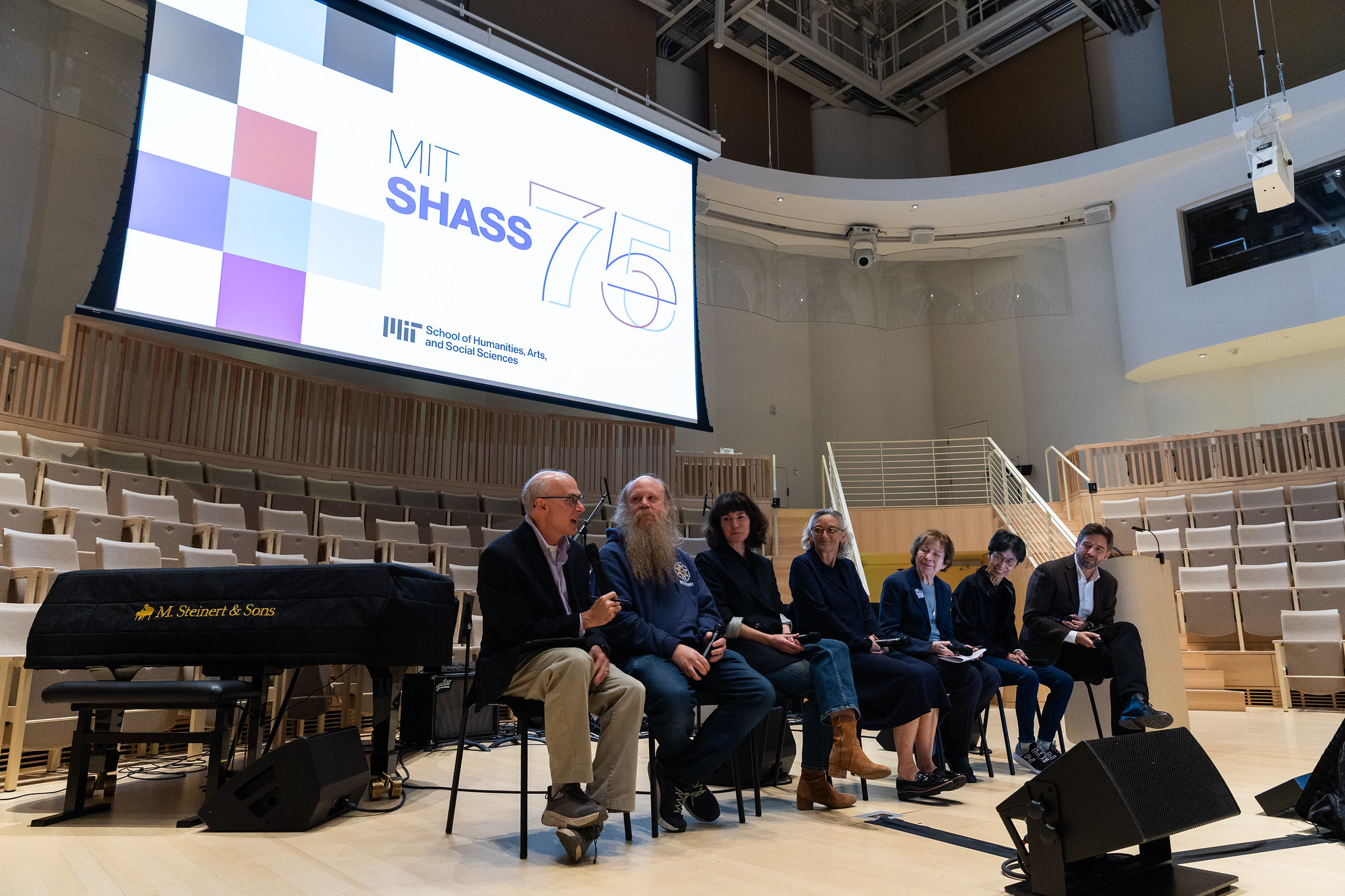
During the School of Humanities, Arts, and Social Sciences’ 75th Anniversary Symposium, President Sally Kornbluth said “MIT has never needed your particular insight and guidance more than we do now.”
MIT News · Artificial Intelligence· news.mit.eduOct 23, 2026
Assistant Professor Benjamin Lindquist studies how engineers deliberately injected randomness into early AI, giving rise to deep-learning models that sometimes hallucinate.
MIT News · Artificial Intelligence· news.mit.eduOct 22, 2026
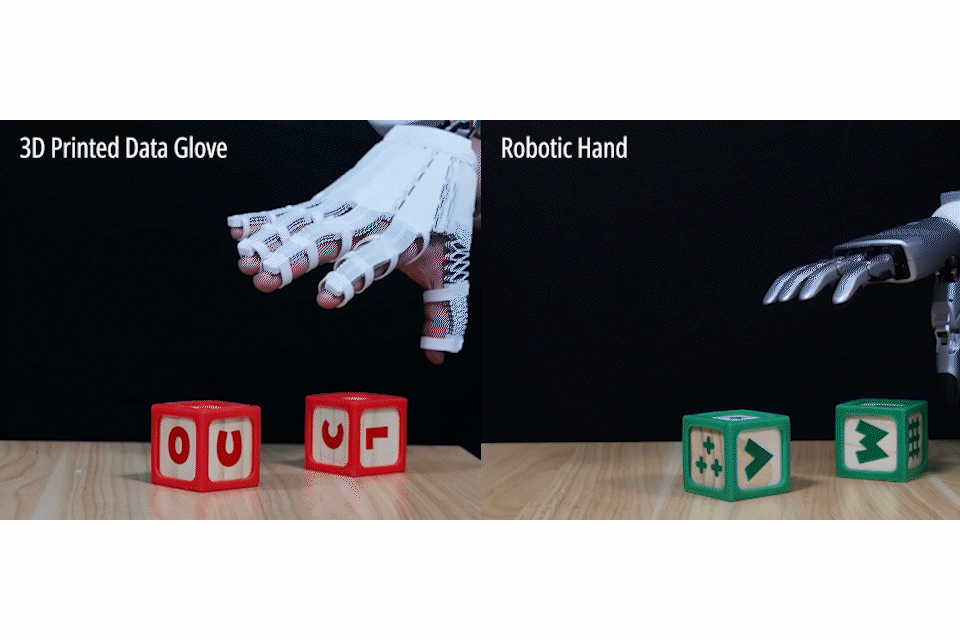
“X-Hinges” helps design and 3D print items like lamps and gloves with an interactive twist: automatically embedded sensors that perceive and adaptively respond to human contact.
We use cookies to run the site and, with your consent, for analytics and to show ads.
See our Cookie Policy.