Vision-language models must reconcile conflicting text and images. Prior work has characterized the resulting behavior in terms of modality biases--e.g., a"blind faith in text"--but why preferences vary across models, domains, and input conditions remains unclear. We develop a predictive account from a Bayesian perspec...
J. Barua, Kyle Mahowald, William Rudman· 0 citations
Korean neologisms arise through diverse mechanisms, a demanding test of language models beyond lexical memorization. To enable systematic evaluation, we introduce NeoTrace, an automated, rerunnable framework that collects and dates neologisms across genres. Its 4,271 entries support KoAGE, a cutoff-aware benchmark with...
Massively multilingual speech modeling has made remarkable progress in recent years, yet existing training resources and benchmarks still underrepresent much of the linguistic long tail. To address this gap, we introduce ELARSpeech, a large-scale multilingual speech resource comprising 30,202 hours of speech across 675...
Sangmin Lee, Yejin Jeon, David Ifeoluwa Adelani· 0 citations
Identification and ranking of salient propositions in documents is indirectly involved in many AI tasks, but few papers define proposition salience scores clearly, make diverse data available, or evaluate models directly on the task. This paper proposes PROPALIGN, a multiple-summary-based approach for propositional sal...
Lin Ai, Emma Thronson, Katherine Conhaim et al.· 0 citations
Reach audiences
Advertise in front of researchers, engineers, and readers.
This work proposes SkillGrain, a framework for learning reusable personalized skills from user feedback that decomposes feedback into independently actionable rules, predicts their transferability, and retains only those suitable for future requests.
Li Wang, Chen Zhang, Yi-Rong Yang et al.· 0 citations
Does a language model answer better because its compressed memory contains useful document information? Replacing memory vectors with zeros can lower a trained model's score without showing that it outperforms a model trained without memory. We combine zeroing with separately trained models that cannot access stored te...
Minsu Oh, Seunghui Jwa, Chanjun Park et al.· 0 citations
Large language models (LLMs) are increasingly used for multi-turn agentic tasks that require interactions with users and environments over extended sequences of actions. A common approach to improving LLM agents is to use more capable expert models to provide training supervision, either by behavior cloning the expert'...
Thomas Zeng, Zelei Cheng, Mingyang Zhou et al.· 0 citations
This paper presents LLM-jp-4, a family of Japanese sovereign large language models (LLMs) developed with an emphasis on transparency, reproducibility, and practical usability. LLM-jp-4 comprises an 8B dense model and a 32B-A3B mixture-of-experts model, both trained from scratch on approximately 12 trillion tokens. To s...
Large language model (LLM) evaluators are increasingly used to assess personalized assistants, yet whether they can reliably judge personalization has rarely been tested. We introduce PersEvalBench, a benchmark testing whether an evaluator can recognize appropriate and inappropriate uses of user history. It contains 40...
Xin-Yi Liu, H. Nayyeri, Emine Yilmaz et al.· 0 citations
This work concerns our submission for the Multilingual track of the 2026 BabyLM Challenge. We improve on our baseline using data that has been summarized and translated by an LLM, showing that higher-quality data can come from synthetic sources. We further improve with 2 simple changes: using a larger model, and using...
Lukas Edman, Alexander Fraser· Proceedings of the Second Ba...· 0 citations
In so-called "Industry 4.0," integrated sensors, analytics tools, and other digital technologies supplement industrial workflows, potentiating enhanced visibility and automation. Prognostics and health management (PHM) and natural language processing (NLP) practitioners alike have explored the application of large lang...
Lucas H. McCabe, Sarah Lukens, H. Howie Huang· 0 citations
Benchmarks shape how model capabilities are measured and interpreted, yet their scores can obscure whose conventions, contexts, and judgments define successful performance. We introduce a user-centric audit framework that distinguishes users who contribute benchmark content from those whose needs evaluation results are...
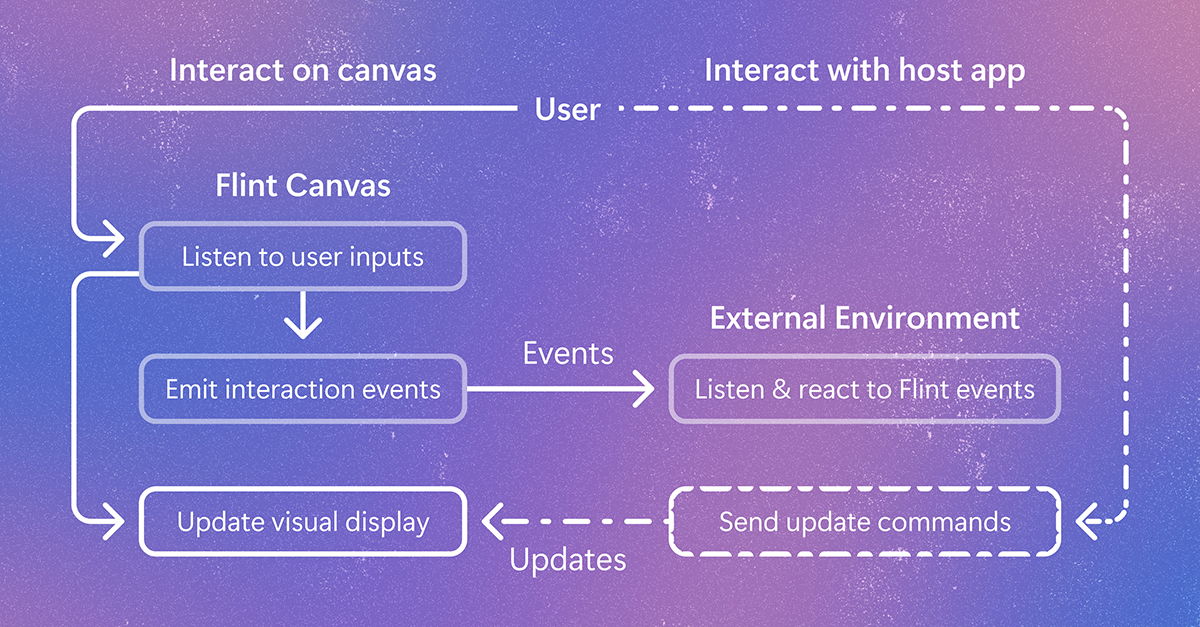
Flint-interactive gives AI agents a language for creating interactive visualizations. Click a chart, filter data, highlight related content, and explore beyond the view the author originally chose. The post Flint-interactive: A language for creating interactive data visualizations appeared first on Microsoft Research.