Streaming video understanding is a critical capability for real-world applications, including embodied intelligence, autonomous driving, industrial monitoring, surveillance and early warning, and wearable assistants. However, processing continuous video streams with multimodal large language models (MLLMs) is computationally expensive. Existing efforts have explored reducing streaming overhead through visual token pruning, token merging, quantization, on-demand frame retrieval, and context offloading. However, most existing methods overlook the dimension of model depth. Repeatedly executing full-depth MLLM prefill over incoming frames is prohibitively expensive, incurring substantial computational overhead and causing the KV cache to grow at a rate directly proportional to the prefill depth. To address these challenges, we propose ShallowStream, a novel framework that leverages the shallow layers of an MLLM to simultaneously perform frame encoding and retrieval index building. During stream processing, ShallowStream maintains an always-on lightweight index using the KV cache of shallow layers. During query-time answering, we leverage the attention scores generated by the shallow layers to score context frames and employ a diversity-aware selection strategy to retrieve precise and comprehensive evidence. ShallowStream achieves performance on par with the strongest existing streaming methods, while reducing per-frame prefill latency and 10-second end-to-end latency by up to 52.1x and 11.9x, respectively. Our code is available at https://github.com/CURRENTF/ShallowStream.
Jitai Hao, Ke Yang, Qiang Huang et al.· 0 citations
Selecting a retrieval model for a production RAG system requires reliable comparative evaluation, but obtaining relevance judgments at scale is expensive and difficult to repeat as new candidate systems arrive. We study pooled LLM evaluation, in which an LLM judges the union of documents retrieved by the current set of candidate systems, and the pool is then expanded incrementally as new systems are introduced by judging only the new documents they contribute. These judgments are reused to evaluate all systems on a common basis. We validate this approach on four retrieval benchmarks with 11 systems spanning dense, sparse, and hybrid configurations, and deploy it to compare 62 retrieval configurations for a financial news QA system. Pooled LLM rankings correlate strongly with gold-standard evaluation across datasets, and 97% of pairwise system orderings are preserved once bootstrap uncertainty in the qrels is taken into account. In production, document overlap yields 65-80% judgment reuse and up to 4.9x lower evaluation cost, allowing teams to benchmark new retrieval candidates without re-judging previously assessed documents. These results suggest pooled LLM evaluation is a practical and cost-effective workflow for incremental retrieval model selection in deployed systems.
Max Nelson, Hanoz Bhathena, Aviral Joshi et al.· 0 citations
Recent advances in audio-language modeling have been driven by large-scale audio captioning datasets. However, existing datasets remain limited by low semantic diversity, generic descriptions lacking acoustic details, and one-to-one audio-caption mappings that poorly reflect the inherent ambiguity of auditory perception. We introduce SonicCaps, a large-scale audio captioning dataset comprising ~15M captions paired with ~700k audio clips, generated using a multi-modal large language model (Qwen3-Omni) conditioned on both audio and text. To explicitly promote diversity, we generate around 24 captions per audio via structured prompt engineering and few- shot generation, spanning main descriptions, rephrased variants (verbosity, style) and semantic tags. Human evaluation shows that SonicCaps is rated significantly higher than existing captioning datasets, with fine-grained analyses indicating that our captions are perceived as more descriptive and precise, which strongly correlates with quality judgments. Finally, training CLAP models on SonicCaps with a multi-caption sampling strategy consistently improves audio retrieval and zero-shot classification, with stronger generalization across public and commercial benchmarks. We release both SonicCaps and two specialized CLAP models on hugging face: https://huggingface.co/datasets/Zineb/SonicCaps.
Zineb Lahrichi, Marc Ferras, G. Richard et al.· 0 citations
Generative engine optimization (GEO) enables content producers to increase the visibility of their web pages in generative search engines, but the same techniques can deliver targeted misinformation when adversaries publish ordinary-looking GEO-optimized documents that victim large language models (LLMs) retrieve and synthesize into distorted answers. No existing benchmark evaluates defenses against this threat under controlled conditions. Therefore, we present Counter-GEO-Bench, a defense benchmark that pairs 247 human-verified, quality-gated queries with information-preserving and information-distorting GEO rewrites, and evaluates defenses on attack success rate (ASR), false positive rate, and answer quality across three victim LLMs. Under Counter-GEO-Bench, three off-the-shelf defenses (Granite Guardian, Llama Guard 3, and NeMo Self-Check Fact-Checking) reduce ASR by at most 5.7% relative, while Granite Guardian's reduction is not statistically significant. Safety-taxonomy guardrails target policy violations, while GEO misinformation passes through them as fluent informational content. To this end, a lightweight benchmark baseline, C-GEO Guard, is proposed, reducing ASR by 47.6% relative with near-zero utility loss, which proves threat tractable.
Ragebait refers to online content intentionally designed to provoke anger or outrage and thereby increase attention and engagement. However, reliable large-scale detection and systematic analysis of ragebait remain limited, hindering efforts to understand its prevalence, impact, and mitigation. This study aims to develop an effective ragebait detection framework and to clarify the characteristics of ragebait at scale, providing a basis for understanding and mitigating emotionally provocative content online. We constructed a labeled dataset with the assistance of a large language model (LLM) and trained several Japanese language models for ragebait detection. The resulting ensemble classifier was then applied to a large-scale dataset of Japanese-language posts on X. Our analysis shows that ragebait is more prevalent in politically and socially contentious topics, including politics, discrimination, public health, and interpersonal conflict. Ragebait posts also spread faster and receive more negative reactions than non-ragebait posts, particularly anger, fear, disgust, sadness, and surprise. These findings demonstrate the utility of the proposed detector and provide a large-scale characterization of ragebait in Japanese online discourse.
Zhiyang Qi, Kazuhiro Ito, Jinghui Chen et al.· 0 citations
Real-world personally identifiable information (PII) redaction often operates on document images---scans, screenshots, and PDF renderings---where OCR errors, layout structure, and visual noise determine whether sensitive information is actually removed. Existing PII benchmarks are mostly text-centric and do not measure document-level redaction risk: a page remains unsafe if even one identifier is missed. We introduce LeakageBench, a challenge set of 500 document images with 11,954 GDPR-aligned PII annotations spanning direct identifiers, linkage keys, and contextual re-identification surfaces. We evaluate generic OCR pipelines, commercial and task-adapted OCR-dependent detectors, and OCR-free vision-language models using entity-level F1, group-wise leakage, and document-level leakage metrics. Code Interpreter raises GPT-5.5 localization F1 from 0.090 to 0.249, but critical page-level leakage remains 0.968. These results show that stronger detection and tool assistance improve localization without making most pages safe for release. LeakageBench provides a diagnostic benchmark for high-recall, spatially grounded PII redaction in document images.
Vishnu Prasad Vijaya Kumar, Santhosh Venkatesh, Ivan P. Yamshchikov· 0 citations
Privacy policies may contain internal contradictions in which commitments are undermined by practices documented elsewhere in the same policy. We operationalize this phenomenon, privacy washing, through a four-stage pipeline: statement extraction, compatibility filtering and natural language inference screening, multi-model judge verification, and thematic analysis, with contradictions confirmed by majority vote of a three-model LLM panel. Applied to two corpora of website privacy policies, 123 collected in 2026 (OPPT) and 115 collected in 2015 (OPP-115), the pipeline finds the same category patterns recurring across the 11-year gap, with third-party sharing contradictions the majority of confirmed cases in each primary run, consistent with structural factors in policy composition rather than necessarily intentional deception. At least one panel-confirmed contradiction appears in 12.2% of OPPT companies (15/123; 9.8% excluding legacy pairs) and 36.5% of OPP-115 companies (42/115). A stability re-run seven months later, with a fully separated configuration (new extraction models, judges from three Chinese providers absent from both corpora, matched filters, no judge-submission similarity threshold), reproduces the OPPT prevalence under the original protocol (13.0% vs. 12.2%), finds sub-threshold pairs confirm at rates of the same order as those above (raising prevalence to 20.3% and 40.9%), and shows the third-party majority is panel-sensitive while the recurrence of the same category pairs is not. Two caveats govern all figures: panel verdicts are not validated against human expert judgment, so precision is unknown and prevalence figures are lower bounds; and the two primary runs used different filter configurations, so their prevalence difference is not interpretable as a corpus or era effect (the matched re-run reduces the gap to roughly twofold but does not eliminate it).
Embedding-based code retrieval is a core component of coding agents and retrieval-augmented code generation, where retrieving correct code matters more than retrieving lexically similar code. Existing code-retrieval benchmarks do not plant controlled, execution-verified single-edit variants of each query's canonical implementation in the search pool, leaving the question of whether embeddings can functionally discriminate correct from near-clone-but-incorrect code unanswered in a retrieval setting. Resolving this requires a benchmark whose search pool itself contains the relevant counterfactuals -- execution-verified buggy variants near-identical to each canonical -- so that a retriever's rank ordering can be directly tested for functional discrimination rather than topical or identity overlap. We introduce ExecRetrieval, 939 Python tasks each paired with one execution-verified canonical implementation and up to four execution-verified buggy distractors, each generated by a mechanical mutation making a single targeted edit, and evaluate 23 dense embedding configurations plus BM25 under provider-native invocation with paired McNemar tests and query-level bootstrap intervals. With near-clone counterfactuals in the pool, the top hosted system reaches exec@10 = 1.00 but only exec@1 = 0.331; rank-1 misses are paired buggy variants 91.5-99.4% of the time across the four leading systems, and the canonical scores below at least one of its four paired distractors in 67-78% of queries on the leading systems. The full dataset, execution oracle, embedding matrices, environment snapshot, and pairwise statistical tests are released at the URL in Appendix D.
Aaryan Kapoor, Md Abdullah Al Hafiz Khan· 0 citations
Chain-of-thought (CoT) reasoning powers generative models by eliciting intermediate steps before producing an answer. In autonomous driving, the answer is a continuous action. Thus its reasoning must share the same spatiotemporal structure as the physical world. This survey studies the resulting shift from textual CoT to action-grounded reasoning. Surveying 171 papers, including 130 method papers and 41 benchmarks, datasets, surveys, and analysis papers, we propose a representation-centered taxonomy that treats the form of the intermediate state as the organizing axis. We systematize the 130 methods into four categories: language-based, visual-spatial, latent-dynamic, and externalized reasoning, further divided into 13 subtypes tied to distinct regions of interests. Our synthesis shows that the open frontier of reasoning in driving agents lies in intermediate representations that can be grounded in the real world, coupled to real-time action, and verified under safety-critical systems. Project page: https://github.com/tangzhengxu/awesome-av-cot.
Zhengxu Tang, Xiaozhou Zhang, Guofeng Cui et al.· 0 citations
Content moderation is a central form of digital governance, yet people disagree over what content should be removed from shared online spaces. While platforms aggregate human judgments to build moderation systems, it remains unclear how this process shapes which users are protected from content they perceive as toxic. We address this gap by combining large-scale judgment data with counterfactual simulations that trace how the demographic composition of moderator pools shapes the distribution of protection across users. Applying this framework to removal judgments from 16,221 U.S. respondents evaluating 102,463 comments from Twitter, Reddit, and 4chan, we find demographic heterogeneities in moderation demand. We further reveal a consistent pattern of in-group protection: reductions in perceived toxicity accrue disproportionately to users who share the demographic identities of the moderator pool. Crucially, moderator pools that mirror the demographic composition of self-identified moderators on Prolific widen these disparities relative to a nationally representative baseline, while even fully representative pools fail to ensure equal protection: Black and LGB users remain underprotected unless they are represented well beyond their population share. These findings show that unequal protection from perceived toxicity can arise structurally from the aggregation of stratified removal standards, making the demographic composition of moderation inputs a key determinant of who is protected online.
We introduce MESSY STREETS, a benchmark for evaluating geocoders on verbatim web addresses, with existence verification and controlled measurement of surface-form divergence. Unlike conventional benchmarks based on clean or synthetically perturbed addresses, MESSY STREETS contains addresses whose surface forms diverge from canonical representations and whose components may be missing, repeated, malformed, or incomplete. The benchmark is constructed from the December 2024 Web Data Commons corpus, with reference locations established from OpenAddresses or OpenStreetMap.
The strongest commercial geocoders outperform open-source systems by up to 49 percentage points in recall. This gap is driven primarily by differences in candidate return rates on non-canonical addresses; once a candidate is returned, positional accuracy is broadly comparable across systems. Non-canonical surface form alone accounts for up to 25 percentage points of recall loss. Examining Nominatim's query-processing pipeline, we show that its conjunctive matching lets a single unrecognised token zero an otherwise valid query.
The results demonstrate that geocoder choice is a consequential design decision for applications processing noisy address data, and that normalisation and preprocessing could substantially narrow the gap between open-source and commercial geocoders.
Harnessing naturally occurring feedback from user interactions offers a promising learning signal for Large Language Models (LLMs). However, recent studies suggest this feedback is inherently noisy and difficult to leverage effectively. We challenge this conception by demonstrating that user feedback is a highly actionable signal for improvement, and that its perceived ineffectiveness stems from a systematic bias in current evaluation paradigms. To isolate the usefulness of feedback, we construct synthetic data with a definitive ground truth, alongside naturalistic data to validate that our findings hold in real-world scenarios. By comparing model revisions generated with and without access to feedback across both settings, we show that feedback-informed revisions resolve targeted issues at significantly higher rates than baseline revisions. Finally, we expose the root of the evaluation bias: when a model successfully fixes an issue exclusively due to feedback, LLM judges frequently fail to identify the genuinely corrected response, systematically preferring inferior baseline outputs instead.
A new method, called CW-Net, translates the reasoning process of an autonomous vehicle’s AI system into understandable concepts that explain its behavior.
MIT News · Artificial Intelligence· news.mit.eduAug 31, 2026
With millions of users across the world, Julia has been used to conduct cutting-edge research and to design new drugs, jet engines, heat pumps, and more.
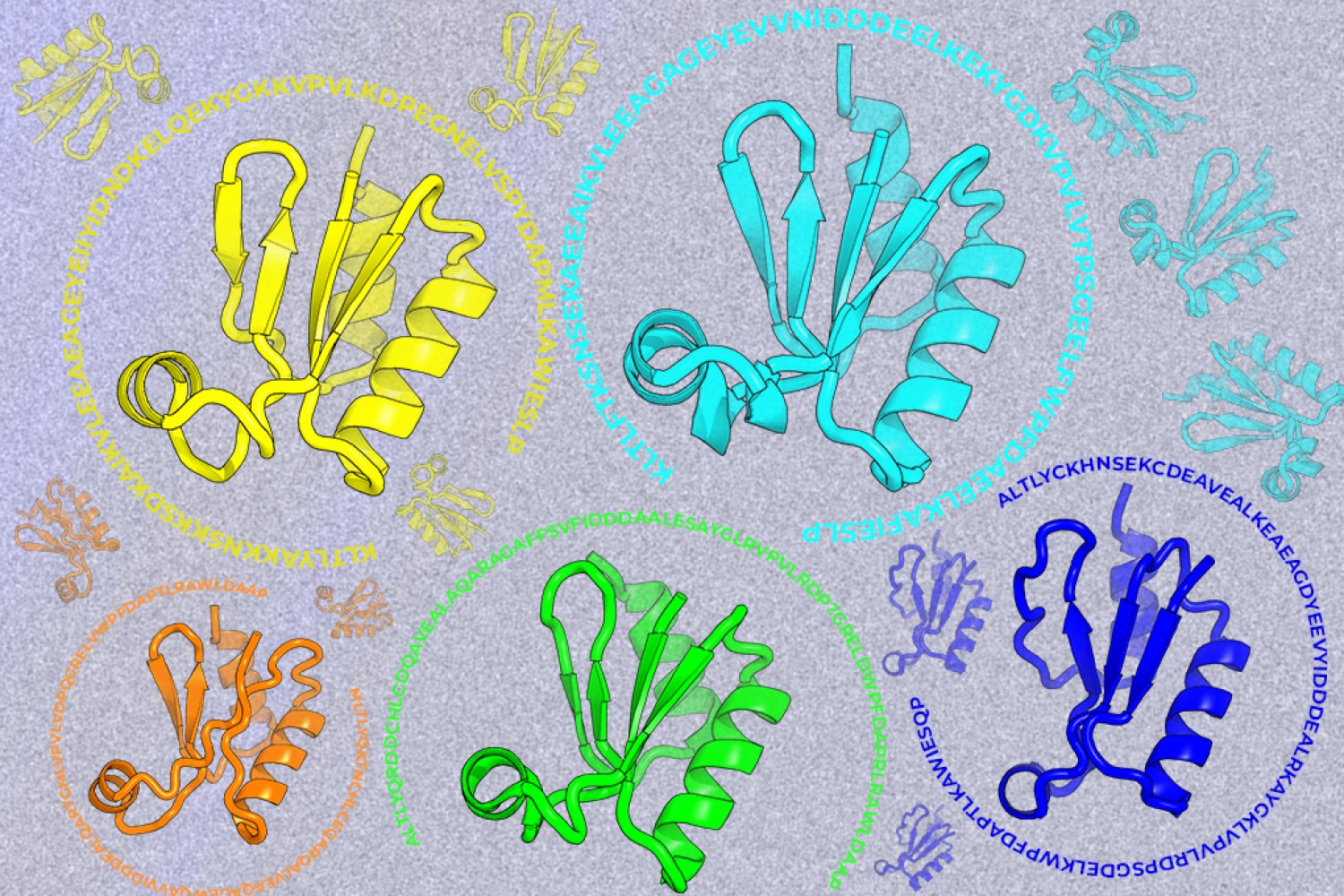
A new machine-learning framework aims to improve the success rate of computational protein design while moving away from results that reproduce sequences found in nature.
New MIT research could lead to better materials for a fossil-fuel-free process for making the chemical that's essential to fertilizer and other products.
We use cookies to run the site and, with your consent, for analytics and to show ads.
See our Cookie Policy.