Repository-level issue-resolution benchmarks such as SWE-bench evaluate submitted patches primarily based on whether they pass the correctness tests, leaving the runtime performance of different test-passing patches largely unexplored. Evaluating patch performance is essential but challenging since designing performanc...
Speech recognition on low-cost microcontrollers is, in practice, limited to keyword spotting or a fixed list of commands. We present O\'ido, an inference engine that runs open-vocabulary English speech recognition entirely on an ESP32-S3 (240 MHz dual-core Xtensa LX7, 512 KB of SRAM, 8 MB of PSRAM, 16 MB of flash, no n...
Daniel Varela S\'anchez, Guillermo Mart\'in-Coello Ju\'arez· 0 citations
Attention sinks are tokens or positions that consistently receive disproportionate attention mass, often beyond what their semantic content would suggest. Despite extensive study in large language models, their behavior and functional relevance in text-to-image (T2I) Transformers remain largely unexplored. To fill this...
Binglei Li, Mengping Yang, Zhiyu Tan et al.· 0 citations
Memory-augmented assistants retrieve evidence from stored conversations and documents to answer queries. Most embedding-based retrievers compare single-vector representations of queries and memories, even when relevance depends on a small part of the content. Such local evidence can be matched to queries using the cont...
Han Luo, Zhan Zhuang, Xu He et al.· 0 citations
Reach audiences
Advertise in front of researchers, engineers, and readers.
Can a vision model learn what words mean from pixels alone? We show that the two largest DINOv3 vision transformers organize words rendered in images by word meaning, despite being pretrained using self-supervision on images only, without paired captions, class labels, or other language supervision. We derive word repr...
Anders Gjølbye, S. R. Mason, Stella Frank et al.· 0 citations
Open audio-language models are used as judges of generated music: given a clip and its text prompt, the model rates the clip, and the judge is validated by how well its ratings correlate with expert ratings. The correlation does not show what the judge responds to: the music, the text prompt, or the way the question is...
In this work, we revisit the classic Les Mis\'erables benchmark network from the perspective of social communication. Using the 1998 film adaptation of the novel, we construct the publicly available Les Mis\'erables Dialogue temporal text network, which explicitly distinguishes speakers, addressees, and other recipient...
We introduce MVGraph, a benchmark for evaluating large vision-language models (LVLMs) on multi-graph reasoning where the evidence required by a query is distributed across multiple interrelated visual graph views. Although such evidence commonly resides in source-specific graphs, temporal snapshots, or local observatio...
Yingjie Zhu, Han Cheng, Xuefeng Bai et al.· 0 citations
Technologies like large language models make it easier to convert cultural material into analyzable variables, while LLM-driven agentic systems extend machine assistance to other parts of the research workflow. Rather than a full how-to guide or an exhaustive review of recent LLM use cases, this chapter looks at some c...
Ethnic and cultural identities rarely align with political borders, a tension made sharper by migration and long-standing cross-border ties. Communities such as the Sami, the Rohingya, and the Kurds have long lived across more than one state. This tension is especially clear in mainland Southeast Asia, where many commu...
Recursive self-improvement (RSI) aims to transform interaction experience into persistent improvements, yet external feedback is costly and world-model predictions may become unreliable as policies evolve. We introduce RSI-Anything, a domain-general framework built on JEPA-Anything that uses predictive world models to...
Taoyong Cui, Pinxian Zeng, Wanghan Xu et al.· 0 citations
Vision-Language Models (VLMs) increasingly analyze and reason about images, yet it remains unclear whether their internal representations faithfully encode the structured relations required for such reasoning. We introduce EICS (Evaluation-Invariant Concept Stability), a metric for testing whether representations consi...
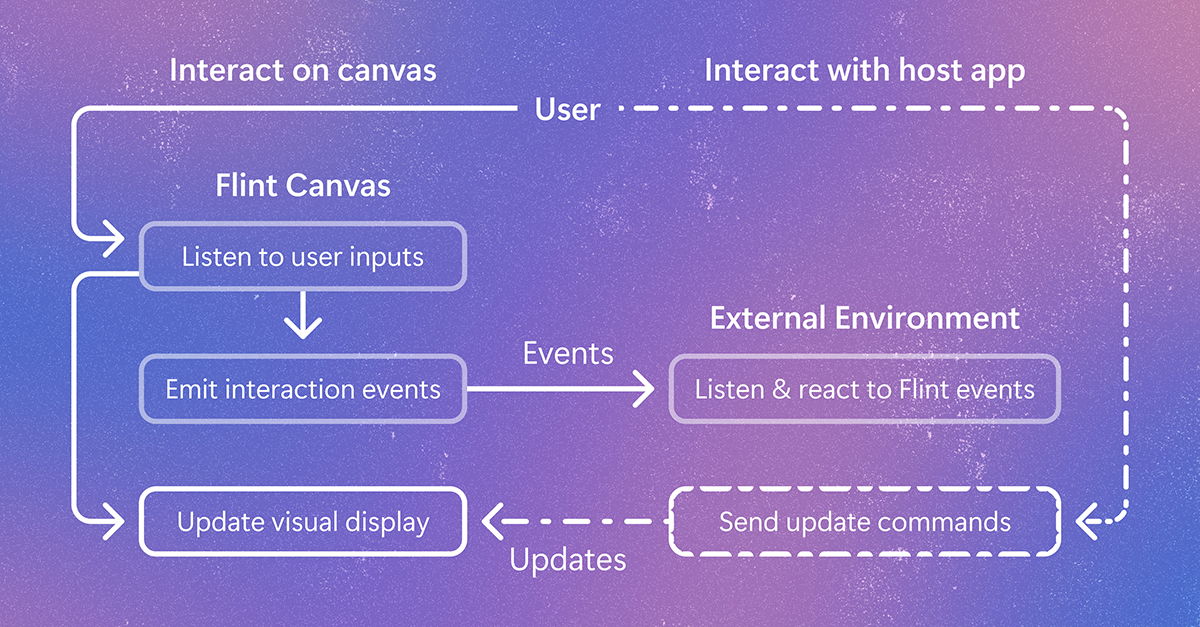
Flint-interactive gives AI agents a language for creating interactive visualizations. Click a chart, filter data, highlight related content, and explore beyond the view the author originally chose. The post Flint-interactive: A language for creating interactive data visualizations appeared first on Microsoft Research.