A comprehensive framework integrating robotic arms with automation components such as programmable logic controllers, sensors, and actuators, aiming to improve assembly accuracy and efficiency is explored, highlighting the potential of this integration scheme in optimizing high-precision assembly processes.
Yue-Hong Zhao, Wen-Lei Zhao, Pengfei Yan et al.· 電腦學刊· 0 citations
ABSTRACT Software, hardware, and brainware of hospital management information systems play a role in employee performance, although there are still problems/weaknesses in each variable that need to be improved. This study focuses on providing a deeper understanding of software, hardware, and brainware of hospital management information systems on employee performance. The object of this study was employees at the outpatient unit of Batara Guru Regency Hospital with a total sample of 62 respondents. The data analysis used multiple linear regression, correlation coefficient analysis, and coefficient of determination analysis. The results showed that respondents' opinions on software, hardware, and brainware of the hospital management information system were in the good category, although there were still weaknesses in each variable. The multiple regression equation model shows a positive and unidirectional functional relationship with the equation Y = 3.637 + 0.293 (X1) + 0.289 (X2) + 0.302 (X3) + e. Partial and simultaneous hypothesis testing showed a positive and significant influence. Software, hardware, and brainware of hospital management information systems have a positive and significant effect on employee performance. Keywords: Software, Hardware, Brainware, Employee Performance. ABSTRAK Sistem Informasi Manajemen Rumah Sakit (SIMRS) yang terdiri dari aspek software, hardware, dan brainware memiliki peran penting dalam menunjang kinerja pegawai, khususnya di unit rawat jalan rumah sakit. Namun, dalam implementasinya masih terdapat beberapa kendala yang dapat memengaruhi efektivitas kinerja pegawai. Untuk memberikan pemahaman yang lebih mendalam mengenai pengaruh software, hardware, dan brainware dalam SIMRS terhadap kinerja pegawai. Sampel penelitian ini adalah pegawai pada unit rawat jalan RSUD Batara Guru Kabupaten Luwu sebanyak 62 responden. Data dianalisis menggunakan regresi linear berganda, uji koefisien korelasi, dan uji koefisien determinasi. Hasil penelitian menunjukkan bahwa perangkat keras, perangkat lunak, serta kompetensi pengguna SIMRS berada dalam kategori baik, walaupun masih ditemukan kelemahan pada setiap variabel. Model persamaan regresi menunjukkan hubungan fungsional positif dan searah dengan persamaan Y = 3,637 + 0,293 (X1) + 0,289 (X2) + 0,302 (X3) + e. Hasil uji hipotesis secara parsial maupun simultan menunjukkan adanya pengaruh positif dan signifikan. Perangkat keras, perangkat lunak, serta kompetensi pengguna SIMRS berpengaruh positif dan signifikan terhadap kinerja pegawai. Kata Kunci: Perangkat Keras, Perangkat Lunak, Pengguna SIMRS, Kinerja Pegawai.
According to the results, deep learning can be more beneficial for forecasting technical debt but does not bring the required level of improvement only due to the complexity of the model.
Abdalmenam Khalif Masaud Abuswah, Abdarrahman Khalif Ali Abousowa, Ziad Omar Salem Wareg· Comprehensive Journal of Sci...· 0 citations
This study compared explainable machine learning models for predicting customer churn using the IBM Telco Customer Churn dataset in R and found Logistic Regression achieved the best performance, with an accuracy of 82.30% on this dataset.
Uppu Venkata Subbarao, Tedlapu Narayana Rao, Vantaku Bala et al.· International Journal of Man...· 0 citations
Reach audiences
Advertise in front of researchers, engineers, and readers.
Groundwater is essential for agricultural development, particularly where surface-water resources are limited.
However, groundwater occurrence in crystalline basement terrains is difficult to predict because lithology and geological
structures vary considerably over short distances. This study evaluated the groundwater potential of Oban Farmland, Akamkpa
Local Government Area, Cross River State, Nigeria, using integrated Electrical Resistivity Tomography (ERT) and Portable
Quantum Water Detector (PQWT) surveys. ERT delineated vertical and lateral variations in subsurface resistivity, while PQWT
provided reconnaissance information for identifying favourable groundwater zones. Two ERT profiles were acquired, processed,
and inverted using RES2D software. Resistivity values ranged from 50.70 to 11,830.00 Ωm along ERT-01 and from 20.50 to
1,140.00 Ωm along ERT-02, indicating substantial subsurface heterogeneity. Low-resistivity zones were interpreted as
weathered, potentially water-bearing materials, whereas very high-resistivity zones represented relatively dry lateritic deposits
and fresh crystalline basement. The subsurface comprises lateritic topsoil, weathered materials, fractured basement, and fresh
basement rock. Weathered-zone thickness ranged from approximately 24 to 78 m. Weathered and fractured basement units
constitute the principal aquifers because they provide groundwater storage and flow pathways. Fractured zones with resistivity
values of approximately 852–1,165 Ωm were identified as promising drilling targets. Integrated interpretation indicated suitable
borehole depths of approximately 70–135 m, especially where thick weathered materials coincide with fractured basement
structures. The results demonstrate that combining ERT and PQWT significantly improves borehole siting and reduces
groundwater-exploration uncertainty in complex basement environments. Borehole logging, pumping tests, and water-quality
analyses are recommended to validate aquifer conditions and support sustainable agricultural groundwater development.
M. Aka, Okechukwu E. Agbasi· International Journal for Re...· 0 citations
ABSTRACT Voluntary Counseling and Testing (VCT) clinics play a critical role in HIV/AIDS control by providing counseling, early detection, and referral for treatment services. Understanding the characteristics of HIV/AIDS patients who access VCT services is essential to identify at-risk populations. This study aimed to examine the characteristics of HIV/AIDS patients attending a VCT clinic in East Lombok Regency, West Nusa Tenggara. This study employed a retrospective descriptive design using medical records of all HIV/AIDS patients who visited the VCT clinic at Dr. R. Soedjono Selong Regional General Hospital from January 2023 to December 2024. The variables included age, sex, occupation, referral source, and risk factors. Descriptive data analysis was conducted using Jamovi software. A total of 157 HIV/AIDS patients accessed VCT services during the 2023–2024 period, with 75 patients recorded in 2023 and 82 in 2024. The majority were male (77%), aged 31–40 years (38%), unmarried (59%), self-employed (73%), and men who have sex with men (MSM) (55%). Most patients were referred from primary health centers (69%). Between 2023 and 2024, the proportion of unmarried patients increased from 38.7% to 43.9%, MSM from 49% to 60%, and hospital referrals decreased from 21% to 3%. The proportion of self-employed patients declined from 81.3% to 65.9%. New occupational categories emerged in 2024, including teachers (4%) and students (5%). The majority of HIV/AIDS patients attending the VCT clinic at Dr. R. Soedjono Selong Hospital were males of productive age with high-risk behaviors. These findings highlight the need to strengthen early detection and targeted education, particularly among high-risk groups. Keywords: Characteristics, HIV/AIDS, VCT Clinic, East Lombok Regency, West Nusa Tenggara Province. ABSTRAK Klinik Voluntary Counseling and Testing (VCT) berperan penting dalam upaya penanggulangan HIV/AIDS dengan menyediakan layanan konseling, deteksi dini, dan rujukan pengobatan. Memahami karakteristik pasien HIV/AIDS yang mengakses klinik VCT penting untuk mengidentifikasi populasi berisiko. Penelitian ini bertujuan untuk mengetahui karakteristik pasien HIV/AIDS pada Klinic VCT di Kabupaten Lombok Timur Nusa Tenggara Barat. Penelitian ini merupakan penelitian deskriptif retrospektif dengan menggunakan rekam medis seluruh pasien HIV/AIDS yang mengunjungi klinik VCT di RSUD Dr. R. Soedjono Selong periode Januari 2023 hingga Desember 2024. Variabel yang digunakan meliputi usia, jenis kelamin, pekerjaan, sumber rujukan, dan faktor risiko. Analisis data deskriptif dilakukan menggunakan perangkat lunak Jamovi. Hasil: Sebanyak 157 pasien HIV/AIDS mengakses layanan VCT selama periode 2023–2024, dengan 75 pasien pada tahun 2020 dan 82 pada tahun 2024. Proporsi terbesar adalah laki-laki (77%), berusia 31–40 tahun (38%), belum menikah (59%), wiraswasta (73%), dan laki-laki yang berhubungan seks dengan laki-laki (55%), serta berasal dari rujukan puskesmas (69%). Antara tahun 2023 dan 2024, proporsi pasien belum menikah meningkat dari 38,7% menjadi 43,9%, LSL meningkat dari 49% menjadi 60%, rujukan ke rumah sakit dari 21% menjadi 3%, dan wiraswasta menurun dari 81,3% menjadi 65,9%. Kategori baru, yaitu guru (4%) dan siswa (5%), akan mengakses layanan VCT pada tahun 2024. Mayoritas pasien HIV/AIDS di Klinik VCT RSUD Dr. R. Soedjono Selong adalah laki-laki usia produktif dengan perilaku berisiko. Temuan ini menggarisbawahi perlunya peningkatan deteksi dini dan edukasi, terutama bagi kelompok berisiko. Kata Kunci: Karakteristik, HIV/AIDS, Klinik VCT di Kabupaten Lombok Timur, Provinsi Nusa Tenggara Barat.
Lalu Alfian Zartadi, Muthia Cenderadewi· Malahayati Nursing Journal· 0 citations
BBExplorer is proposed, which combines multi-directional candidate generation, budget-aware two-stage screening, and adaptive step-size shrinkage for boundary refinement for boundary refinement in non-deterministic, budget-constrained systems.
ABEX is presented, an agentic LLM-based framework that replaces operator engineering with adaptive strategy generation: specialized LLM agents propose, select, and execute boundary-exploration strategies, guided by execution feedback and a quality-diversity (QD) archive.
Atomic charge is crucial in drug design for analyzing reactive sites and interactions between ligands and targets. While quantum mechanical methods offer high accuracy, they are generally computationally costly. Conversely, empirical approaches, while computationally efficient, frequently suffer from lack of precision and generalizability. Recent a number of machine learning-based models have been developed for atomic charge predictions, but they struggle with accurately representing molecular structures and capturing the chemical environments affecting atomic charges, thus limiting their generalization and accuracy. To overcome these limitations, we propose LumiCharge, a novel atomic charge prediction framework that incorporates high-order spherical harmonics convolutions and explicitly models multibody interactions. In constructing this model, we employ a strategy that integrates both high- and low-order information, enhancing its geometric spatial perception capability, which is currently underexplored in the field. Benchmark evaluations demonstrate that LumiCharge outperforms state-of-the-art (SOTA) models by 30%-60% across diverse data sets. Additionally, in cross-scale experiments, LumiCharge demonstrates exceptional extrapolation capability and robustness across molecules of varying sizes, effectively overcoming the limitations imposed by molecular sizes. On an external halogen-containing test set, LumiCharge achieves an RMSE of 0.055e, meeting practical application requirements. Finally, a case study of virtual screening for the androgen receptor (AR) target further validates its outstanding accuracy compared to the OPLS3e force field and other deep learning (DL)-based baseline models, highlighting its exceptional generalization capacity and practical utility in real-world scenarios.
Qun Su, Hui Zhang, Qiaolin Gou et al.· Journal of Physical Chemistr...· 2 citations
The androgen receptor (AR) represents a pivotal therapeutic target for prostate cancer. However, existing orthosteric ligand-binding pocket (LBP) antagonists [e.g., enzalutamide (ENZ)] encounter significant obstacles due to resistance-conferring mutations in the LBP. Allosteric antagonists targeting the BF3 site exhibit great potential in overcoming such resistance but have low inhibitory efficacy. In our study, we employed an integrated computational modeling strategy, including Gaussian-accelerated molecular dynamics (GaMD), MM/GBSA free-energy calculations, and elastic network model (ENM)-based signaling communication pathway analyses. This approach is used to probe the cooperativity of allosteric BF3 antagonists [e.g., VPC-13808 (VPC)] with diverse orthosteric LBP ligands [e.g., ENZ and testosterone (TES)] in suppressing AR activity. Herein, four types of AR systems were examined: AR bound to LBP agonist (AR·TES), LBP antagonists (e.g., AR·ENZ), and combinations of LBP agonist/antagonist with BF3 antagonist (e.g., AR·TES·VPC and AR·ENZ·VPC). Results indicate that BF3 antagonists can synergize with the LBP antagonist to amplify conformational flexibility in H12 and induce anticorrelated dynamics of H12 with H3 and H4. This induces the downward movement of H12 and its displacement away from H3/H4, triggering the wide opening of the AF2 binding cleft and substantially reducing the coactivator recruitment. Furthermore, the BF3 antagonist can interact with specific residues (e.g., F673, F826, L830, and Y834) and cooperate with the LBP agonist or antagonist to allosterically perturb the AF2 conformation. Multiple short- and/or long-range BF3→AF2 and LBP→AF2 signaling transition pathways are involved, such as F673→Y834→L722→L812→L744→V746→L873→ENZ→L880/V889/V891. These mechanistic insights establish the foundation for developing novel AR BF3 antagonist and LBP-BF3 combination therapies, suggesting a promising avenue for enhancing the efficacy and overcoming the resistance in castration-resistant prostate cancer treatment.
Xiaotian Kong, Yushan Zou, Peng Cao et al.· Journal of Chemical Informat...· 1 citation
Atomic charge is a fundamental quantum chemical property essential for advancing drug design and discovery. Although quantum mechanics (QM) methods offer the highest level of accuracy, their computational demands scale quadratically with the number of atoms, limiting their practicality for large-scale applications. In light of this, empirical and semiempirical methods have been introduced to improve computational efficiency, albeit often at the expense of accuracy. The advent of artificial intelligence has witnessed a growing application of machine learning (ML) techniques to accelerate atomic charge predictions. However, existing ML models often suffer from low accuracy and limited generalization capabilities. To address these challenges, we introduce an advanced equivariant graph attention neural network specifically engineered to model long-range atomic electrostatic interactions with high precision. This model introduces a sophisticated global graph attention mechanism, enabling it to capture charge contributions across multiple scales. By utilizing a combination of structural symmetry-preserving transformations and multiscale attention, our approach not only preserves the inherent symmetries of molecular structures but also substantially improves the model's accuracy, generalization, and robustness in complex scenarios. Our empirical analyses demonstrate that, compared to leading baseline models, the proposed model improves charge prediction accuracy by over 40% on average across various charge-calculation schemes. Remarkably, the model achieves superior performance on the external RESP (restrained electrostatic potential) test data sets, with a 54.6% improvement over the baseline. Additionally, we evaluated our charge model under the setting of virtual screening, where it outperforms both the OPLS3 charges and baseline deep learning models across all evaluation metrics, highlighting its extensive potential for scientific discovery.
Qiaolin Gou, Qun Su, Jike Wang et al.· Journal of Chemical Informat...· 1 citation
Protein-protein interactions play pivotal roles in a wide range of biological processes. Determining the atomic-level structures of protein-protein complexes is indispensable for elucidating macromolecular interaction mechanisms and advancing structure-based drug design. Protein-protein docking, as one of the leading computational approaches for predicting complex structures, has seen considerable progress but requires rigorous evaluation in practical applications. In this study, we proposed a comprehensive benchmarking framework to evaluate 11 docking methods spanning traditional (HDOCK, PatchDock, PIPER, ZDOCK) and deep learning (DL)-based (EquiDock, ElliDock, EBMDock, GeoDock, DiffDock-PP, AlphaFold-Multimer, AlphaFold3) approaches. Our framework incorporates the classical DockingBenchmark 5.5 data set for evaluating flexible docking, introduces a newly curated data set (AACBench) for antibody-antigen complex docking, and establishes the PPCBench data set to examine the out-of-distribution (OOD) generalization capabilities of DL-based methods. In docking against apo structures, AlphaFold3 achieves a superior top-5 success rate of 77.98%, whereas the traditional approach HDOCK reaches merely 12.84%, despite its highest top-5 success rate of 85.24% when docking against holo structures. For antibody-antigen docking, AlphaFold3 remains the most accurate method (top-5 success rate: 31.78%) and substantially outperforms AlphaFold-Multimer in modeling the CDR-H3 loop. In OOD generalization tests, all DL-based models exhibit markedly reduced performance on the PPCBench data set. Overall, our work establishes a unified benchmarking framework that enables systematic evaluation of docking methods across diverse tasks and provides critical insights into the strengths and limitations of current docking strategies, thereby informing future developments in protein-protein docking research.
Linlong Jiang, Ke Zhang, Kai Zhu et al.· Journal of Chemical Informat...· 3 citations
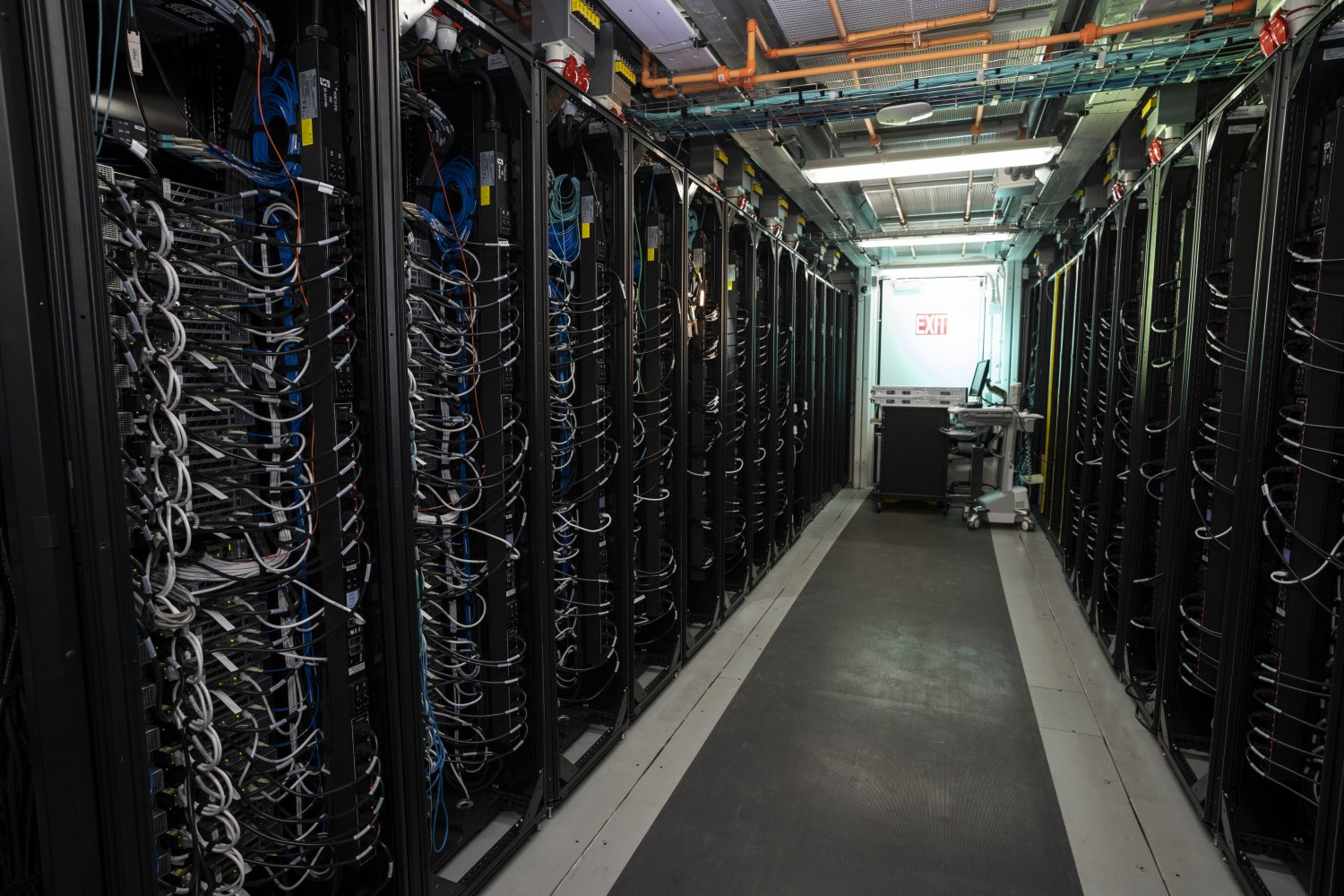
A USAF cadet and a Lincoln Laboratory researcher found AI chatbots can help nontechnical service members produce viable software applications for their unique problems.