This dataset is the reproducibility and robustness evidence companion to the SCILLA v1.1.0 canonical research note (DOI: 10.5281/zenodo.22209746). It contains the synthetic evidence used to audit and reproduce the principal computational results of SCILLA, including matched run-level results, aggregate policy effects, paired-bootstrap confidence intervals, sign-flip tests, parameter sensitivity sweeps, prior-mismatch and other ablation experiments, independent trace-verifier results, canonical trace records, the frozen experimental protocol, assumptions, and seed registry. The evidence preserves both positive and negative results. In particular, the released experiments do not support universal adaptive superiority for raw discovery. The dataset instead supports more bounded findings concerning paired ascent/return reacquisition, the constructed priority-weighted Track Debt metric, and decision-weighted utility under the declared synthetic reference conditions. All performance data contained in this record are synthetic or recomputed from the released SCILLA research software. No physical SCILLA field measurement is included. The dataset does not establish operational detection range, field tracking performance, customer ROI, patent status, QPU execution, or quantum advantage. An independent trace verifier is included in the associated evidence architecture to recompute geometry, eligibility, scan constraints, observation identities, paired-state counts, and final metric identities without selecting the optimizer’s actions. This dataset supplements the canonical SCILLA v1.1.0 research publication: Michele Giletto, “SCILLA: Altitude-Coupled Transient Maritime Surface Observation — Geometry, Paired State Estimation, and Falsification of Adaptive Scan Allocation,” Giletto Systems Lab, v1.1.0, 2026. DOI: 10.5281/zenodo.22209746. The next validation gates are external historical sensor replay and a cooperative paired-observation field experiment using synchronized platform navigation and independent target ground truth.
Michele Giletto· Zenodo (CERN European Organi...· 2 citations
Version 0.5.0 of the open exchange and preservation standard for digital representations of musical instruments and other acoustic objects. This release adds identified cross-carrier distributions, carrier and descriptor fixity, release-inventory validation, and a two-carrier repository profile for bootstrap and preservation delivery. Specification text, schemas, semantic artifacts, fixtures, and knowledge documentation are CC BY 4.0; reference software, tests, and automation are Apache-2.0. The authoritative per-file mapping is in REUSE.toml.
Copilot CLI Local Memory v1.1.2 — Citation and provenance This release makes the project's authorship, design history, and public release chronology explicit and machine-readable. It does not change the plugin's runtime behaviour. What changed Added CITATION.cff so GitHub, Zenodo, reference managers, and researchers can identify and cite the software consistently. Added DESIGN-AND-PROVENANCE.md to record the implemented design, public release chronology, and relationship to earlier Copilot memory proposals. Added Shankar Balakrishna to the MIT copyright notice. Linked the citation and provenance records from the README. Prepared the release for independent preservation through Zenodo and Software Heritage. The provenance document deliberately acknowledges earlier public proposals for persistent and local Copilot memory. The contribution recorded here is this project's concrete implementation: explicit save, search, and delete commands over plain local modular-instruction files, with deterministic search, optional file scopes, duplicate and common-secret detection, and no database or server. Verification All 11 automated tests pass. The Agent Plugins v1.0.0 manifest checks pass. CITATION.cff validates against the Citation File Format 1.2.0 schema. Runtime behaviour is unchanged from v1.1.1. Install or update copilot plugin install shankarnarayanb/copilot-cli-local-memory copilot --experimental Verify the plugin with /plugin list and /extensions manage. Full Changelog: https://github.com/shankarnarayanb/copilot-cli-local-memory/compare/v1.1.1...v1.1.2
Shankar Balakrishna· Zenodo (CERN European Organi...· 0 citations
Multi-vendor enterprise systems operating under regulatory mandates face a structural software quality failure that existing governance frameworks do not address: interpretation divergence. When multiple vendors independently translate the same regulatory requirement into system behavior, each may produce an implementation that is internally correct yet incompatible with the others at system integration boundaries. In regulated healthcare exchange programs under the Affordable Care Act (ACA), this failure is compounded by geospatial risk—regulatory terms such as service area, county boundary, and rating region carry implicit spatial data model dependencies that different vendors resolve through incompatible geographic representations, producing divergent eligibility determinations for the same enrollees. This paper introduces AIRIA: the AI-Assisted Regulatory Interpretation Alignment framework. AIRIA is a Design Science Research artifact—a five-layer human-AI architecture that intercepts interpretation divergence before it propagates into acceptance criteria and implementation. The five layers are: (1) Regulatory Ingestion, (2) Ambiguity Detection, (3) Geospatial Interpretation Analysis, (4) Regulatory Knowledge Graph construction, and (5) Divergence Detection and Alerting. AI performs computationally intensive consistency work across these layers while human governance structures retain all binding decision authority. This paper proposes a Design Science Research framework to investigate three research questions: whether geospatial regulatory terms can be systematically classified by spatial data model divergence risk; whether a knowledge graph schema can represent regulatory interpretation lineage with explicit geospatial nodes; and whether AI-assisted governance can detect multi-vendor divergence before implementation. AIRIA is grounded in more than 13 years of practitioner observation across healthcare exchange and government-regulated enterprise implementations involving multiple independent vendor organizations, presented as a conceptual architecture with a five-phase empirical validation roadmap. Contributions include a regulatory geospatial term taxonomy, a Geospatial Ambiguity Risk Score formula, a nine-node Regulatory Knowledge Graph schema, and an Alignment Confidence Score model—all specified as testable artifacts for future empirical validation.
Sreedhar Ailu· International Journal of Glo...· 0 citations
Reach audiences
Advertise in front of researchers, engineers, and readers.
Copilot CLI Local Memory v1.1.2 — Citation and provenance This release makes the project's authorship, design history, and public release chronology explicit and machine-readable. It does not change the plugin's runtime behaviour. What changed Added CITATION.cff so GitHub, Zenodo, reference managers, and researchers can identify and cite the software consistently. Added DESIGN-AND-PROVENANCE.md to record the implemented design, public release chronology, and relationship to earlier Copilot memory proposals. Added Shankar Balakrishna to the MIT copyright notice. Linked the citation and provenance records from the README. Prepared the release for independent preservation through Zenodo and Software Heritage. The provenance document deliberately acknowledges earlier public proposals for persistent and local Copilot memory. The contribution recorded here is this project's concrete implementation: explicit save, search, and delete commands over plain local modular-instruction files, with deterministic search, optional file scopes, duplicate and common-secret detection, and no database or server. Verification All 11 automated tests pass. The Agent Plugins v1.0.0 manifest checks pass. CITATION.cff validates against the Citation File Format 1.2.0 schema. Runtime behaviour is unchanged from v1.1.1. Install or update copilot plugin install shankarnarayanb/copilot-cli-local-memory copilot --experimental Verify the plugin with /plugin list and /extensions manage. Full Changelog: https://github.com/shankarnarayanb/copilot-cli-local-memory/compare/v1.1.1...v1.1.2
Shankar Balakrishna· Zenodo (CERN European Organi...· 0 citations
Analysis code, configuration, intermediate result tables and figure-generating scripts supporting the manuscript "African and European Haplotypes Carry Different Slick PRLR Alleles in Criollo and Senepol Cattle" (submitted to Animal Genetics). What the study does. The slick coat phenotype of tropically adapted cattle arises from independent truncating mutations of the prolactin receptor (PRLR). Allele counts locate such a variant but do not source it. This work phases the receptor gene without the minor-allele-frequency filter that phasing normally applies, so that each carrier haplotype can be read at the causal site itself, and then assigns every carrier haplotype to a reference panel separately by functional class of site, keeping N'Dama distinct from the sanga populations rather than pooling them as "African". Three truncating alleles segregating in Criollo cattle of the Caribbean and northern South America are resolved: SLICK1 (c.1382del, p.Ala461ValfsTer2) sits on a West African taurine (N'Dama) background in four of five carrier haplotypes, whereas SLICK2 (c.1489C>T, p.Arg497*) and SLICK3 (c.1394C>A, p.Ser465*) sit on European taurine backgrounds. A fourth truncating allele, SLICK5 (c.1396A>T, p.Lys466*), fails a panel-specificity test and is reported as excluded rather than assigned. Referred to its lineage-matched British control, the Senepol carries about six percentage points more West African ancestry, which keeps an African route into tropically adapted taurine cattle open. Files. The manuscript, the Supporting Information, the graphical abstract, the reference list and the README are provided as standalone files. The complete reproducible tree is in slick_ancestry_analysis_code_and_data.zip: scripts/lib/hap_ancestry/ — locus-agnostic engine for haplotype ancestry assignment by functional class (likelihood assignment, site resampling, haplotype network). Everything locus-specific lives in a single YAML. scripts/ — supervised ancestry estimation, titration calibration, lineage-paired controls, background-homozygosity control, panel-specificity filter, informativeness analysis, data acquisition, panel labelling and every figure script. config/slick.yaml — focal sites, reference panels, consequence classes. data/genotypes/ — genotypes at the three focal sites for all 1,880 phased samples, plus the panel labels; these are the inputs that regenerate Figure 1. tables/ and figures/ — the tables and figures of the article and of the Supporting Information. What this archive does not contain. The primary sequence data are public and are referenced by accession rather than redeposited: European Nucleotide Archive ERP150979, PRJEB39353 and PRJEB39924; SRA PRJNA604048; GEO GSE192471 (Senepol liver RNA-seq); Dryad doi:10.5061/dryad.th092 (high-density array genotypes); the WIDDE portal; and CLARITY doi:10.5281/zenodo.17909700 (physical-genetic map). Reference assembly ARS-UCD1.2. See README.md for the software environment, the data sources, and how to go from the public accessions to each reported number.
Luiz Dione Barbosa de Melo· Zenodo (CERN European Organi...· 0 citations
Analysis code, configuration, intermediate result tables and figure-generating scripts supporting the manuscript "African and European Haplotypes Carry Different Slick PRLR Alleles in Criollo and Senepol Cattle" (submitted to Animal Genetics). What the study does. The slick coat phenotype of tropically adapted cattle arises from independent truncating mutations of the prolactin receptor (PRLR). Allele counts locate such a variant but do not source it. This work phases the receptor gene without the minor-allele-frequency filter that phasing normally applies, so that each carrier haplotype can be read at the causal site itself, and then assigns every carrier haplotype to a reference panel separately by functional class of site, keeping N'Dama distinct from the sanga populations rather than pooling them as "African". Three truncating alleles segregating in Criollo cattle of the Caribbean and northern South America are resolved: SLICK1 (c.1382del, p.Ala461ValfsTer2) sits on a West African taurine (N'Dama) background in four of five carrier haplotypes, whereas SLICK2 (c.1489C>T, p.Arg497*) and SLICK3 (c.1394C>A, p.Ser465*) sit on European taurine backgrounds. A fourth truncating allele, SLICK5 (c.1396A>T, p.Lys466*), fails a panel-specificity test and is reported as excluded rather than assigned. Referred to its lineage-matched British control, the Senepol carries about six percentage points more West African ancestry, which keeps an African route into tropically adapted taurine cattle open. Files. The manuscript, the Supporting Information, the graphical abstract, the reference list and the README are provided as standalone files. The complete reproducible tree is in slick_ancestry_analysis_code_and_data.zip: scripts/lib/hap_ancestry/ — locus-agnostic engine for haplotype ancestry assignment by functional class (likelihood assignment, site resampling, haplotype network). Everything locus-specific lives in a single YAML. scripts/ — supervised ancestry estimation, titration calibration, lineage-paired controls, background-homozygosity control, panel-specificity filter, informativeness analysis, data acquisition, panel labelling and every figure script. config/slick.yaml — focal sites, reference panels, consequence classes. data/genotypes/ — genotypes at the three focal sites for all 1,880 phased samples, plus the panel labels; these are the inputs that regenerate Figure 1. tables/ and figures/ — the tables and figures of the article and of the Supporting Information. What this archive does not contain. The primary sequence data are public and are referenced by accession rather than redeposited: European Nucleotide Archive ERP150979, PRJEB39353 and PRJEB39924; SRA PRJNA604048; GEO GSE192471 (Senepol liver RNA-seq); Dryad doi:10.5061/dryad.th092 (high-density array genotypes); the WIDDE portal; and CLARITY doi:10.5281/zenodo.17909700 (physical-genetic map). Reference assembly ARS-UCD1.2. See README.md for the software environment, the data sources, and how to go from the public accessions to each reported number.
Luiz Dione Barbosa de Melo· Zenodo (CERN European Organi...· 0 citations
Purpose: This study aims to examine the effect of Environmental Disclosure, Social Disclosure, and Governance Disclosure on stock returns, as well as to investigate the moderating role of audit quality in the relationship between ESG disclosure dimensions and stock returns of companies listed in the LQ45 Index on the Indonesia Stock Exchange during the 2021–2025 period. Method: This research adopted a quantitative approach by utilizing secondary data derived from annual reports, sustainability reports, and stock market information. The study population comprised companies listed in the LQ45 Index of the Indonesia Stock Exchange throughout the 2021–2025 period. Sample selection was carried out through a purposive sampling technique based on specific criteria established by the researcher, resulting in a total of 65 firm-year observations. The collected data were analyzed using descriptive statistical methods, classical assumption testing, multiple linear regression, and Moderated Regression Analysis (MRA). All statistical procedures were performed with the support of SPSS software. Finding: The findings reveal that Environmental Disclosure does not significantly influence stock returns. Conversely, both Social Disclosure and Governance Disclosure demonstrate a significant positive association with stock returns. The analysis also shows that audit quality does not strengthen or weaken the relationship between Environmental Disclosure and stock returns. However, audit quality is found to enhance the positive impact of Social Disclosure and Governance Disclosure on stock returns. These results imply that investors tend to assign greater importance to information related to social and governance aspects than to environmental disclosures when evaluating investment opportunities. In addition, higher audit quality increases the reliability and trustworthiness of ESG-related information, thereby improving its usefulness in investment decision-making. Novelty: This research enriches the existing body of literature by investigating the effects of Environmental Disclosure, Social Disclosure, and Governance Disclosure on stock returns as separate dimensions, rather than evaluating ESG disclosure as a unified construct. Furthermore, the study advances previous research by introducing audit quality as a moderating factor in the relationship between sustainability disclosures and stock returns. By concentrating on firms included in the LQ45 Index over the 2021–2025 period, this study offers more focused empirical evidence regarding the role of ESG disclosures and audit quality within the context of the Indonesian capital market.
Purpose: This study was conducted to investigate the influence of sustainability Report, the proportion of independent commissioners on the board, and institutional ownership on firm value. In this relationship, financial performance was positioned as a mediating variable among energy companies listed on the Indonesia Stock Exchange during the 2022–2024 period. Method: A quantitative research design was employed using secondary data collected from companies’ annual reports and sustainability reports. The research sample comprised 35 energy-sector firms selected through purposive sampling, resulting in a total of 105 firm-year observations. The data were analyzed using panel regression techniques with EViews 13 software, while the mediating role of financial performance was assessed through the Sobel test. Finding: The findings revealed that sustainability Report contributes positively and significantly to both financial performance and firm value. In contrast, the presence of independent commissioners was found to have a significant negative impact on financial performance as well as firm value. Meanwhile, institutional ownership did not demonstrate a statistically significant effect on either financial performance or firm value. Further analysis indicated that financial performance partially mediates the association between sustainability Report and firm value, as well as the relationship between independent commissioners and firm value. However, no mediating effect of financial performance was identified in the linkage between institutional ownership and firm value. Novelty: The originality of this study lies in the adoption of the Global Report Initiative (GRI) 2021 framework, which encompasses 117 disclosure indicators, the inclusion of institutional ownership as an additional corporate governance mechanism, and the application of the Quintuple Bottom Line perspective. This framework was utilized to explain the interconnections among sustainability practices, corporate governance, financial performance, and firm value within the context of Indonesia’s energy industry.
Background: The Department of Business Administration uses several laboratories to support practical learning, including computer, business simulation, typing, competency testing (TUK), and banking laboratories. Objective: This research was conducted to analyze the needs of office administration laboratories in improving the quality of practical learning and competencies of students of the Department of Business Administration at the Sriwijaya State Polytechnic, Palembang. Methods: The equipment used from the entire laboratory is office administration equipment. Learning facilities in the laboratory at the Department of Business Administration are available. However, there is a shortage of equipment such as printers, damage to some software on computers and some office practice equipment and archives and office stationery that are not available to suppobrt practical learning activities and student competencies. Quantitative descriptive approach (survey), which is an approach to using numerical data from questionnaires to measure the level of need, use of tools, or the level of satisfaction of laboratory users statistically. Results: The results of this study show that equipment, equipment, hardware and software in the laboratory need to be revitalized and improved so that practical learning can run well and the output produced is competent and in accordance with industry needs. Conclusion: The findings show that office administration laboratory revitalization is essential for practical learning and competency development, with priorities including equipment, computer maintenance, digital archives, and simulation tools. However, the study was limited to one institution, requiring broader comparative research.
This paper develops an integrated electromechanical position control system with an embedded microcontroller platform, combining signal processing, control, actuation, and mechanical design. The system operates through a sensing, control, and execution loop for automatic position adjustment. For hardware implementation, the system includes a signal conditioning circuit, a power drive circuit, and a mechanical structure for sensor processing, actuator control, and component integration. For control implementation, a proportional controller runs on an Arduino microcontroller for closed-loop position adjustment. Then, its performance is evaluated through circuit, control, and prototype simulations under different inputs. The results indicate that the prototype achieves a relative tracking error below 2% across the tested positions, with an average response time of 0.82 s under the 90° reference input. Moreover, the integrated hardware and software modules achieve basic closed-loop position control in a low-cost electromechanical prototype system.
Shaohang Yuan· Applied and Computational En...· 0 citations
Context: LLM-based multi-agent systems enable automation and decision support in software development, yet existing studies rely on benchmark datasets offering only binary pass-or-fail results, limiting insight into real-world applicability. Objective: This study empirically investigates the potential and limitations of LLM-based agents in autonomous software development tasks. Method: A two-phase approach was employed: developing a multi-agent system, CodePori, for automated code generation, and conducting participant-based evaluation to assess practical performance. Results: Participant feedback reveals key strengths, challenges, and areas for improvement in LLM-based multi-agent systems, highlighting aspects missed by standard code-generation benchmarks. Conclusions: While LLM-based multi-agent systems show potential for large-scale software development, successful integration requires addressing challenges such as memory limitations, hallucinations, and code smells, alongside a practitioner-centric perspective.
Z. Rasheed, Muhammad Waseem, Kai-Kristian Kemell et al.· 31 citations
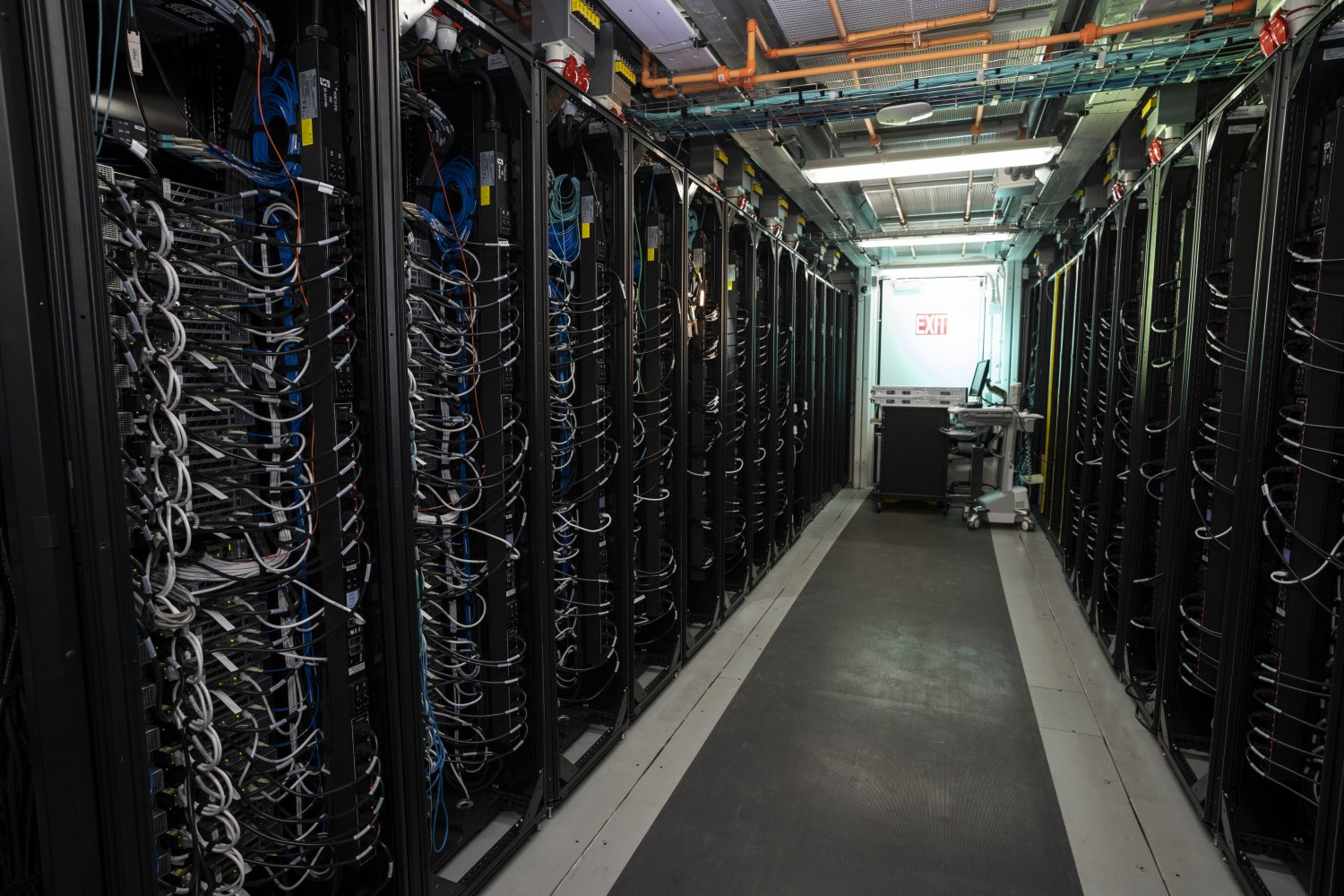
A USAF cadet and a Lincoln Laboratory researcher found AI chatbots can help nontechnical service members produce viable software applications for their unique problems.