JevProbe is presented, the first automated framework to evaluate JPDH by tracing adversarial influence from reachable context surfaces through program-consumed decisions to downstream security consequences in real-world Jev applications, and further construct JevProbeBench to support systematic evaluation of JPDH in re...
Yang Luo, Tian-Tian Ji, Zi-Feng Kang et al.· 0 citations
Coding agents use generated tests to decide whether a proposed patch satisfies an issue's requirements. A suite that fails on the buggy program and passes after applying the reference patch can still accept an incorrect patch or reject a correct patch. We introduce SWEPATCHTEST, a test-generation benchmark with 619 tas...
Hua Lu, Peng-Cheng Wang, Han-Yu Li et al.· 0 citations
Agent evaluation harnesses are software systems that run test suites, generate inputs, and decide outcomes with test oracles. This paper audits such software for reliability defects that score tables cannot reveal. We introduce an oracle-integrity auditing approach with five state-integrity invariants and three known-a...
Automating AI research creates a positive feedback loop between software capability and research effort. We study a stochastic realisation of this loop in which independent, positive, multiplicative improvements arrive at a rate proportional to a power of current capability. Within this model, randomness leaves the det...
Xiao-Yu Li, Zheng-Guang Gao, Chi-Wun Yang et al.· 0 citations
Reach audiences
Advertise in front of researchers, engineers, and readers.
We study industrial fault diagnosis as a classification task that assigns sensor time-series windows to predefined health states or fault types. Scarce labels and changing operating conditions make repeated training of specialized classifiers costly. Yet structures such as periodicity, trends, and transients can remain...
Nam V. Nguyen, Hoa Van Truong, D. HieuD et al.· 0 citations
The present study sought to shed light on the role played by Environmental Total Quality Management as an independent variable, with its dimensions (top management commitment, customer focus, and teamwork), in enhancing Organizational Excellence as a dependent variable with its dimensions (leadership, strategy, and hum...
Introduction: Preeclampsia (PE) is a complication of pregnancy, burdened with heavy maternal-fetal morbidity and mortality. It complicates 2–8% of pregnancies worldwide [1–3]. In addition to the clinical and biological monitoring of mother and child, doppler ultrasound is an essential tool and makes it possible to asse...
Koama Adjirata, Sinare Djamila Carine, S. Marouruana et al.· Journal Africain d Imagerie...· 0 citations
Integration of VCAR Thoracic software optimizes COVID-19 clinical management by providing objective and reproducible quantification, representing a major advance in thoracic radiology for managing emerging pulmonary infections.
K. Abdoulaye, Aba Ata Oumar, Sidibé Kassim et al.· Journal Africain d Imagerie...· 0 citations
A persistent gap separates academic research priorities from the operational challenges faced by manufacturing firms. Established identification methods, among them Failure Mode and Effects Analysis (FMEA) workshops, Lean audits and consultant engagements, are episodic, bounded by participant expertise and organised al...
M. Adoul, Abdelhamid Ghoul· Discover Artificial Intellig...· 0 citations
In outcome-selective Pavlovian-to-instrumental transfer (PIT), reward-related cues selectively energize instrumental responding for associated outcomes. In humans, this effect has been attributed both to automatic associative processes and to cognitive inferences about which rewards are available in the presence of a c...
Ulkar Huseynzade, David Dignath, Andreas B. Eder· Scientific Reports· 0 citations
Verification effort for FHIR-based clinical systems can be allocated by clinical consequence rather than by test-suite convention, extending quality obligations into the operational-behavior layer where specification-conformant systems have been shown to fail.
Pavlo Palamarchuk· Metaverse Science, Society a...· 0 citations
A matched-marginal benchmark for testing whether temporal and cross-player network correlation changes multiplayer predictions when mean delay, p95, p99 and packet loss are held constant. The archived release includes 3,000 deterministic model runs, raw and summary data, generated figures, Python code and a reproducibl...
Jason Doyle· Zenodo (CERN European Organi...· 0 citations
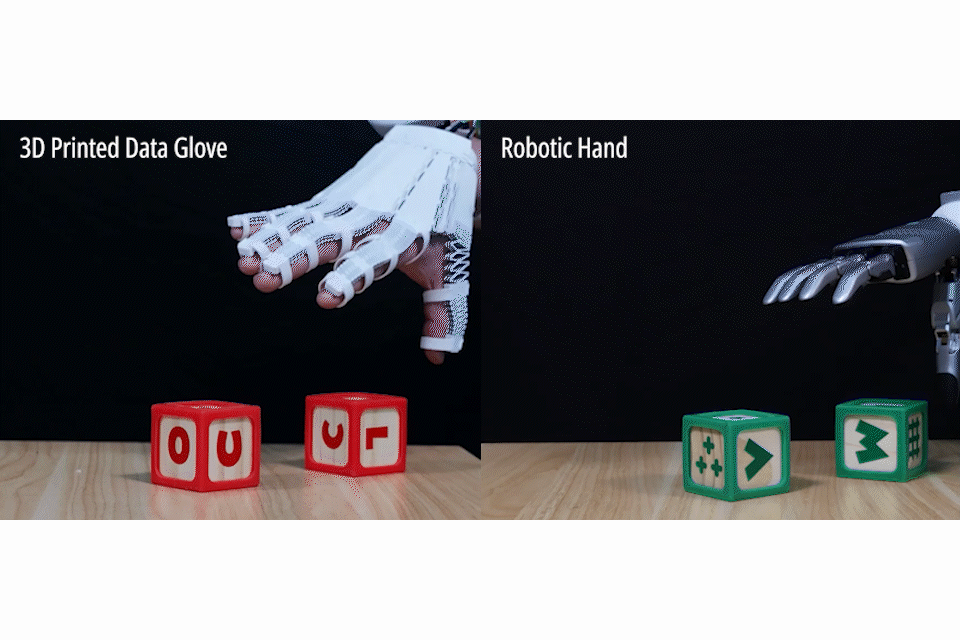
“X-Hinges” helps design and 3D print items like lamps and gloves with an interactive twist: automatically embedded sensors that perceive and adaptively respond to human contact.
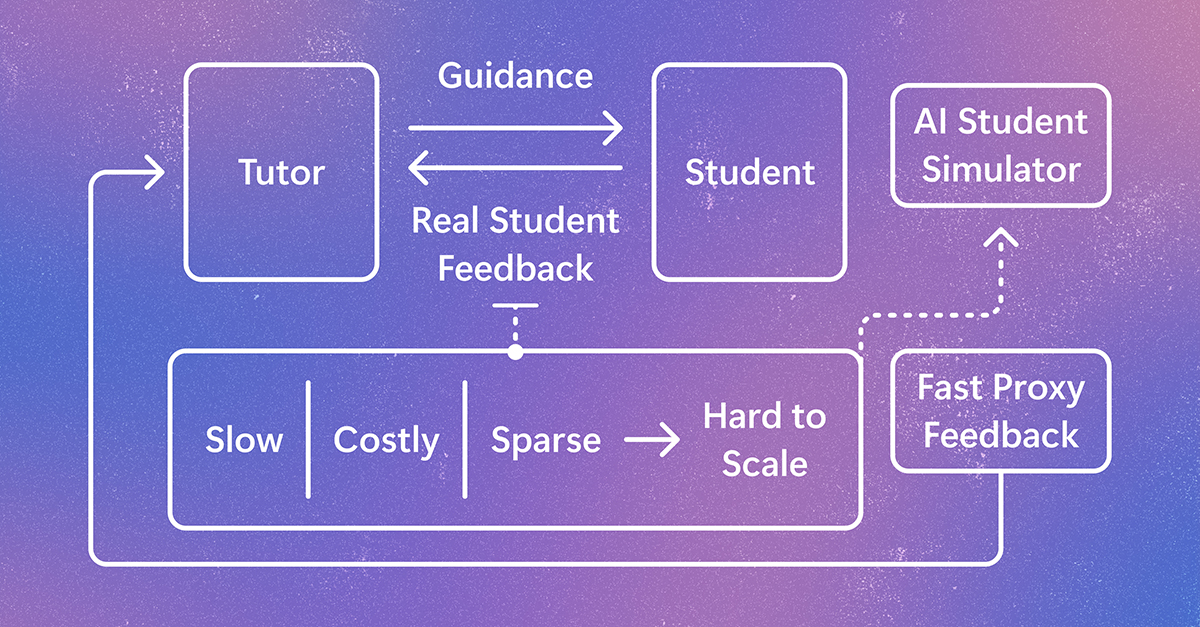
StudentSim is a research system for evaluating and improving AI tutoring tools before they are tested with learners. It models how individuals may engage with tutors, giving feedback to improve tutor performance across subjects like chess, writing, and mathematics. The post Simulating student learning for better AI tutoring appeared first on Microsoft Research.
MIT News · Artificial Intelligence· news.mit.eduOct 6, 2026
Writing as a participant and researcher, PhD student JS Tan SM ’22 has co-authored a new book about the rise of tech worker protests and the employer backlash that followed.
MIT News · Artificial Intelligence· news.mit.eduOct 2, 2026
Writing as a participant and researcher, PhD student JS Tan SM ’22 has co-authored a new book about the rise of tech worker protests and the employer backlash that followed.
We use cookies to run the site and, with your consent, for analytics and to show ads.
See our Cookie Policy.