What's Changed Terminal rendering, second release: field rendering and every language surface (v16.34.0, ABI 24) by @loumalouomega in https://github.com/loumalouomega/meshioplusplus/pull/139 Fluent reader: fix two integer overflows found by the fuzz campaign by @loumalouomega in https://github.com/loumalouomega/meshiop...
Vicente Mataix Ferrándiz, Nico Schlömer, Mariam Kesba et al.· Zenodo (CERN European Organi...· 0 citations
Abstract. Lumped-parameter models infer groundwater transit-time distributions by combining environmental-tracer input histories with parameterized age distributions. Their practical use requires flexible tracer representation, reliable repeated numerical integration, and explicit treatment of uncertainty when differen...
Jean‐Raynald de Dreuzy, Sarah Leray, Jean Marçais· 0 citations
The extent to which Saudi Arabia is undergoing a digital transformation now relies on enterprise platforms that are put together using APIs, service-oriented components, microservices, identity services, data stores, and capabilities that are managed externally. This architectural modularity speeds up the delivery proc...
Hossam Kenawy· Iconic Research and Engineer...· 0 citations
Lost Data Retrieval Lab is a Python-based educational application designed to demonstrate simulated file recovery, digital evidence documentation, and data integrity verification. Built with Python, Streamlit, and Pandas, the application generates synthetic test files, records SHA-256 hashes, simulates accidental delet...
Abeeha Zeeshan· Zenodo (CERN European Organi...· 0 citations
Reach audiences
Advertise in front of researchers, engineers, and readers.
In this paper, the design, simulation, and analysis of a novel hexagonal patch antenna operating at a frequency of 10.5 GHz are proposed. The hexagonal shape of the patch is chosen for its unique geometric properties, providing improved radiation characteristics and enhanced bandwidth. The proposed antenna leverages sl...
V. Gnanalakshmi, S. Asha, G. Sowmiyadevi· international journal of eng...· 0 citations
This repository documents a manuscript on urban soundscape composition. It contains supplementary materials, supporting data used to train and deploy a convolutional neural network (CNN) for soundscape classification in Venice, Italy (U-VNE-CNN), and data required to reproduce the results presented in the manuscript. T...
Julián Grijalba, Carlos A. Durán Paredes· Zenodo (CERN European Organi...· 0 citations
Software and hardware sources for multilevel Monte Carlo (MLMC) pricing of an arithmetic-average Asian call with Binomial MLMC: exact Binomial-count increments on a Cox–Ross–Rubinstein lattice, drawn from alias tables, with prices read from a ROM, so that the per-step kernel needs no multiplier.Contents: - Python MLMC...
Pieter Fabry· Zenodo (CERN European Organi...· 0 citations
ASSURANCE ENGINEERING FOR AUTONOMOUS QUANTUM–NANO HEALTH INFRASTRUCTURE AT THE LIMIT Measurement Trust × Clinical Authority × Recoverable Infrastructure This exploratory research monograph investigates how safety evidence could be constructed for future autonomous quantum–nano health infrastructure without confusing ph...
Description: Four synthetic data packages for testing MESA 5.7.0, the open-source tool for mapping environmental sensitivity. Each ZIP is one MESA project (config.ini plus input/ data), restored via Manage data → Restore data. The packages contain inputs only, no computed results: the recipient runs Process and gets th...
Ragnvald Larsen· Zenodo (CERN European Organi...· 0 citations
AbstractObjective. Public-key cryptography protects key establishment, authentication, software integrity and trust relationships across the optical transport and IP/MPLS networks that carry U.S. critical-infrastructure communications. A sufficiently capable quantum computer would break the widely deployed algorithms o...
AI Delivery Risk Intelligence is a research software prototype for ranking delivery-delay risk from historical e-commerce order data. This v0.1.0 source-code release includes an XGBoost pipeline, chronological cohort selection, purchase-time feature engineering, calibration diagnostics, bootstrap intervals for evaluati...
Zohreh Kaheh· Zenodo (CERN European Organi...· 0 citations
Objectives: This study aimed to evaluate the fitness and retention of presurgical infant orthopedic (PSIO) plates fabricated from three materials—polyethylene terephthalate glycol-modified (PETG), PETG/polyurethane (PETG/TPU), and direct-printed Tera Harz resin—within a standardized in vitro framework. Methods: Thirty...
F. Shakir, Mushriq F. Abid· Dental journal· 0 citations
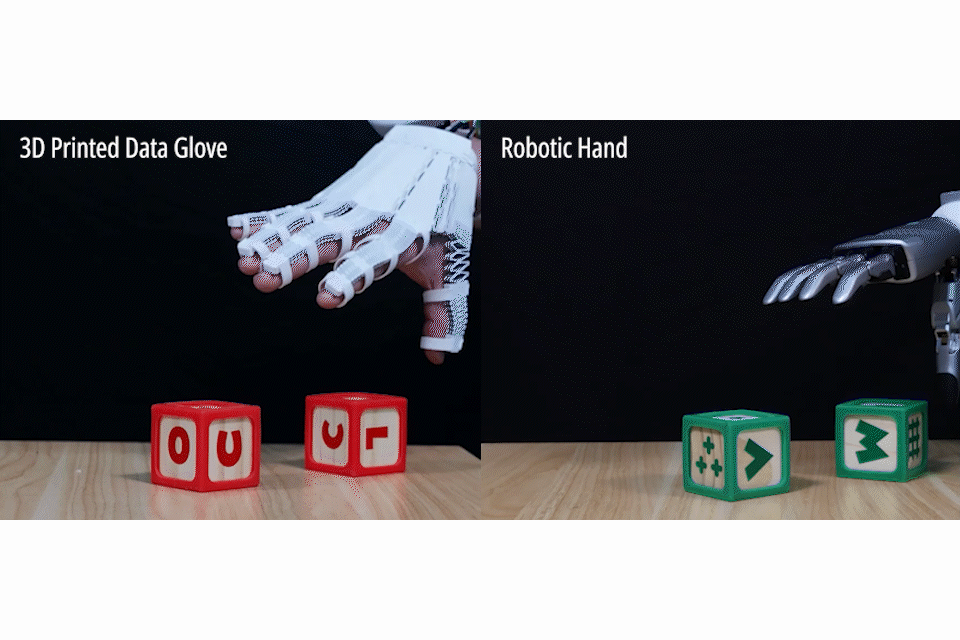
“X-Hinges” helps design and 3D print items like lamps and gloves with an interactive twist: automatically embedded sensors that perceive and adaptively respond to human contact.
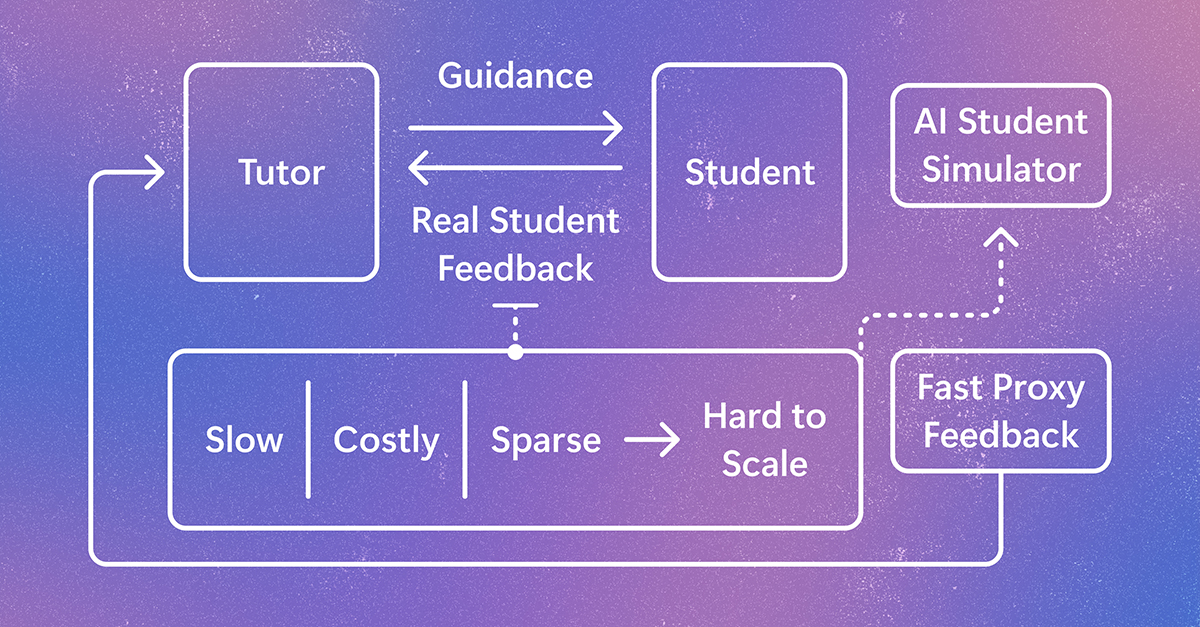
StudentSim is a research system for evaluating and improving AI tutoring tools before they are tested with learners. It models how individuals may engage with tutors, giving feedback to improve tutor performance across subjects like chess, writing, and mathematics. The post Simulating student learning for better AI tutoring appeared first on Microsoft Research.
MIT News · Artificial Intelligence· news.mit.eduOct 6, 2026
Writing as a participant and researcher, PhD student JS Tan SM ’22 has co-authored a new book about the rise of tech worker protests and the employer backlash that followed.
MIT News · Artificial Intelligence· news.mit.eduOct 2, 2026
Writing as a participant and researcher, PhD student JS Tan SM ’22 has co-authored a new book about the rise of tech worker protests and the employer backlash that followed.
We use cookies to run the site and, with your consent, for analytics and to show ads.
See our Cookie Policy.