Skip to content

"I Felt Very Seen, But Still Very Alone": Longitudinal Trajectories of General-Purpose LLM Use for Socioemotional Support

Sep 2026 · 0 citations · 87 references
Computer Science

TL;DR

It is argued that HCI researchers and designers should account for users'histories with their chatbots and broader care ecologies when evaluating AI systems over time and introducing updates that may disrupt established sources of support.

Abstract

People increasingly use general-purpose chatbots such as ChatGPT, Claude, and Gemini for mental health and emotional support. We report a multi-stage longitudinal qualitative study of 18 U.S. adults, conducted from April to December 2025, combining initial interviews, a four-week diary study, focus groups, and exit interviews. We find that socioemotional use often emerged gradually out of practical use and when other forms of support were unavailable. Participants developed routines and boundaries around chatbot use, which were disrupted by model updates, evolving public discourse about AI harms, and changes in personal circumstances. We demonstrate how longitudinal study captures factors beyond the human-AI dyad, and argue that HCI researchers and designers should account for users'histories with their chatbots and broader care ecologies when evaluating AI systems over time and introducing updates that may disrupt established sources of support.

View source

Similar papers

Book Open access Aug 2026

The Influence of Trust and Need Satisfaction on Young Adults’ Interactions with AI Chatbots for Emotional Support

English: In light of the rising mental health challenges faced by young adults and the growing prevalence of generative AI, this study examines publicly available chatbots, i.e. ChatGPT, as a source of emotional support. The central question was: To what extent - beyond mere functional utility - can digital closeness b...

Stefanie Osetrow, H. Klapperich, A. Huldtgren · 0 citations
Preprint Aug 2026

When AI"Works,"When Does Help Begin?: Intergenerational Support Around Older Adults'LLM Usage

LLMs are becoming part of everyday life, including for older adults (OAs). OAs often learn digital technologies with younger family members, who have traditionally served as"warm experts"providing trusted and personalized operational help. LLMs expand this role: family supporters may also help OAs judge appropriate use...

Hyehyun Chu, Yuri Lee, Y. Park et al. · 0 citations
Book Open access Oct 2026

"Maybe it's a very normal thing that we often forget about our own mental health": Researchers' safety in HCI research with, around, and about trauma

Critical issues are uncovered through thematic analysis, including insufficient ethical and conference review guidelines, a lack of institutional support such as counseling and training, and a reliance on informal knowledge-sharing networks within Human-Computer Interaction.

Natalia A. Obukhova, Nimra Ahmed, Elaine M. Huang · 0 citations
Open access Sep 2026

A PERSONA-GROUNDED MOBILE SYSTEM TO SUPPORT ADOLESCENT DECISION-MAKING THROUGH SIMULATED HISTORICAL CONVERSATION USING LARGE LANGUAGE MODELS

SageCircle is a Flutter mobile application that conditions a large language model on hand-curated biographies of 77 historical figures so that users can discuss real dilemmas with historically anchored “sages,” compare perspectives across a four-figure “Council of Sages,” and journal reflections entirely on-device.

Wan-Qing Tao, B. Nguyen · 0 citations
#artificial intelligence Review Sep 2026

Right Words, Wrong Moment: A Clinician-Grounded Analysis of Distress in 19,930 Conversations between Young People and ChatGPT

Young people increasingly turn to General-Purpose Conversational Agents (GPCAs), such as ChatGPT, in moments of distress. We examine young adults'(ages 18-25) experiences using ChatGPT. We first collected 19,930 ChatGPT conversations and survey data from 158 young adults. We then selected five example conversations ref...

M. Wang, Ella Zhang, Cameron Tan et al. · 0 citations

Related blog posts

MIT News · Artificial Intelligence Nov 17, 2026

Putting a spotlight on AI, society, and humanity

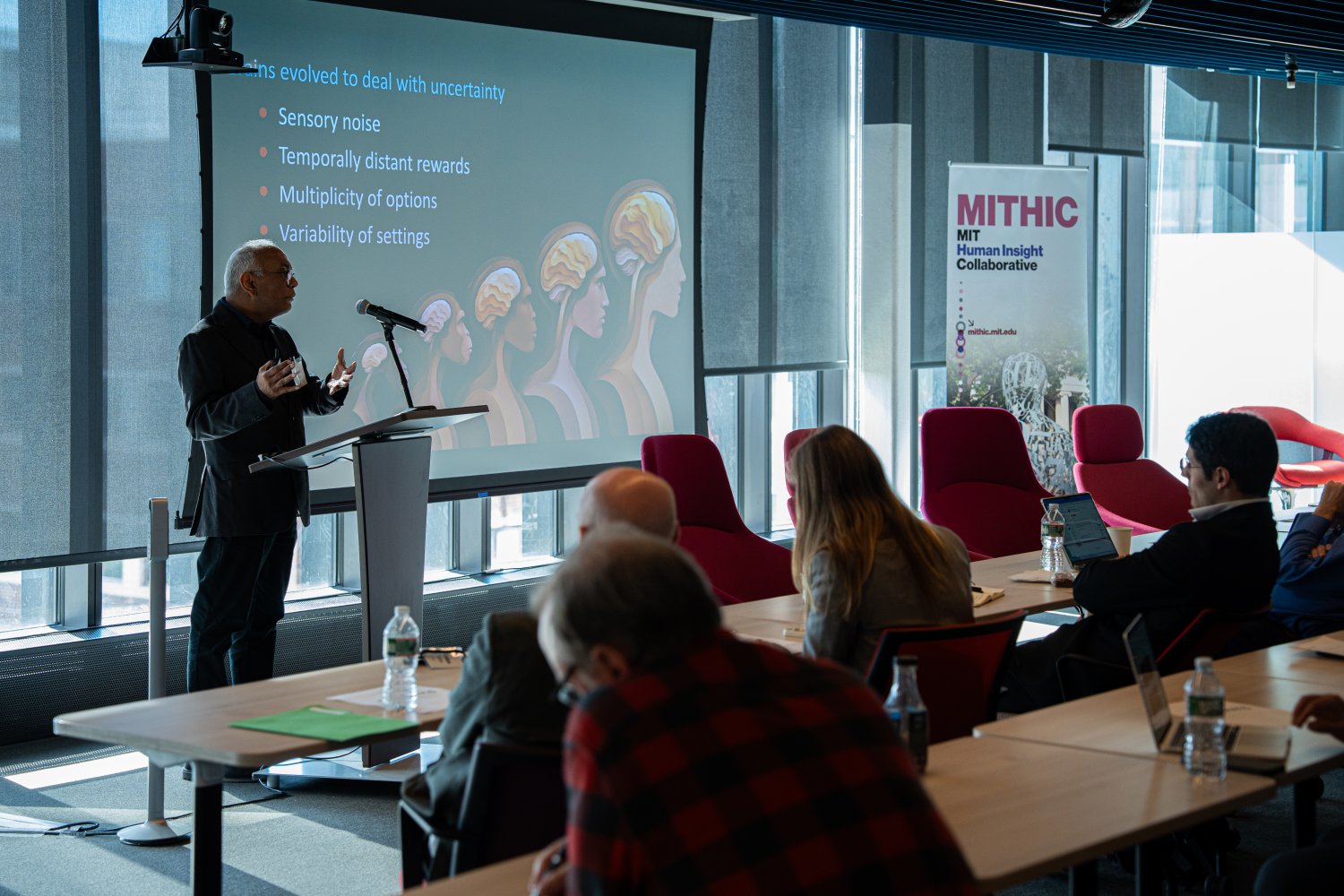
Supported by the MIT Human Insight Collaborative, scholars are exploring how AI is impacting the human experience and reshaping higher education.

MIT News · Artificial Intelligence Nov 17, 2026

Learning the language of machine learning

By studying the computational foundations of language learning, Associate Professor Jacob Andreas builds intelligent systems that can communicate effectively with humans.

Microsoft Research Blog Nov 16, 2026

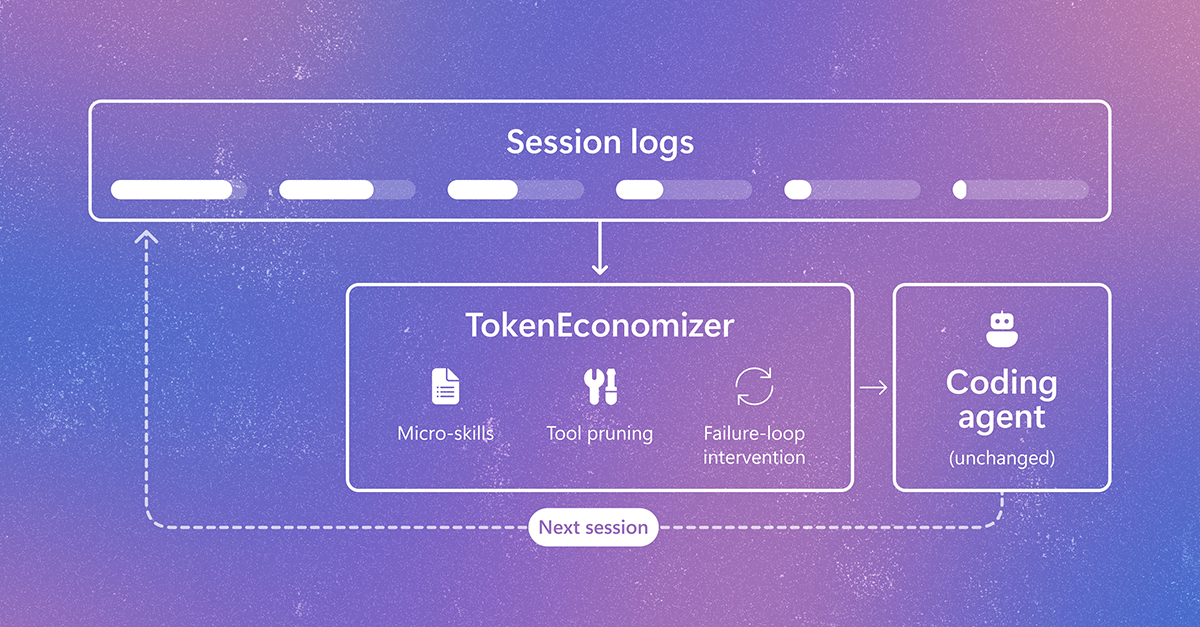
TokenEconomizer: Learning from Experience to Make AI Coding Agents More Efficient

AI coding agents are increasingly help developers fix bugs and build features largely on their own, but every interaction with their models consumes tokens. In each session, an agent sends instructions, tool descriptions, and session history to its model. Most efforts to reduce this cost focus on individual tasks. Yet developers return to the same […] The post TokenEconomizer: Learning from Experience to Make AI Coding Agents More Efficient appeared first on Microsoft Research.

We use cookies to run the site and, with your consent, for analytics and to show ads. See our Cookie Policy.