This work introduces Decision-Relevant Fresh Comparison (DRFC), which uses new, balanced samples from all agents to compare arms at the network level and switches only when fresh global evidence indicates that the common best arm has changed, and proves a high-probability dynamic regret bound with no adaptation term depending on $\Stloc$.
Abstract
Decentralized bandit systems often contain heterogeneous agents: rewards can change at individual agents even when the best action for the network stays the same. These local changes may cancel when rewards are averaged across agents, so the number of local changes $\Stloc$ can be much larger than the number of changes in the best common arm $\Stdec$. We introduce Decision-Relevant Fresh Comparison (DRFC), which uses new, balanced samples from all agents to compare arms at the network level and switches only when fresh global evidence indicates that the common best arm has changed. We prove a high-probability dynamic regret bound with no adaptation term depending on $\Stloc$, and show that every algorithm must still pay for identifying genuine decision switches and propagating them through the communication graph. Under a distinct time-average benchmark, an anytime-valid sliding-window extension handles gradual drift; experiments on synthetic, semi-real, and MovieLens-1M replays show that DRFC ignores decision-irrelevant local changes while the extension avoids false switches.
Change-of-measure lower bounds show that shared-reward identification is optimal up to one universal logarithmic factor, and that the entire statistical price of removing communication is a multiplicative $\rho^2$ in sample complexity.
Larissa Xu, Jasmine Nguyen, William Chang· 0 citations
Linear bandits model sequential decision-making problems with noisy rewards that are linear in the decision variable, where an agent must simultaneously learn about an unknown parameter that governs the mean rewards, while maximizing (expected) rewards over time. Two prominent algorithmic families--upper confidence bou...
Arda Güçlü, Subhonmesh Bose, J. Birge· 0 citations
COLD is an auditable measurement methodology, an evaluation contract that fixes a public information boundary, downstream stack G, and finite legal team family before outcomes are generated, which exposes selection headroom without manufacturing a routing win.
This work introduces \emph{ECHO-OFTRL}: optimistic follow-the-regularized-leader (OFTRL) equipped with an EMA cascade for high-order optimism (ECHO), where EMA denotes exponential moving average, and leverages a new form of optimism inspired by modern filter design.
Mingyang Liu, Gabriele Farina, A. Ozdaglar· 5 citations· ⚡4
Continual world models must decide whether new data justify changing the model. Fixed replay schedules and prediction-error triggers specify when to update, but neither reveals the value of an individual update: one deployment run cannot show how the same model would have performed at that moment had it held its parame...
An-Qi Li, Kaden Kim· 0 citations
Related blog posts
MIT News · Artificial Intelligence· news.mit.eduOct 2, 2026
Martin Trust Center Managing Director Bill Aulet introduces Dear Dreamer, a free platform for middle and high school students who want to learn about entrepreneurship.
Microsoft Research Blog· microsoft.comSep 30, 2026
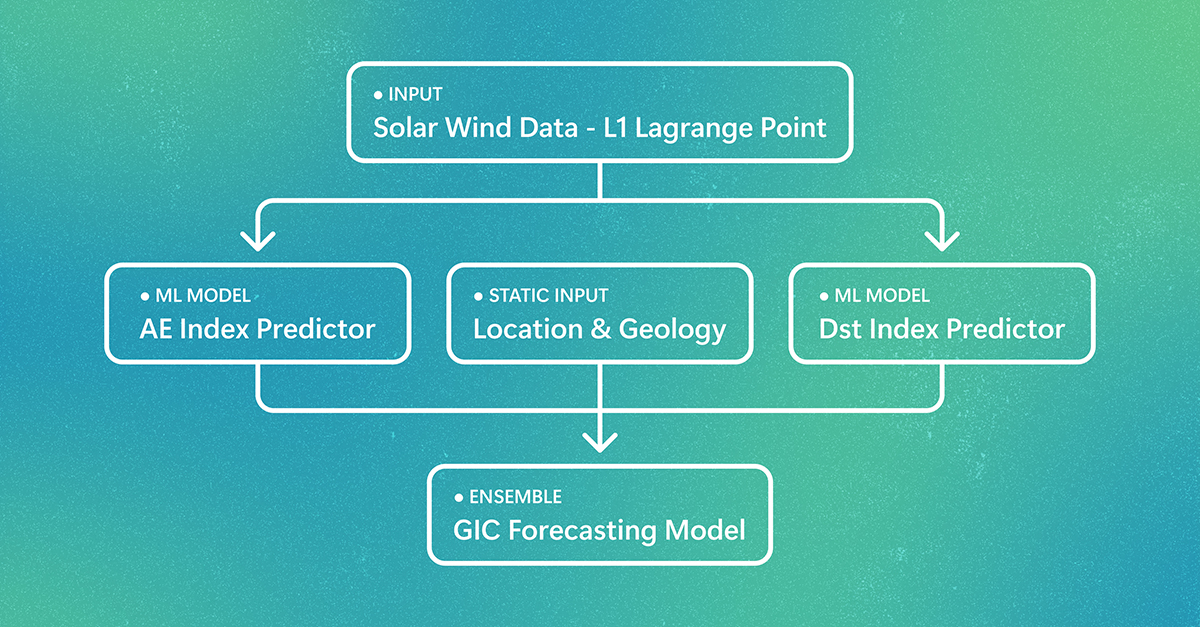
Extreme space-weather events can damage power systems on Earth and degrade GPS accuracy and satellite operations. A new machine learning system can predict where damage is likely to occur 30-60 minutes before a storm arrives. The post Forecasting space weather risks on power grids appeared first on Microsoft Research.
We use cookies to run the site and, with your consent, for analytics and to show ads.
See our Cookie Policy.