Landmark mathematical formalizations have taken specialist teams years to complete. We present FormalFlow, a system that coordinates AI proving agents under human supervision to address statement drift and proof composition in long-horizon formalization. Drawing on software engineering principles and practices, it uses a shared blueprint to guide nested planning, proving and review loops. Agents strengthen verification and review throughout formalization. We completed a machine-checked Lean 4 proof of the quantum soundness of the classical low individual-degree test, a core theorem underlying MIP* = RE. Developing the proof took 63 days; greater parallelism could further reduce this time. The final library contains 126,367 lines of Lean code, all generated by agents. The formalization corrects side conditions and intermediate errors while preserving the published final error bound under corrected assumptions. This work provides a verified foundation for quantum complexity and demonstrates a route to affordable verification of major research proofs by small teams.
Language models can produce plausible short proofs, but may still be unreliable on long-horizon research problems, where progress depends on a sequence of uncertain and interdependent decisions. We introduce Stellar Colosseum, a model-agnostic harness for allocating inference across research in mathematics and theoreti...
Hong-Hao Lin, David P. Woodruff, Yuan Deng et al.· 1 citation· ⚡1
Formalizing research-level stochastic optimization in Lean requires both an algorithm model and domain theory connecting foundational libraries to convergence proofs. Revising a model to restore provability can change the mathematical claim. We introduce ProofLoom, a fully automated LLM-agent system for Proof-Obligatio...
Analytical performance models --- derivations of throughput or speedup from hardware parameters --- make claims independently verifiable and expose binding constraints, yet rarely accompany architecture papers because building one by hand takes weeks of expert effort. We present Rosetta, a multi-agent LLM pipeline that...
Prove2Me aims to turn math formalization into a scalable, crowd-sourced effort open to anyone with an agent, and designed mechanisms and a specialized harness that enable large-scale collaboration so that agents can build on one another's work and freely reuse existing results.
Shu-Ze Chen, Kunal Marwaha, Xiao-Yang Lu et al.· 1 citation
Formal modeling provides strong guarantees about system correctness, but developing and repairing formal models remains labor-intensive and requires substantial expertise in logic and formal reasoning. Recent LLM-based autoformalization agents seek to reduce this burden by generating candidate formal models and revisin...
Hong-Shu Wang, Xin-Yue Zuo, Yu-Fan Cai et al.· 0 citations
An anecdotal account of AI agents, equipped with a CLI and a proof assistant, producing thousands of lines of machine-checked code, and the role of the human expert, whose contribution reduces to providing natural-language problem descriptions, reviewing auto-generated specifications, and occasionally supplying a key i...
Eleftherios Ioannidis, Nikhil Swamy, Gabriel Ebner et al.· Proc. ACM Program. Lang.· 1 citation
Related blog posts
Microsoft Research Blog· microsoft.comJul 30, 2026
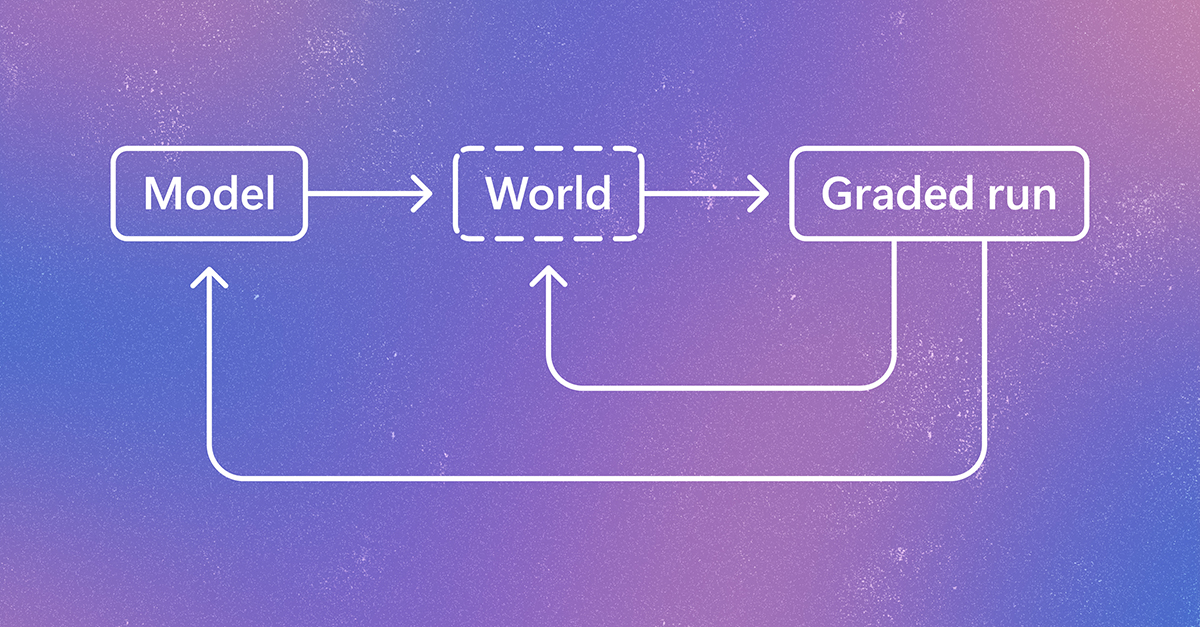
Computer-use AI agents struggle with multi-step workflows like email and customer support. Echoverse trains agents in realistic environments rather than simply providing more training tasks, helping them improve as the tasks, tests, and environments evolve. The post Echoverse: Deep, evolving environments for computer-use agents appeared first on Microsoft Research.
Known for his clear and elegant writing style, Bertsekas shaped fields from control and optimization to large-scale computation and artificial intelligence.