An unbiased direct gradient estimator is derived and the adaptive minimum-variance phase (AMVP) estimator is introduced for neural-network variational optimization by improving the signal-to-noise ratio of weak gradients to enable reliable scientific calculations where training previously failed, while substantially reducing computational cost.
Abstract
Neural networks provide expressive representations for scientific computing. However, even sufficiently expressive networks can suffer training failure in weak-gradient regimes, limiting their practical use in quantum many-body physics and ab initio quantum chemistry. Here we derive an unbiased direct gradient estimator and introduce the adaptive minimum-variance phase (AMVP) estimator for neural-network variational optimization. By improving the signal-to-noise ratio of weak gradients, these methods enable reliable scientific calculations where training previously failed, while substantially reducing computational cost. The framework enables compact networks to outperform larger and fine-tuned default standard-estimator models with over an order of magnitude less GPU time on correlated flux models, and ultimately exceed the density matrix renormalization group (DMRG) accuracy. It further achieves chemical accuracy in N$_2$ bond breaking and, for the first time, in heavy-element I$_2$ with explicit spin-orbit coupling. These results demonstrate that gradient-estimator design expands the capabilities of neural-network variational methods for accurate scientific computing.
A hybrid symbolic-neural framework is introduced that unifies the interpretability of the Embedded Atom Method with the adaptability of data-driven learning, and derives a composite potential that surpasses the fidelity of its constituent models.
Bilvin Varughese, Aditya Koneru, Adil Muhammad et al.· PHYSICAL REVIEW MATERIALS· 0 citations
Together, these results place autoregressive neural quantum states within the broader landscape of empirical neural scaling and open a quantitative route toward the systematic scaling of neural quantum solvers for ab initio quantum chemistry.
Chen Yu, Han-Lin Kong, Jia-Nan Wei et al.· 0 citations
Physics-Informed Neural Networks (PINNs) typically exhibit spectral bias, where some frequencies of the target function converge more slowly than others. In this work, we analyze the training dynamics of Fourier Feature PINNs in the Neural Tangent Kernel regime to address this limitation. We derive an explicit evolutio...
Juan Molina, P. Perdikaris, Mircea Petrache et al.· 0 citations
Physical neural networks and analog in-memory computing could reduce the energy cost of neural network training. Realizing this potential, however, requires optimizers that combine effective learning with physical implementability. SGD fits local analog updates but struggles on transformers, while Adam family is unstab...
Barren plateau diagnostics characterize whether gradient signal remains available for training, but surviving signal need not translate into successful optimization. We study this trainability--optimization gap at the level of optimizer steps. Treating coefficient-weighted Hamiltonian-term gradients as task-like compon...
A physics-informed random feature method for countering part of the spectral bias which PINN-based solvers are facing for a certain class of PDEs, and develops a rigorous approximation error analysis and derive high-probability error bounds on the H^1$ norm.
Chi-An Chen, Chun-Yang Liao, Ming Zhong· 0 citations
Related blog posts
MIT News · Artificial Intelligence· news.mit.eduNov 17, 2026
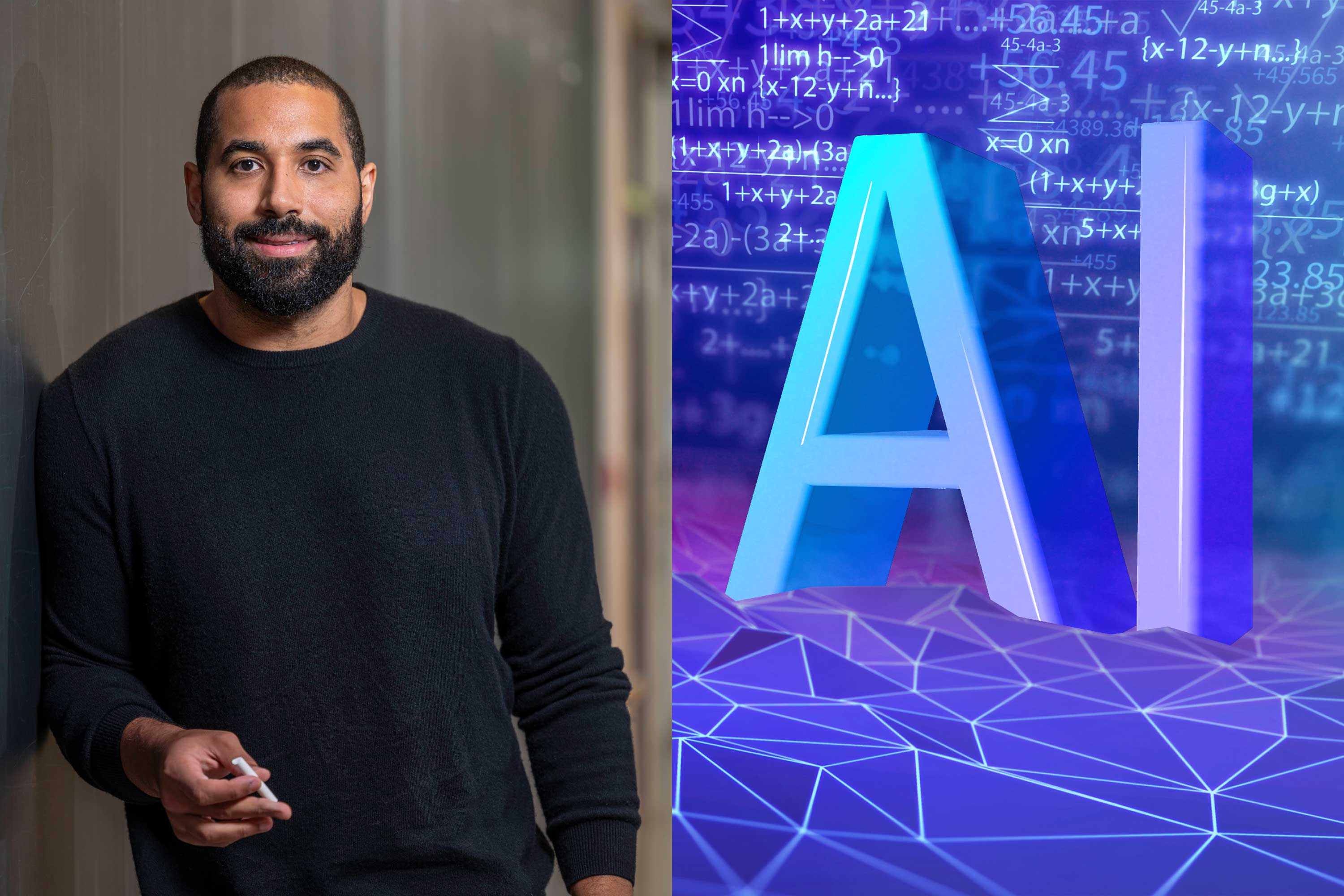
By studying the computational foundations of language learning, Associate Professor Jacob Andreas builds intelligent systems that can communicate effectively with humans.
Microsoft Research Blog· microsoft.comNov 16, 2026
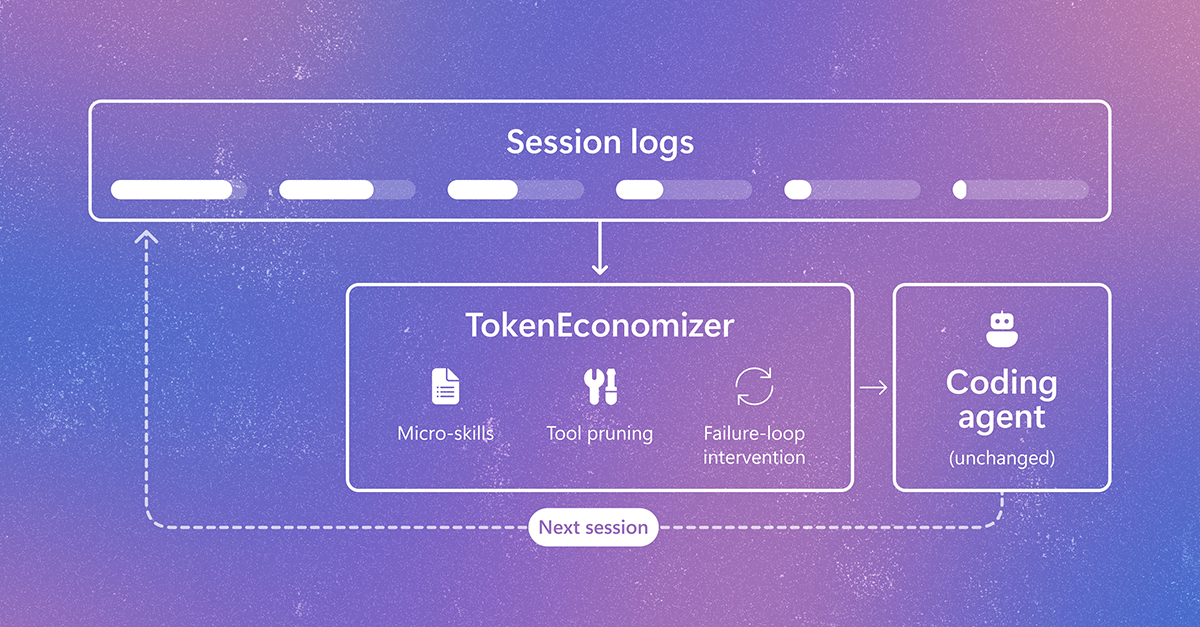
AI coding agents are increasingly help developers fix bugs and build features largely on their own, but every interaction with their models consumes tokens. In each session, an agent sends instructions, tool descriptions, and session history to its model. Most efforts to reduce this cost focus on individual tasks. Yet developers return to the same […] The post TokenEconomizer: Learning from Experience to Make AI Coding Agents More Efficient appeared first on Microsoft Research.
MIT News · Artificial Intelligence· news.mit.eduNov 13, 2026