These findings demonstrate that explicitly representing observation availability and using it to guide spatial compensation improves the robustness of traffic forecasting from incomplete histories.
Abstract
Accurate traffic forecasting depends on reliable historical observations, yet sensor readings are often unavailable in practice. Simply filling missing entries with numerical placeholders obscures their observation state and may distort the representation of historical traffic conditions. Graph neural networks can capture spatial dependencies among traffic sensors, but relying only on the physical road graph may not provide the most effective compensation when a sensor’s own history is incomplete. We therefore propose the Availability-Conditioned Spatial Compensation Graph Convolutional Recurrent Network (ACSC-GCRN), which uses observation availability to guide both historical feature use and spatial compensation. An availability-gated encoder prevents unavailable values from contributing to the value representation while retaining the observation state. The model further complements the road graph with correlation and adaptive relations and adjusts their contributions according to the current observation condition. Experiments on METR-LA, PEMS04, and PEMS08 under standard and synthetic missingness protocols, together with an additional dataset-native invalid-reading protocol on METR-LA, show that ACSC-GCRN consistently remains among the two best-performing methods across diverse observation conditions. Ablation results support the gated encoding and multi-source spatial compensation, with availability-conditioned fusion showing greater value under severe missingness. These findings demonstrate that explicitly representing observation availability and using it to guide spatial compensation improves the robustness of traffic forecasting from incomplete histories.
A robust focused comparative evaluation of seven traffic forecasting approaches suggests that traffic forecasting models should be assessed not only by clean-data accuracy but also by their robustness under degraded sensing conditions before deployment in real intelligent transportation systems.
Shreya N. Desai, Kasim Ishaque Ghanchi, Ali Mehdi Mirza et al.· International journal of res...· 0 citations
Fixed roadside cameras repeatedly observe a stable scene overlaid by sparse moving traffic. Temporal memory can recover weak observations, but reusing moving evidence at stale locations can corrupt occupancy predictions. Motion compensation addresses displacement, while reliance on the resulting history remains a separ...
Xiao-Kai Bai, Lei Yang, Song Wang et al.· 0 citations
In modern urban environments, traffic congestion poses a significant challenge for intelligent transportation systems, which demand accurate and scalable traffic flow forecasting solutions. Conventional time series approaches fail to capture the spatial dependencies inherent in road networks, which motivates the use of...
Dikshya Aryal, Hemant Joshi· Journal of Hillside College...· 0 citations
Experiments on real-world traffic datasets demonstrate that MVCTD achieves accurate forecasts with favorable runtime under severe missingness, confirming its suitability for online traffic prediction.
Traffic sensors commonly record flow, speed, and occupancy, but standard traffic flow forecasting benchmarks and models rarely exploit all three raw measurements reliably. Although speed and occupancy provide sensor-native traffic-state information beyond flow alone, existing releases often omit these variables, replac...
Experiments on PeMS03, PeMS04, and PeMS08 show that CausalST achieves the lowest MAPE among all compared methods while remaining competitive in MAE and RMSE, and ablation results reveal non-additive interactions between directed weighting and delayed aggregation.
Assistant Professor Pat Pataranutaporn describes a new interface that lets everyday users glimpse inside an AI's neural network before their chatbot ever says a word.
Microsoft Research Blog· microsoft.comJul 13, 2026
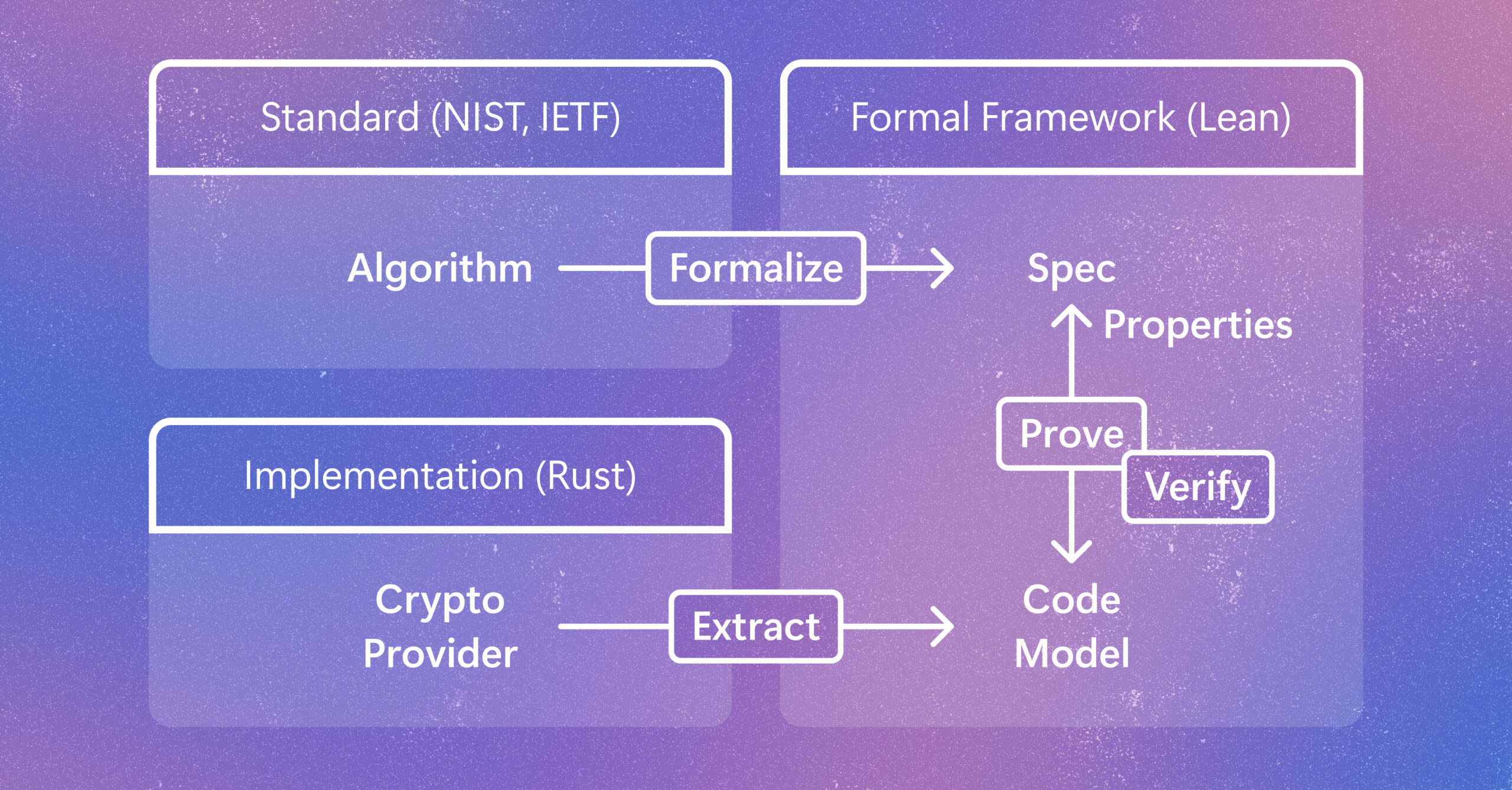
Cryptographic code supports vital protections in modern computing systems. Learn how a new method helps verify code as developers write it while preserving speed and adaptability as it gets implemented and evolves. The post Verifying Rust cryptography in SymCrypt, from standards to code appeared first on Microsoft Research.
MIT News · Artificial Intelligence· news.mit.eduJul 6, 2026
PhD student Rachel Sava, winner of the Envisioning the Future of Computing Prize, explores transformative improvements and dystopian risks of neural technology.