This essay introduces the concept of Socratic Intelligence (SI) and proposes five premises: (1) artificial and human agents learn through observation, interaction, and reflective examination of those interactions; (2) what is learned depends on metacognition and reinforcement; (3) SI comprises five interlocking dimensions: epistemic curiosity, critical self-awareness, assumption analysis, dialogical competence, and intellectual humility; (4) Generative SI, embedded in Intelligent Tutoring Systems (ITS) or Large Language Models (LLMs), can scaffold human learning; and (5) Generative SI can apply the Socratic method recursively to a system’s own computational processes as a form of internal epistemic self-regulation. We situate SI within several philosophical traditions: Plato’s elenchus and docta ignorantia, Aristotle’s phronesis, virtue epistemology on intellectual humility, Dreyfus’s critique of cognitivism, and recent epistemology of LLMs. We argue that SI construct gives the philosophy of AI a normative vocabulary that interfaces classical philosophy with current machine-learning practice.

The results indicate that software engineering work practices are chosen opportunistically, adapted and configured to provide value under the constrains imposed by the startup context.
Nicolò Paternoster, Carmine Giardino, M. Unterkalmsteiner et al.· Information and Software Tec...· 394 citations· ⚡54
This state-of-practice investigation was performed using a literature review followed by a multiple-case study approach and presents how inconsistency between managerial strategies and execution can lead to failure by means of a behavioral framework.
Carmine Giardino, Xiaofeng Wang, P. Abrahamsson· International Conference on...· 175 citations· ⚡19
This study conducts a case survey study based on the secondary data of the major pivots happened in 49 software startups, and demonstrates that customer need pivot is the most common among all pivot types.
Sohaib Shahid Bajwa, Xiaofeng Wang, Anh Nguyen-Duc et al.· Empirical Software Engineeri...· 127 citations· ⚡15
It is found that roles of MVPs in startups were not fully aware by entrepreneurs, and entrepreneurs should consider a systematic approach to fully explore the value of MVP, as a multiple facet product (MFP).
Anh Nguyen-Duc, P. Abrahamsson· International Conference on...· 93 citations· ⚡9
The method, ECCOLA, is presented, which aims at making the high-level AI ethics principles more practical, making it possible for developers to more easily implement them in practice.
Ville Vakkuri, Kai-Kristian Kemell, P. Abrahamsson· EUROMICRO Conference on Soft...· 64 citations· ⚡6
It is found that what perceived as biggest challenges by software startups do vary across different life cycle stages, even though its significance decreases when the learning focuses of the startups move from problem to solution and their products mature.
Xiaofeng Wang, Henry Edison, Sohaib Shahid Bajwa et al.· International Conference on...· 62 citations· ⚡6
Training AI agents with reinforcement learning can be challenging because their tools, context, and decision-making are managed by complex frameworks. Agent Lightning connects existing agents to RL training, making it easier to improve them without rebuilding them. The post Agent Lightning v1.0: A 3,500-Line Lightweight Agentic RL Framework for Training Agents with Real Harnesses appeared first on Microsoft Research.
MIT News · Artificial Intelligence· news.mit.eduOct 6, 2026
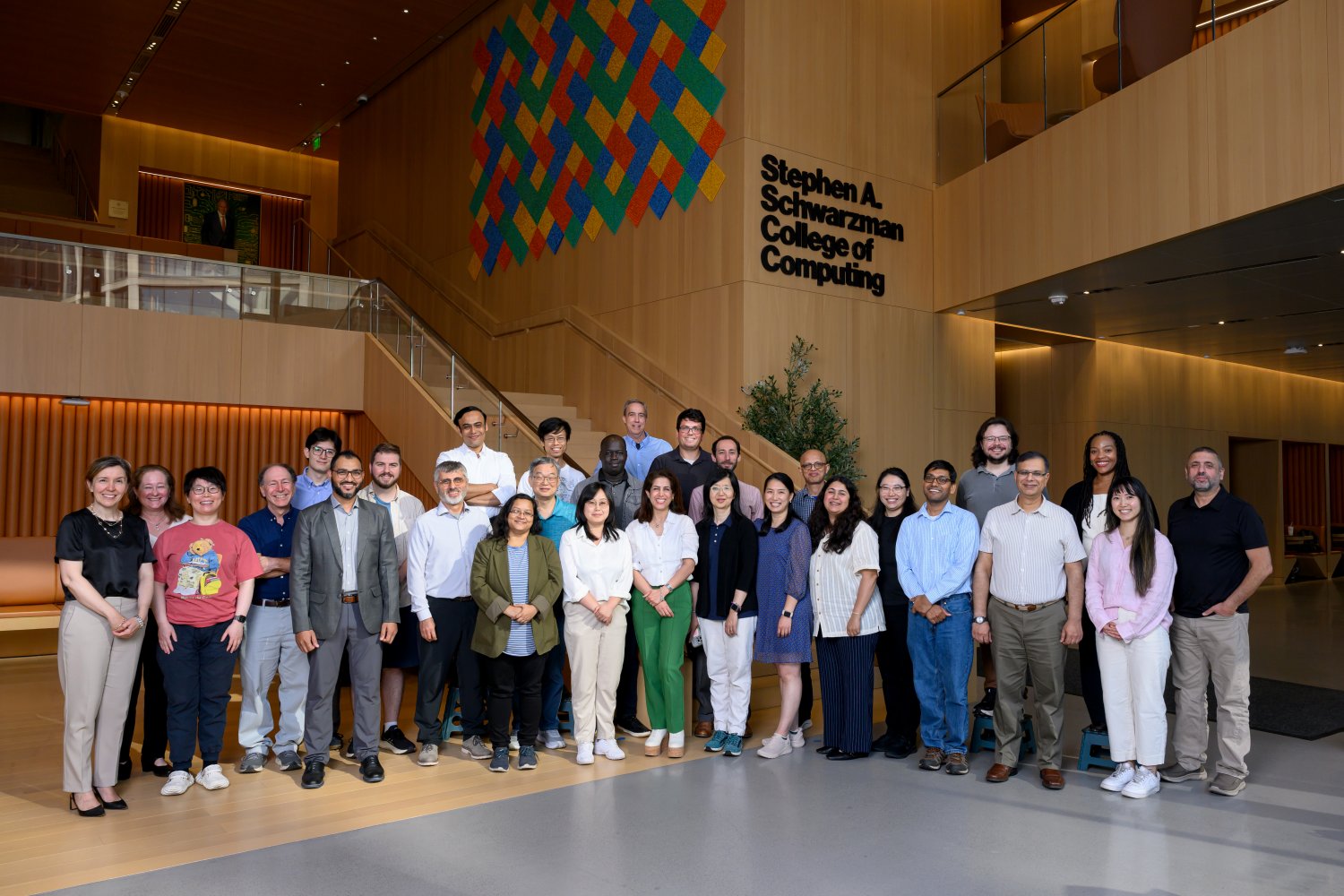
A weeklong summer workshop brought higher education faculty to campus to explore how AI and machine learning materials can be adapted for their classrooms.
We use cookies to run the site and, with your consent, for analytics and to show ads.
See our Cookie Policy.