Skip to content

NeuroSchedule2.0: A Novel GNN-Based Scheduling Method With RL-Based Preprocessing Optimization for High-Level Synthesis

Oct 2026 · IEEE Transactions on Computer-Aided Design of Integrated Circuits and Systems · Vol 45, pp. 4734-4747 · 0 citations · 53 references

Abstract

During high-level synthesis (HLS), scheduling is a critical step that determines the execution order of operations and directly affects circuit performance. However, existing scheduling methods suffer from either poor solution quality or limited scalability for complex designs containing hundreds of operations. This article introduces NeuroSchedule2.0, an efficient and effective GNN-based scheduling method that delivers both fast runtime and improved solution quality. NeuroSchedule2.0 is composed of a GNN-based list scheduling (LS) algorithm and a reinforcement learning (RL)-based preprocessing algorithm. Major features are as follows: 1) the learning problem for HLS scheduling is formulated for the first time, and a new machine learning framework is proposed; 2) pretraining models are adopted to further enhance the scalability for various scheduling problems with different settings; and 3) an RL-based preprocessing algorithm is proposed to optimize the topology of data-flow graphs for enhanced solution quality. Experimental results show that NeuroSchedule2.0 reduces the number of scheduled cycles by up to 8.41% on large real-life benchmarks compared with the state-of-the-art neural network-based scheduling method.
View source

Similar papers

Open access Sep 2026

HRL-TaskOpt: A Hierarchical Reinforcement Learning-Based Task Scheduling Framework for Multi-Cloud and Hybrid Environments

Cloud computing has emerged as a new paradigm, which entrusts task scheduling to ensure the satisfaction of stringent constraints on latency, energy, and resources for sustainably running real-time applications. State-of-the-art natural DRL-based scheduling solutions mainly rely heavily on DRL techniques and are either...

Krishna Patwari, Raghvendra Kumar, J. Sastry · 0 citations
Open access Aug 2026

A Hybrid Deep Reinforcement Learning Framework for Efficient Cloud Resource Scheduling

A hybrid Deep Reinforcement Learning (DRL) framework that combines Deep Q-Network, Proximal Policy Optimization and Advantage Actor-Critic to enable adaptive resource scheduling in cloud environments is proposed.

P. Priya, J. Geetha, E. Naresh et al. · 0 citations
#reinforcement learning Conference Open access Sep 2026

A Deep Reinforcement Learning (DRL) Based Transformer Method for Solving the Open Shop Scheduling Problem

In this study, we investigate the potential of a Deep Reinforcement Learning (DRL) based Transformer neural network architecture to solve large-scale open shop scheduling problems. The open shop scheduling problem (OSSP) involves sequencing n jobs across m machines, where each machine handles only one job at a time, an...

Faezeh Ardali, Gerald M. Knapp · 0 citations
#artificial intelligence Preprint Sep 2026

PowerZooJax: A JAX-based Power System Benchmark for Reinforcement Learning

Power system operation is a safety-critical sequential decision-making problem, making it a natural testbed for reinforcement learning (RL). However, existing RL environments for power systems are often narrow in scope and computationally limited by CPU-based simulation workflows, making large-scale evaluation difficul...

Zhan-Hua Pan, Xiao Liu, Zhi-Long Cao et al. · 0 citations
Conference Open access 2026

Deep Reinforcement Learning Driven Spectrum-Energy Joint Optimization

Spectrum efficiency (SE) and energy efficiency (EE) are two fundamental problems in the wireless resource management that need to be jointly optimized. Deep reinforcement learning (DRL) allows near-optimal policy learning via continuous interaction with the environment, which is suitable in complex, dynamic, and high-d...

Jia-Yi Liu · 0 citations

Related blog posts

Microsoft Research Blog Jul 13, 2026

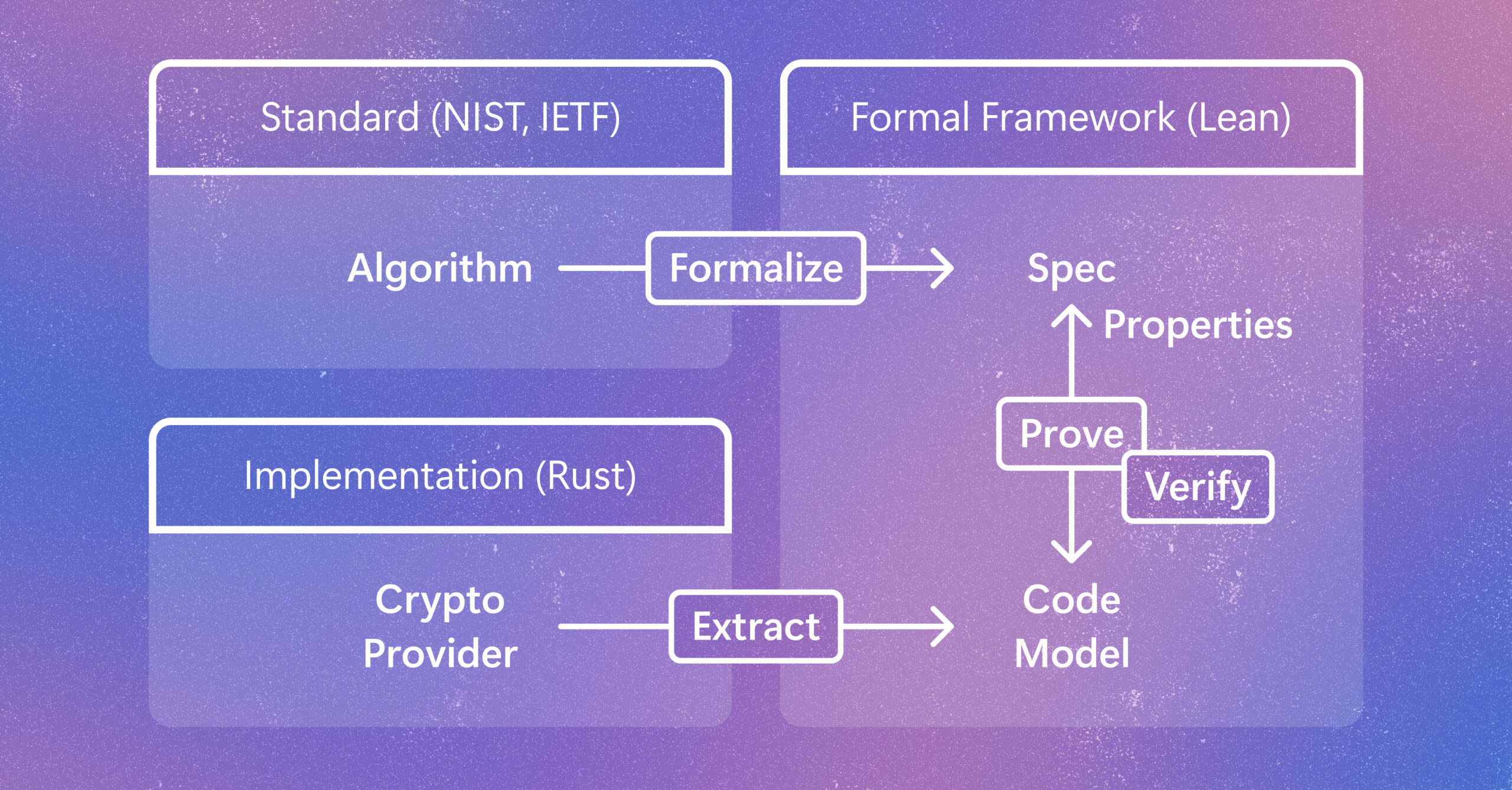
Verifying Rust cryptography in SymCrypt, from standards to code

Cryptographic code supports vital protections in modern computing systems. Learn how a new method helps verify code as developers write it while preserving speed and adaptability as it gets implemented and evolves. The post Verifying Rust cryptography in SymCrypt, from standards to code appeared first on Microsoft Research.

We use cookies to run the site and, with your consent, for analytics and to show ads. See our Cookie Policy.