World models for manipulation are typically trained from video, yet the events that determine how manipulation unfolds, such as making and releasing contact, are difficult to observe visually and are often easier to sense through touch. We present the Dexterous Tactile World Model (DTWM), a video world model for future-frame prediction of egocentric manipulation from both observed video and tactile signals from a glove worn on each hand. We condition a pretrained video diffusion transformer on each hand's tactile signal through a zero-initialized residual at the corresponding hand location in the video tokens, while a causal mask prevents predicted frames from accessing future information. Compared with a vision-only model matched in architecture, parameters, and training, DTWM reduces the underestimation of hand motion from 23% to 9%, while reducing the perceptual error in the hand region by 7.4% across three training runs per model. The benefit also increases over the prediction horizon, with the improvement in the later predicted chunks being about 4.1x larger than in the first. DTWM also outperforms other visual-tactile world models under the same setting, and training with touch improves future-frame prediction even when no touch is available at inference. Ablations show that the model benefits from both the magnitude and spatial location of force: replacing the tactile signal with binary contact states, either per hand or per location, increases prediction error. The observed course of the force indicates whether the interaction will persist or change.
This publication proposes a definition and a classification of agile software development approaches and analyses ten software development methods that can be characterized as being "agile" against the defined criterion.
P. Abrahamsson, O. Salo, Jussi Ronkainen et al.· arXiv.org· 727 citations· ⚡54
The study shows that agile practices improve both informal and formal communication, but indicates that, in larger development situations involving multiple external stakeholders, a mismatch of adequate communication mechanisms can sometimes even hinder the communication.
M. Pikkarainen, Jukka Haikara, O. Salo et al.· Empirical Software Engineeri...· 401 citations· ⚡48
The results indicate that software engineering work practices are chosen opportunistically, adapted and configured to provide value under the constrains imposed by the startup context.
Nicolò Paternoster, Carmine Giardino, M. Unterkalmsteiner et al.· Information and Software Tec...· 394 citations· ⚡54
The possibility of inferring high-dimensional data inference in a model that consists of a prior and an auxiliary differentiable constraint given some additional information is considered, thereby allowing a range of potential applications in adapting models to new domains and tasks.
Alexandros Graikos, Esmeralda S. Whitammer, N. Jojic et al.· Neural Information Processin...· 316 citations· ⚡15
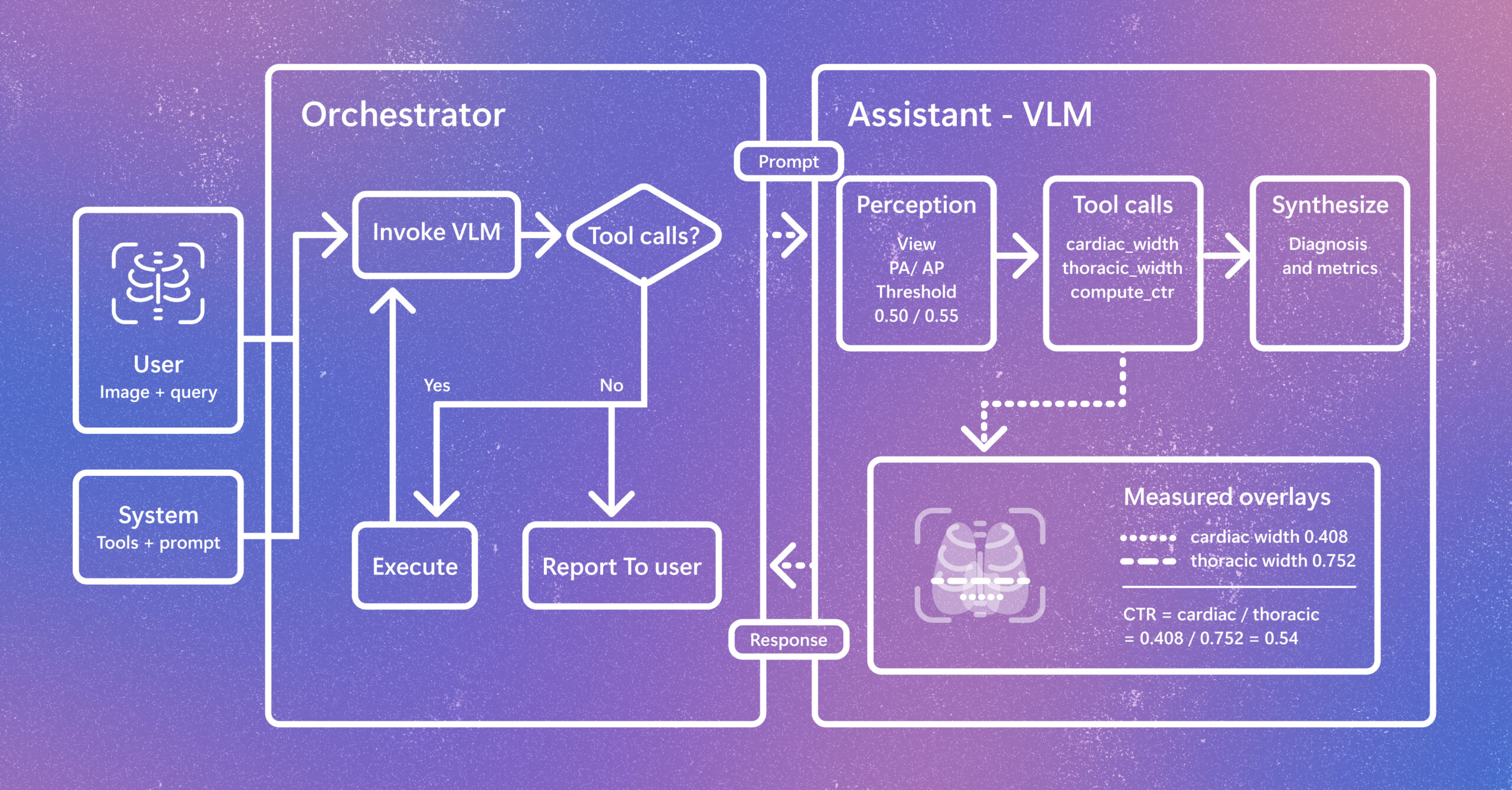
Radiology AI is evolving beyond report generation. CARE-X explores a unified approach that combines flexible reasoning, calibrated predictions, and measurement-based tools for chest X-ray interpretation. The post Introducing CARE-X: Towards Clinically Useful Radiology VLMs with Auxiliary Supervision, Reward-Aligned Learning, and Tool-Augmented Measurement appeared first on Microsoft Research.