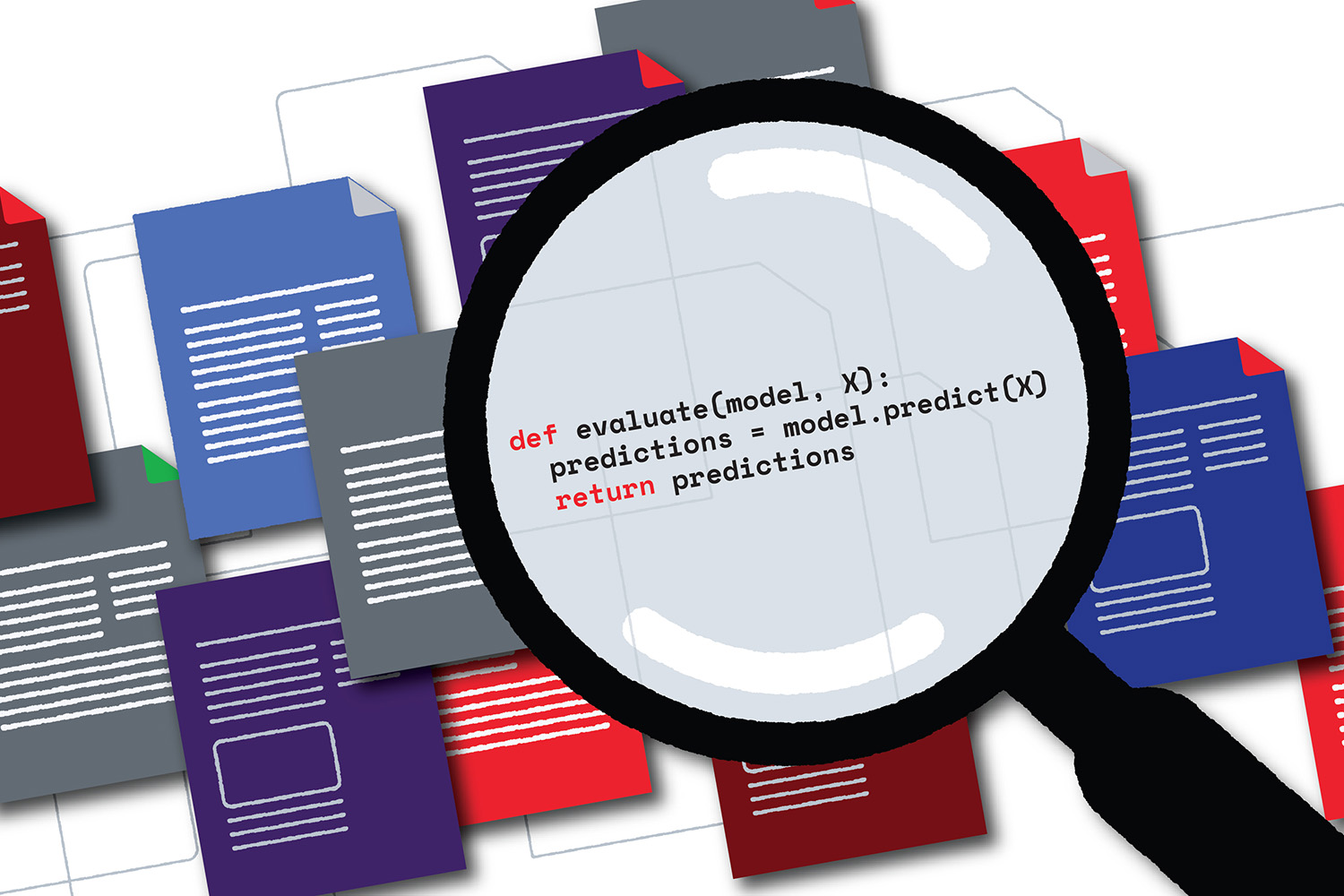
Inspired by distributed computing frameworks like Apache Spark, DISCO partitions long context across a fleet of Worker LLMs dedicated exclusively to parallel, localized grounding, establishing a highly efficient paradigm for robust long-context inference.
Abstract
While Large Language Models (LLMs) advertise million-token context windows, reasoning quality often collapses as inputs grow -- a phenomenon termed context rot. This failure stems from a structural entanglement in monolithic architectures, where the massive search burden of contextual grounding exhausts the representational capacity needed for complex reasoning. To resolve this, we propose Grounding-Reasoning Disaggregation via DIStributed long COntext scaling (DISCO). Inspired by distributed computing frameworks like Apache Spark, DISCO partitions long context across a fleet of Worker LLMs dedicated exclusively to parallel, localized grounding. A central Driver LLM, trained via Reinforcement Learning (GRPO) to optimize planning, orchestrates execution by dynamically mapping queries into atomic extraction tasks and reducing the gathered evidence to synthesize a final answer. By isolating reasoning from raw context noise, DISCO effectively eliminates context rot. On RULER-QA (1M tokens), it maintains 78.4% accuracy where standard baselines collapse. Furthermore, it outperforms full-context models by up to 9.8 points on LongBench v2 and matches frontier models like Gemini-3-Pro-Preview while reducing inference costs by over 80%, establishing a highly efficient paradigm for robust long-context inference.

Generating executable structured queries for OpenStreetMap (OSM) from natural language remains a challenging task due to the rigid syntax of OverpassQL and the steep learning curve it presents to end-users. While steering Large Language Models (LLMs) via
demonstration contexts
offers a promising solution, existing...
Zhuoyue Wan, Wentao Hu, Hwanhee Kim et al.· Proceedings of the ACM on Ma...· 0 citations
This report summarizes discussions that took place in the context of a Dagstuhl seminar1 to explore the emerging paradigm of AI-native databases designed to support agentic workflows and Retrieval-Augmented Generation (RAG) by integrating Large Language Models (LLMs) with robust database abstractions. The central synth...
S. Amer-Yahia, Arijit Khan, Wolfgang Lehner et al.· ACM SIGMOD Record· 0 citations
Retrieval-augmented generation is becoming agentic. A search harness writes queries, reads results, reformulates, and decides when to stop. This largely solves accuracy: a harness with only BM25/grep and MiniMax M3 answers 85% of BrowseComp-Plus and 91% on multi-hop FRAMES in our runs, without compiled or vector indexe...
Zhi-Chang Yu, Bai-Ning Cao, Sbaaoui Idriss et al.· 0 citations
Modern IT helpdesks increasingly need to support multiple languages while staying transparent and resistant to hallucination, yet most deployed chatbots still rely on single-model architectures that struggle on both counts. This paper presents NexaServe v2, a four-tier cascading multi-agent IT helpdesk system combining...
Syed Muhammad Umar Afnan, A. Nellyet· International Journal of App...· 0 citations
The integration of natural language understanding into conversational commerce requires robustly extracting structured intents from idiomatic text. While cloud-based models are highly capable, their latency, privacy risks, and operational costs necessitate efficient local alternatives. To address this, we empirically e...
Ratomir Karlović, Luka Sever, Marijela Miličević et al.· Information· 0 citations
Related blog posts
MIT News · Artificial Intelligence· news.mit.eduNov 20, 2026
Senior Research Scientist Jim Glass discusses how his MIT-IBM Computing Research Lab collaboration connects perception and language, and addresses the shortcoming of current models.
MIT News · Artificial Intelligence· news.mit.eduNov 19, 2026
An MIT and Dana-Farber Institute-led team used large language models to examine nearly 4,000 studies and hundreds of code repositories, revealing gaps in the information needed to scrutinize and reuse published research.
By studying the computational foundations of language learning, Associate Professor Jacob Andreas builds intelligent systems that can communicate effectively with humans.
We use cookies to run the site and, with your consent, for analytics and to show ads.
See our Cookie Policy.