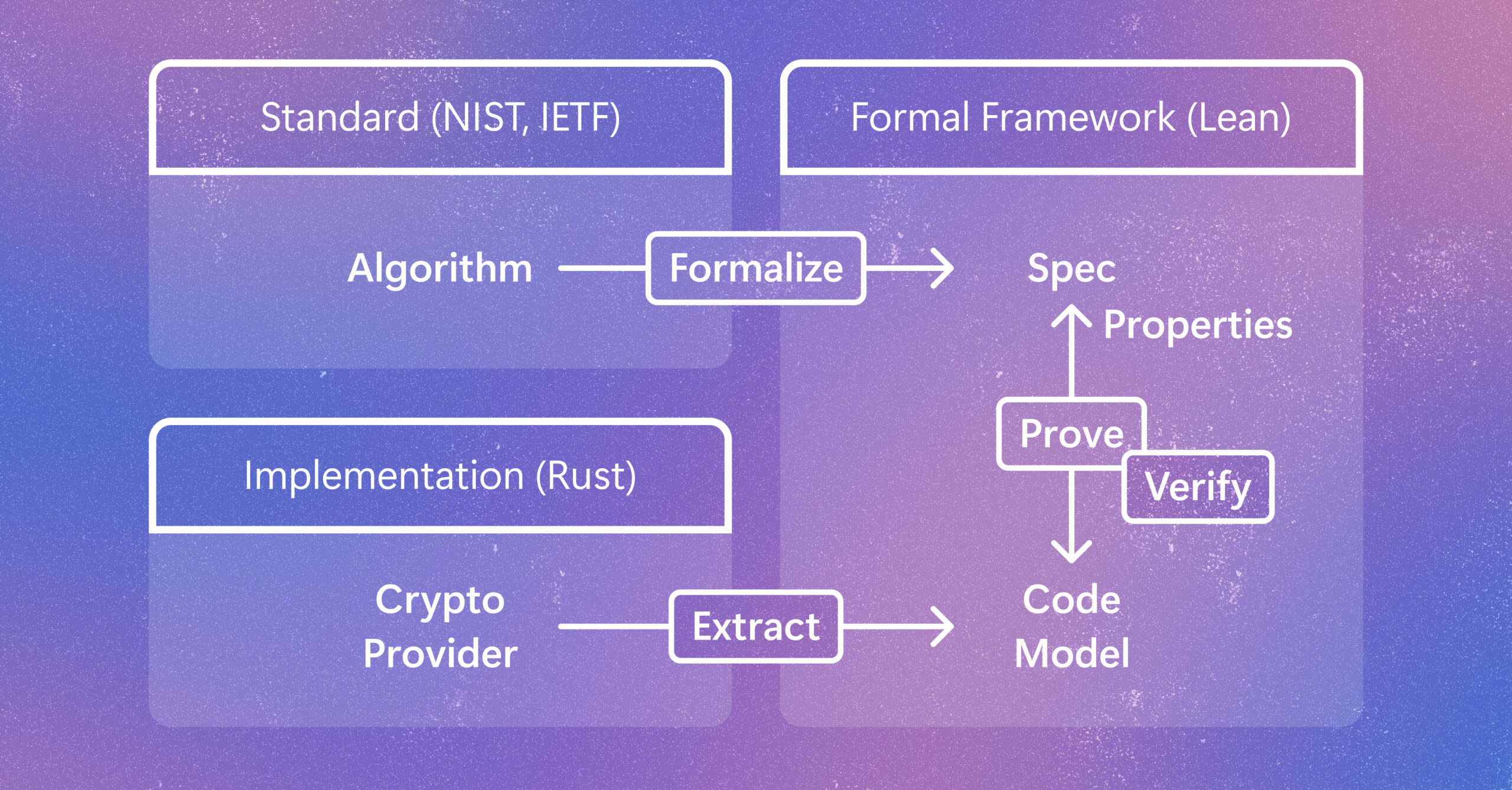
CoRe-GNN is proposed, which performs both propagations in parallel at each layer: a coarsened inter-cluster term capturing long-range structure, and a local intra-cluster term preserving per-node discriminability.
Abstract
Training Graph Neural Networks on large graphs is challenged by the memory cost of storing all node representations across layers. We show that several existing scalable approaches can be written as structured modifications of the GNN propagation matrix, providing a unified perspective that exposes their respective limitations. In particular, graph coarsening replaces it by a low-rank approximation that enables spectral guarantees but assigns uniform representations to clustered nodes, while Cluster-GCN restricts the propagation matrix to intra-cluster connections that allow efficient batching but sever long-range information. These are complementary failures of the \emph{same} decomposition of the graph into groups of nodes. To obtain the best of both worlds, we propose \textbf{CoRe-GNN}, which performs both propagations in parallel at each layer: a coarsened inter-cluster term capturing long-range structure, and a local intra-cluster term preserving per-node discriminability. We prove that CoRe-GNN inherits analogous approximation guarantees to those of graph coarsening, and introduce a natural cluster-based \emph{batching scheme} that scales to graphs with millions of nodes. On node classification benchmarks spanning homophilic, heterophilic, large-scale, and long-range graphs, CoRe-GNN outperforms both graph coarsening and Cluster-GCN baselines. Notably, CoRe-GNN reaches competitive accuracy on \emph{long-range} tasks, while remaining memory-efficient through batching.
This work proposes a novel Adaptive Dual-level Collaborative GNN associated with an adaptive dual-level collaborative mechanism, and shows that the ADC-GNN can inject the learned high-level information back into the node level, forming a closed-loop, bidirectional optimization process.
Graph Neural Networks (GNNs) are popular deep learning models designed to process graph-structured data through recursive neighborhood aggregations in the message passing process. When applied to semi-supervised node classification, the message-passing enables GNNs to understand short-range spatial interactions, but also causes them to suffer from over-smoothing and over-squashing. These challenges hinder model expressiveness and prevent the use of deeper models to capture long-range node interactions (LRIs) within the graph. Popular solutions for LRIs detection are either too expensive to process large graphs due to high time complexity or fail to generalize across diverse graph structures. To address these limitations, we propose a mechanism called information flow control, which leverages a novel connectivity measure, called information flow score, to address over-smoothing and over-squashing with linear computational overhead, supported by theoretical evidence. Building on this mechanism, we introduce DeltaGNN, to the best of our knowledge among the first scalable (featuring linear computational and memory complexity overhead) and generalizable (capable of effectively handling graphs with diverse homophily, density, and topology) architectures for long-range and short-range interaction detection. We benchmark our model across 10 real-world datasets, including graphs with varying sizes, topologies, densities, and homophilic ratios, showing superior performance with limited computational complexity.
Kevin Mancini, Islem Rekik· IEEE Transactions on Pattern...· 2 citations
SmartNIC-based in-network prediction is a practical complement to partitioning and compression techniques for communicationefficient full-graph GNN training at scale, and results indicate SmartNIC-based in-network prediction is a practical complement to partitioning and compression techniques for communicationefficient full-graph GNN training at scale.
Guofan Yu, Sitian Chen, Zhenheng Tang et al.· IEEE International Conferenc...· 0 citations
Graph neural networks (GNNs) have emerged as a powerful framework for learning from graph-structured data. However, their efficient training remains challenging, particularly in distributed computing environments. This challenge arises from the use of message passing, which couples all graph nodes, leading to expensive optimization steps, high memory requirements, and substantial communication overhead. To alleviate these limitations, we propose a novel domain-decomposition (DD) variant of AG2m, an AdaGrad method enhanced with second-order curvature information and momentum, denoted by DD-AG2m. The proposed DD-AG2m alternates between AG2m optimization on the original (global) graph and AG2m optimization on the partitioned graphs. To incorporate global information at reduced cost, we further introduce a two-level variant (2DD-AG2m) that performs global optimization steps on a coarse graph obtained by randomly subsampling nodes within each subdomain. Numerical experiments spanning graph classification, node-level regression, and spatiotemporal forecasting tasks demonstrate that the proposed DD methods reduce the computational cost required to achieve the same predictive performance by a factor of 4-8. Moreover, for the fixed computational cost, they improve the predictive performance of GNNs by up to 22% compared with the baseline AG2m.
Laurynas Varnas, Julien Herrmann, Alexander Heinlein et al.· 0 citations
Experimental results demonstrate that the coarsening technique significantly accelerates dynamic GNN training and inference without compromising predictive performance, offering a practical path toward scalable dynamic graph learning.
Hieu Vu, Rares-Mihail Neagu, Bijaya Adhikari· Proceedings of the 32nd ACM...· 0 citations
Graph neural networks (GNNs) can exhibit unfair behavior even when sensitive attributes are excluded from node features, because graph topology and message passing propagate group-correlated signals under sensitive homophily. Existing fairness-aware GNN methods mainly constrain representations or prediction distributions at a global level, without explicitly controlling the local structural pathways through which biased information propagates during aggregation. We propose Subgraph Filtering for Fair Graph Neural Networks (SF-GNN), a lightweight and architecture-agnostic framework that mitigates structural bias at its source. SF-GNN identifies bias-prone edges by combining sensitive homophily with structural propagation amplifiers, including hub participation and triadic closure. It then incorporates stochastic edge filtering into each message-passing step to selectively downweight or remove these edges while preserving the remaining graph structure. Training further incorporates a statistical-parity regularizer with a warm-up schedule to stabilize optimization. Experiments on five benchmark datasets show that SF-GNN achieves consistent fairness improvements while maintaining competitive predictive performance, leading to a better fairness--accuracy trade-off than recent fairness-aware GNN baselines.
Haohui Lu, Ji-Yuan Tian, Fangyu Zhou et al.· 0 citations
Related blog posts
MIT News · Artificial Intelligence· news.mit.eduJul 15, 2026
Assistant Professor Pat Pataranutaporn describes a new interface that lets everyday users glimpse inside an AI's neural network before their chatbot ever says a word.
MIT News · Artificial Intelligence· news.mit.eduJul 6, 2026
PhD student Rachel Sava, winner of the Envisioning the Future of Computing Prize, explores transformative improvements and dystopian risks of neural technology.