Under this condition, it is proved exponential convergence to a unique fixed point and its bias relative to the unregularized Bellman solution and it is shown that the same mechanism extends to entropy-regularized off-policy control through soft Q-learning.

Abstract
Semi-gradient temporal-difference learning is a core algorithmic component of reinforcement learning, but bootstrapping with function approximation generally induces a non-conservative vector field and can lead to instability. We analyze this effect for two-layer neural networks in the mean-field regime and identify a simple stability mechanism in which entropy-induced relaxation dominates the sensitivity of the moving bootstrap target. Under this condition, we prove exponential convergence to a unique fixed point and quantify its bias relative to the unregularized Bellman solution. We also show that the same mechanism extends to entropy-regularized off-policy control through soft Q-learning.
An exact, information-theoretic analysis of stochastic gradient descent and its variants is given, showing that a preconditioned SGD step is the posterior-mean update of a Gaussian Bayes model, and that its one-step regret splits into an intrinsic-time cost and a change in comparator information.
This analysis reveals that large learning rates do not universally hinder the recovery of sparse solutions and can be harnessed to control the implicit bias of training.
Aniket Sanyal, Tom Jacobs, Rebekka Burkholz· 0 citations
This work studies a spatially-coupled monotone ResNet architecture whose one-step operator is a non-negative local aggregation, designed to satisfy monotonicity and stability at the operator level, and obtains operator-level convergence to the viscosity solution via the Barles–Souganidis framework.
We study stationary discrete-time mean-field games with finite state and action spaces under the average-reward criterion, with an entropy-regularized objective and population-dependent dynamics and rewards. Under a minorization condition, the soft Q-operator is a span-seminorm contraction for the full transition kerne...
Gunes Akbas, Naci Saldi, Berkay Anahtarci et al.· 0 citations
Related blog posts
MIT News · Artificial Intelligence· news.mit.eduOct 13, 2026
Machine-learning networks can learn without detailed instructions from a designer. Those that do may offer insight into how the brain reorganizes itself during learning.
MIT News · Artificial Intelligence· news.mit.eduSep 29, 2026
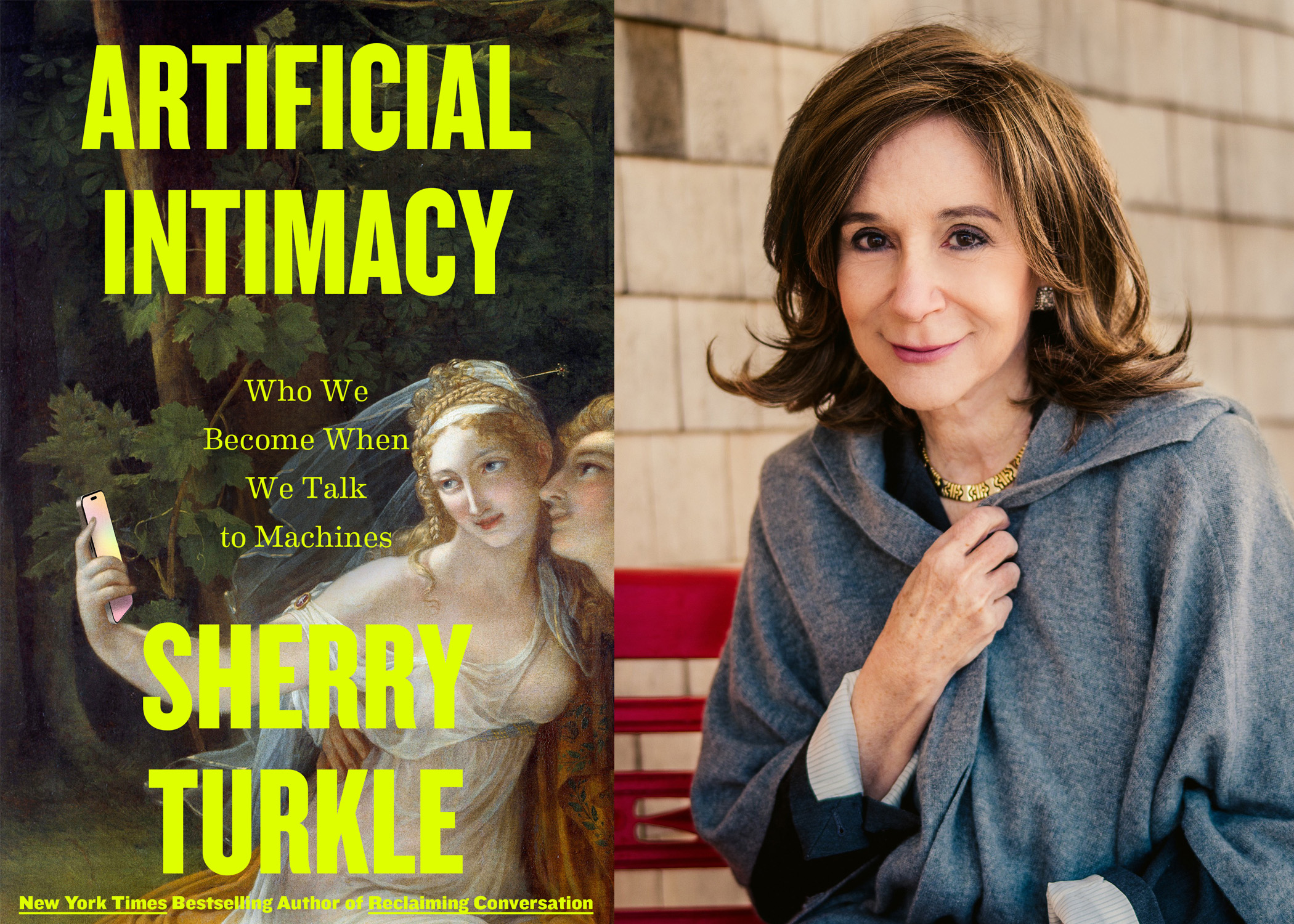
Professor Sherry Turkle’s new book, “Artificial Intimacy,” offers a withering critique of chatbots and the antisocial dynamics she believes they encourage.