May 2026· Journal of Chemical Information and Modeling· Vol 66 9, pp.
5301-5314
· 0 citations
Computer ScienceMedicine
TL;DR
This work aims to discuss the features and the generative performance of different types of molecular generative models for the PROTAC design task and help researchers to better apply these models in practical cases.

A Perspective on computational PROTAC methodologies published from 2019 to the present is presented, organizing the field into two complementary streams: constraint-driven, physics-based workflows that assemble and refine ternary complex models by enforcing geometric feasibility and evaluating pose stability using dock...
Joseph M. Schulz, R. Reynolds, S. Schürer· Journal of Chemical Informat...· 0 citations
A machine-learning-assisted enzyme-engineering (MLEE) workflow that adds substrate-specific functional information to htFuncLib through an initial screening and sequencing round that may bypass the need for transition-state models and reduce the effort required for obtaining high-activity variants.
Li Wan, Mahdi Bagherpoor Helabad, Lena Fraedrich et al.· bioRxiv· 0 citations
A hierarchical benchmark designed to expose evaluation pitfalls and quantify the transferability and reliability limits of current PROTAC predictors is presented, repositioning PROTAC prediction as a problem of transferability and reliability rather than leaderboard optimization and provide practical guidelines for fut...
Ren Zhu, Guang-Hao Guo, Lu-Lu Li et al.· Computational biology and ch...· 0 citations
ProMeta, a prototype-based graph neural network trained through episodic meta-learning on source-E3 tasks and evaluated on held-out target-E3 tasks through support-conditioned inference, is presented as a practical framework for cross-ligase few-shot prediction under the evaluated support/query protocols.
Yuansheng Liu, Yu-Fei Ye, Tao Tang et al.· 0 citations
It is argued that the highest-confidence candidates emerge where deep learning and first-principles models agree, a "sweet spot" that balances generative flexibility with thermodynamic realism.
Gabriel Cia, Gabriele Orlando, D. Cianferoni et al.· FEBS Letters· 0 citations
Generative kinetics is indicated as an aspirational frontier in building physically grounded and transferable models, including data availability and fidelity, the choice of inductive biases to pursue generalization, and the need for rigorous model evaluation.
Daniele Angioletti, Matteo Carli, Marco S. Nobile et al.· WIREs Computational Molecula...· 0 citations
Jennifer Neville did not want to go into computer science—but that’s exactly where she landed. Neville discusses the starts and stops that led to her professional sweet spot and her work identifying “surprising failures” making it hard for AI to handle complexity. The post What AI gets wrong and what failure teaches us appeared first on Microsoft Research.
MIT News · Artificial Intelligence· news.mit.eduOct 15, 2026
A new computational approach reveals how cells communicate to assemble into tissues. This could accelerate stem cell engineering, improve disease models, and inform therapies.
Microsoft Research Blog· microsoft.comOct 15, 2026
Zero-knowledge proofs can verify computing results without rerunning workloads or exposing sensitive data. Magnetar helps bring them into the mainstream with support for standard programming languages, major speed gains, and quantum-resistant security. The post Proof-based general-purpose computing with Magnetar appeared first on Microsoft Research.
Microsoft Research Blog· microsoft.comSep 29, 2026
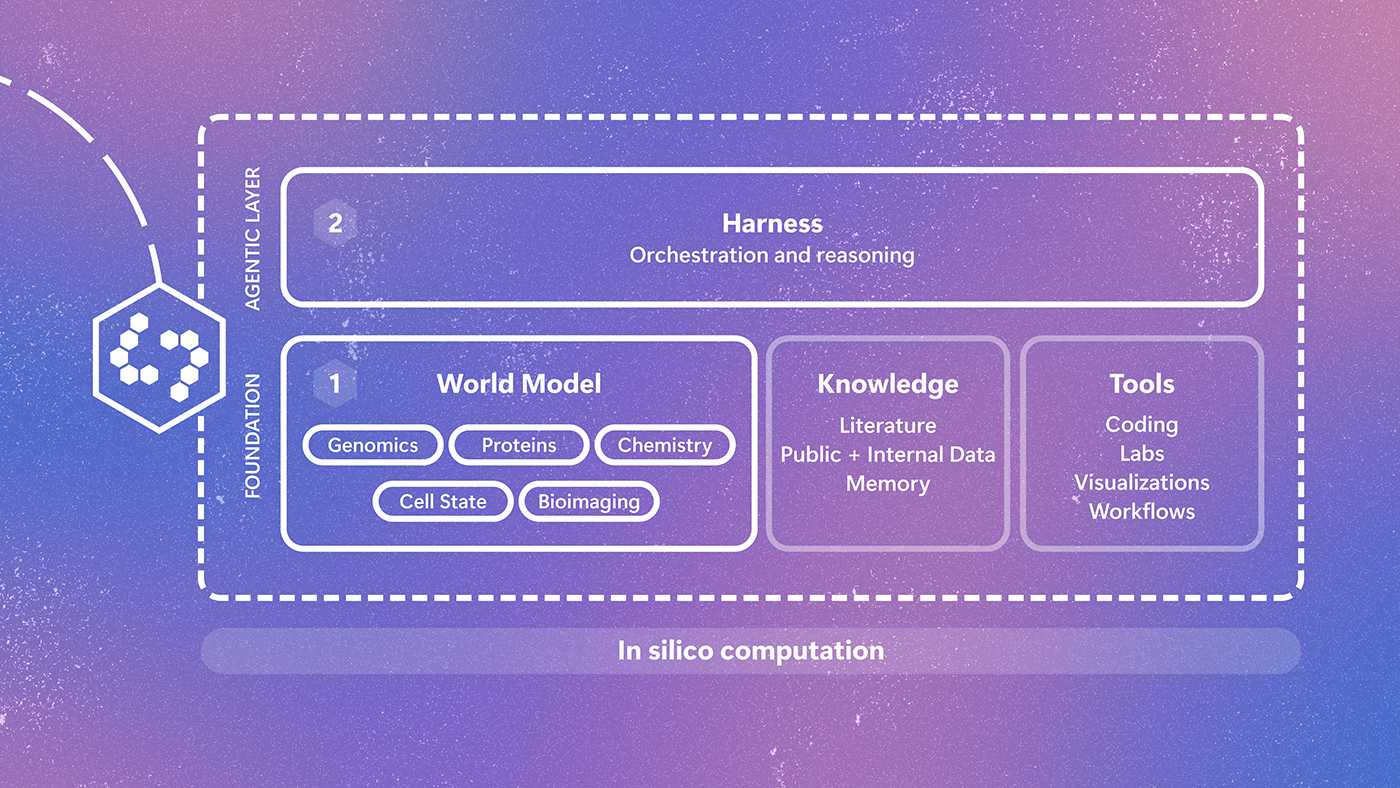
Biology doesn't operate in silos, and neither should the AI representation of it. Quine is an early-stage research effort to create a multimodal world model of biology. By connecting insights across biological scales and modalities, Quine helps scientists computationally search a space far larger than intuition allows and prioritize hypotheses before they reach the lab. Experimental results provide important feedback, helping researchers sharpen future research directions. The post Introducing Q…
We use cookies to run the site and, with your consent, for analytics and to show ads.
See our Cookie Policy.