Skip to content
#protein folding Open access

Characterization of a Ten-Cysteine Peptide from Scorpion That Inhibits Classical Complement Activation via C4/C4b

Xu-Dong Luo Wen Zhu Yu-Wei Wang Xiao-Lin Deng Zhi-Ping Zhai Wang-Mei Duan Xiang-Dong Ye Li Ding Fang Sun Hong-Yi Luo Chen-Hu Qin Zong-Yun Chen
Oct 2026 · Biomolecules · 0 citations · 60 references

Abstract

Scorpion toxin peptides are useful bioactive substance resources, but no anticomplement peptides have been reported from scorpions. Here, we attempt to explore scorpion-derived anticomplement peptides by scanning a small and specific scorpion toxin peptide library. Given that complement activation constitutes a protease-driven proteolytic cascade reaction, we focused on two kinds of serine protease inhibitor-like peptides from scorpion Kunitz-type and Ascaris-type toxin subfamilies. Assays of complement-mediated erythrocyte lysis showed that one scorpion peptide SjAPI-2, with an Ascaris-type structural fold inhibited classical complement activation in a concentration-dependent manner. Complement-deficient experiments revealed that the anti-complement effect of SjAPI-2 was markedly enhanced in sera reconstituted with deficient complement proteins C3 or C4, and suggested that C3 and C4 are associated with the anticomplement effect of SjAPI-2. Combined ELISA and Co-IP assays further revealed that SjAPI-2 can directly bind to C4 and C4b. These results indicated that SjAPI-2 can inhibit classical complement activation via binding to C4 and C4b, which blocks the upstream proteolytic cleavage of C4 as well as the downstream cleavage and activation of C3. Alanine-scanning mutagenesis showed that SjAPI-2 suppressed complement activation via its functional loop from K30 to V38. Myocardial ischemia–reperfusion injury experiment showed that SjAPI-2 limited the extent of myocardial infarction and exerted a cardioprotective effect in vivo. To the best of our knowledge, SjAPI-2 is the first anticomplement toxin peptide from a scorpion, suggesting that scorpion venom peptides might be a new resource for anticomplement peptide discovery. The unique ten-cysteine peptide scaffold of SjAPI-2 also provided a novel lead drug template for C4/C4b associated complement diseases.


Read PDF

Similar papers

#computer vision Review Open access May 2015

A survey study on major technical barriers affecting the decision to adopt cloud services

The comparison of adopter and non-adopter sample reveals three potential adoption inhibitor, security, data privacy, and portability, which underlines the importance of the technical and security perspectives for research investigating the adoption of technology.

Nattakarn Phaphoom, Xiaofeng Wang, S. Samuel et al. · 111 citations · ⚡8
#computer vision Open access Feb 2018

Lean Internal Startups for Software Product Innovation in Large Companies: Enablers and Inhibitors

This study investigates how Lean internal startup facilitates software product innovation in large companies and identifies its enablers and inhibitors, and shows the potential of the method-in-action framework to investigate the Lean startup approach in non-startup context.

Henry Edison, Nina M. Smørsgård, Xiaofeng Wang et al. · 78 citations · ⚡6
#computer vision Book Open access Jul 2015

Understanding the affect of developers: theoretical background and guidelines for psychoempirical software engineering

This paper highlights the challenges to conduct proper affect-related studies with psychology, provides a comprehensive literature review in affect theory, and proposes guidelines for conducting psychoempirical software engineering.

D. Graziotin, Xiaofeng Wang, P. Abrahamsson · 56 citations · ⚡4
#machine learning Open access May 2017

What Influences the Speed of Prototyping? An Empirical Investigation of Twenty Software Startups

This study conducts a multiple case study on twenty European software startups and proposes a prototype-centric learning model in early stage software startups, and identifies factors that occur as barriers but also facilitators for prototyping in earlystage software startups.

Anh Nguyen-Duc, Xiaofeng Wang, P. Abrahamsson · 44 citations · ⚡5
#protein folding Open access Sep 2026

Programmable design of functional proteins from natural language

Pinal, a 16-billion-parameter foundation model that produces protein candidates from natural-language functional descriptions, supports natural language as a high-level interface for candidate generation in protein design, enabling programmable exploration with reduced reliance on manually specified structural or seque...

Fengyuan Dai, Shiyang You, Yudian Zhu et al. · 31 citations · ⚡3

Related blog posts

Google DeepMind Blog Sep 30, 2026

Introducing SynthID Bio

Proof of concept for watermarking AI-generated proteins while preserving biological function.

MIT News · Artificial Intelligence Aug 27, 2026

Looking beyond natural sequences

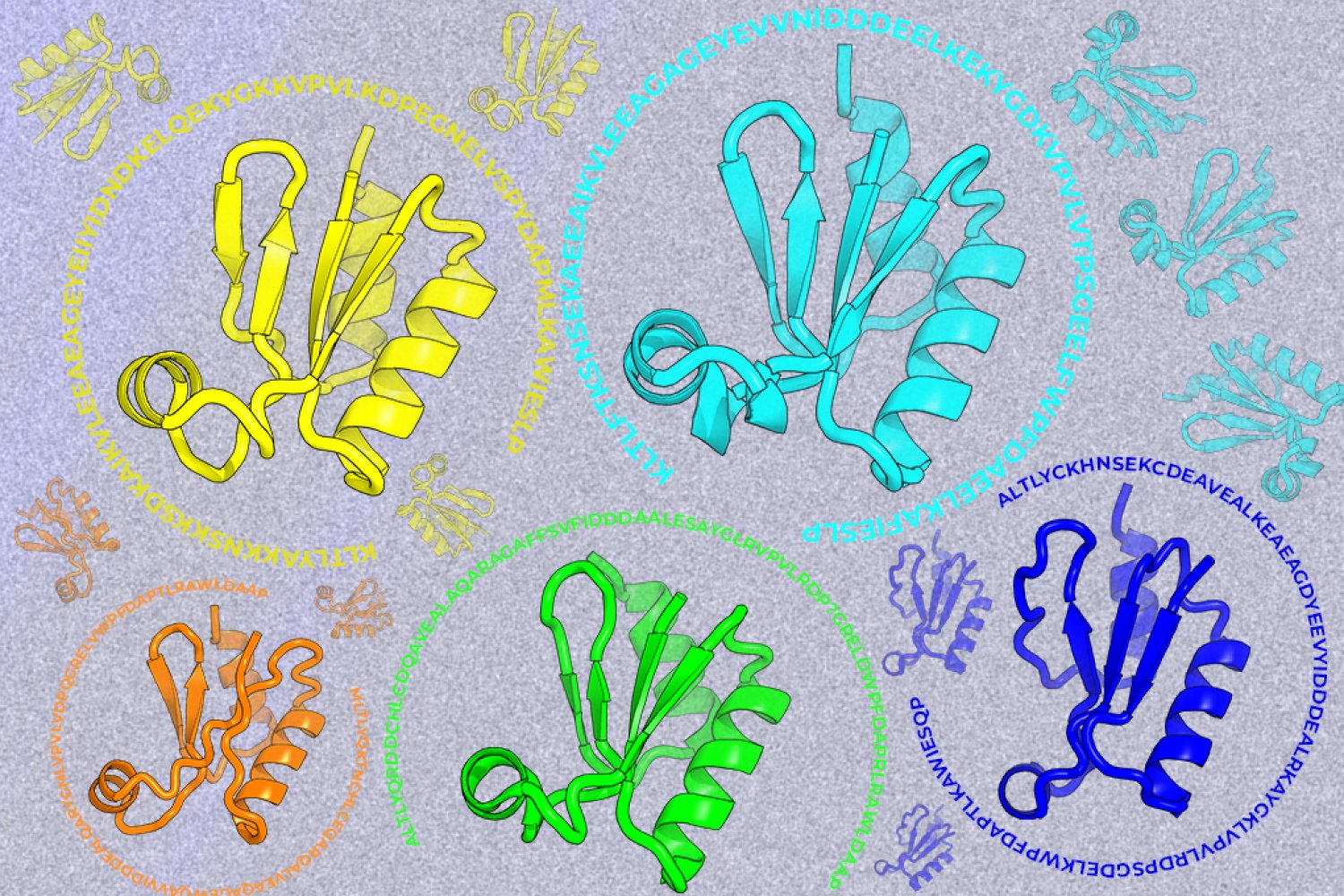
A new machine-learning framework aims to improve the success rate of computational protein design while moving away from results that reproduce sequences found in nature.

We use cookies to run the site and, with your consent, for analytics and to show ads. See our Cookie Policy.