Predicting future physical states stands as a central challenge in embodied intelligence. Existing video world models leave 3D dynamics implicit, action-based formulations remain tied to specific robot configurations, and 3D motion prediction models use flow-only supervision, providing a limited learning signal for physical dynamics. To circumvent these limitations, we introduce \method{}, a generative world model that jointly predicts future video and query-based 3D trajectories. By parameterizing 3D motion as continuous displacement tokens aligned with the video grid, a unified Mixture-of-Transformers (MoT) backbone jointly denoises both modalities under a rectified-flow objective. This formulation couples explicit geometric dynamics with visual evolution, effectively unlocking the physical commonsense embedded within pretrained video models. To empirically scale and validate this unified architecture, we train \method{} on a heterogeneous mixture of 1.44 million object-level samples spanning simulated and real-world domains. We further introduce WorldFlowBench, comprising 1,678 evaluation samples from 11 data sources across simulated and real-world interactions, including spatial reasoning tasks. Across all three evaluation sets, WorldFlow achieves the lowest average displacement error (ADE) and final displacement error (FDE) among the evaluated learning-based methods. Notably, on the challenging SpatialCog set, WorldFlow achieves an ADE of 0.060 m, a 54.2\% reduction compared with the strongest external baseline. It also reduces ADE and FDE by 55.9\% and 68.5\%, respectively, compared with its flow-only variant. Project page: https://worldflow-rbs.github.io/.

This paper investigates developing real-world perception for active agents, proposes Gibson Environment for this purpose, and showcases a set of perceptual tasks learned therein.
F. Xia, Amir Zamir, Zhi-Yang He et al.· 2018 IEEE/CVF Conference on...· 1,069 citations· ⚡112
This publication proposes a definition and a classification of agile software development approaches and analyses ten software development methods that can be characterized as being "agile" against the defined criterion.
P. Abrahamsson, O. Salo, Jussi Ronkainen et al.· arXiv.org· 727 citations· ⚡54
The study shows that agile practices improve both informal and formal communication, but indicates that, in larger development situations involving multiple external stakeholders, a mismatch of adequate communication mechanisms can sometimes even hinder the communication.
M. Pikkarainen, Jukka Haikara, O. Salo et al.· Empirical Software Engineeri...· 401 citations· ⚡48
The results indicate that software engineering work practices are chosen opportunistically, adapted and configured to provide value under the constrains imposed by the startup context.
Nicolò Paternoster, Carmine Giardino, M. Unterkalmsteiner et al.· Information and Software Tec...· 394 citations· ⚡54
The possibility of inferring high-dimensional data inference in a model that consists of a prior and an auxiliary differentiable constraint given some additional information is considered, thereby allowing a range of potential applications in adapting models to new domains and tasks.
Alexandros Graikos, Esmeralda S. Whitammer, N. Jojic et al.· Neural Information Processin...· 316 citations· ⚡15
Related blog posts
MIT News · Artificial Intelligence· news.mit.eduJul 30, 2026
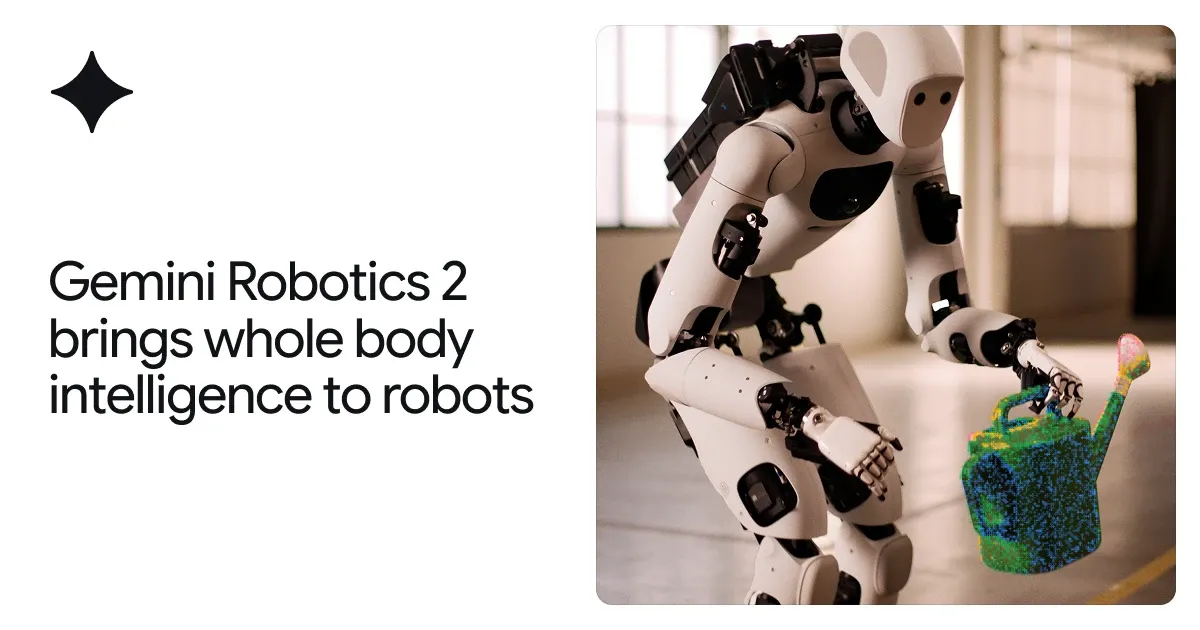
From feet to fingertips — we are teaching robots intelligent whole-body control, fine dexterity, and teamwork to complete a broad range of complex tasks.
Known for his clear and elegant writing style, Bertsekas shaped fields from control and optimization to large-scale computation and artificial intelligence.
We use cookies to run the site and, with your consent, for analytics and to show ads.
See our Cookie Policy.