Nov 2026· PLoS Computational Biology· Vol 22 11, pp.
e1014924
· 0 citations· 72 references
Medicine
TL;DR
Ab-Affinity, a fine-tuned protein language model (PLM) that predicts the binding affinity of an antibody against a target peptide within the SARS-CoV-2 spike protein, achieves higher predicted binding affinities than those produced by alternative mutational strategies, yielding synthetic antibodies with favorable predicted biophysical characteristics.
Abstract
The capacity of an antibody to recognize and bind an antigen with high specificity and strength (i.e., its binding affinity) is a key determinant in the design and optimization of neutralizing antibodies against pathogenic targets. Here we introduce Ab-Affinity, a fine-tuned protein language model (PLM) that predicts the binding affinity of an antibody against a target peptide within the SARS-CoV-2 spike protein. Cross-validation results shows that that Ab-Affinity outperforms other PLM-based affinity predictors when evaluated on a held-out validation and independent test sets. When integrated with a genetic algorithm and simulated annealing for sequence diversification and fitness optimization, Ab-Affinity enables the generation of candidate antibodies exhibiting over 100-fold improvement in predicted binding affinity relative to its parental (natural) antibody. More broadly, antibodies designed with Ab-Affinity attain higher predicted binding affinities than those produced by alternative mutational strategies, yielding synthetic antibodies with favorable predicted biophysical characteristics. Molecular docking and molecular dynamics simulations for the strongest synthetic candidates indicate enhanced interactions and increased stability with the target peptide epitope within the spike protein. Experimental validation in vitro for a top-ranked candidate reveals an apparent increase in binding relative to its parental antibody. All model weights, source code, and analysis pipelines are publicly released to allow full reproducibility.
The comparison of adopter and non-adopter sample reveals three potential adoption inhibitor, security, data privacy, and portability, which underlines the importance of the technical and security perspectives for research investigating the adoption of technology.
Nattakarn Phaphoom, Xiaofeng Wang, S. Samuel et al.· Journal of Systems and Softw...· 111 citations· ⚡8
This study investigates how Lean internal startup facilitates software product innovation in large companies and identifies its enablers and inhibitors, and shows the potential of the method-in-action framework to investigate the Lean startup approach in non-startup context.
Henry Edison, Nina M. Smørsgård, Xiaofeng Wang et al.· Journal of Systems and Softw...· 78 citations· ⚡6
This paper highlights the challenges to conduct proper affect-related studies with psychology, provides a comprehensive literature review in affect theory, and proposes guidelines for conducting psychoempirical software engineering.
D. Graziotin, Xiaofeng Wang, P. Abrahamsson· SSE@SIGSOFT FSE· 56 citations· ⚡4
This study conducts a multiple case study on twenty European software startups and proposes a prototype-centric learning model in early stage software startups, and identifies factors that occur as barriers but also facilitators for prototyping in earlystage software startups.
Anh Nguyen-Duc, Xiaofeng Wang, P. Abrahamsson· International Conference on...· 44 citations· ⚡5
It is demonstrated that linker-free PROTACs can outperform traditional designs, marking a paradigm shift in PROTAC development for targeted protein degradation.
Pinal, a 16-billion-parameter foundation model that produces protein candidates from natural-language functional descriptions, supports natural language as a high-level interface for candidate generation in protein design, enabling programmable exploration with reduced reliance on manually specified structural or seque...
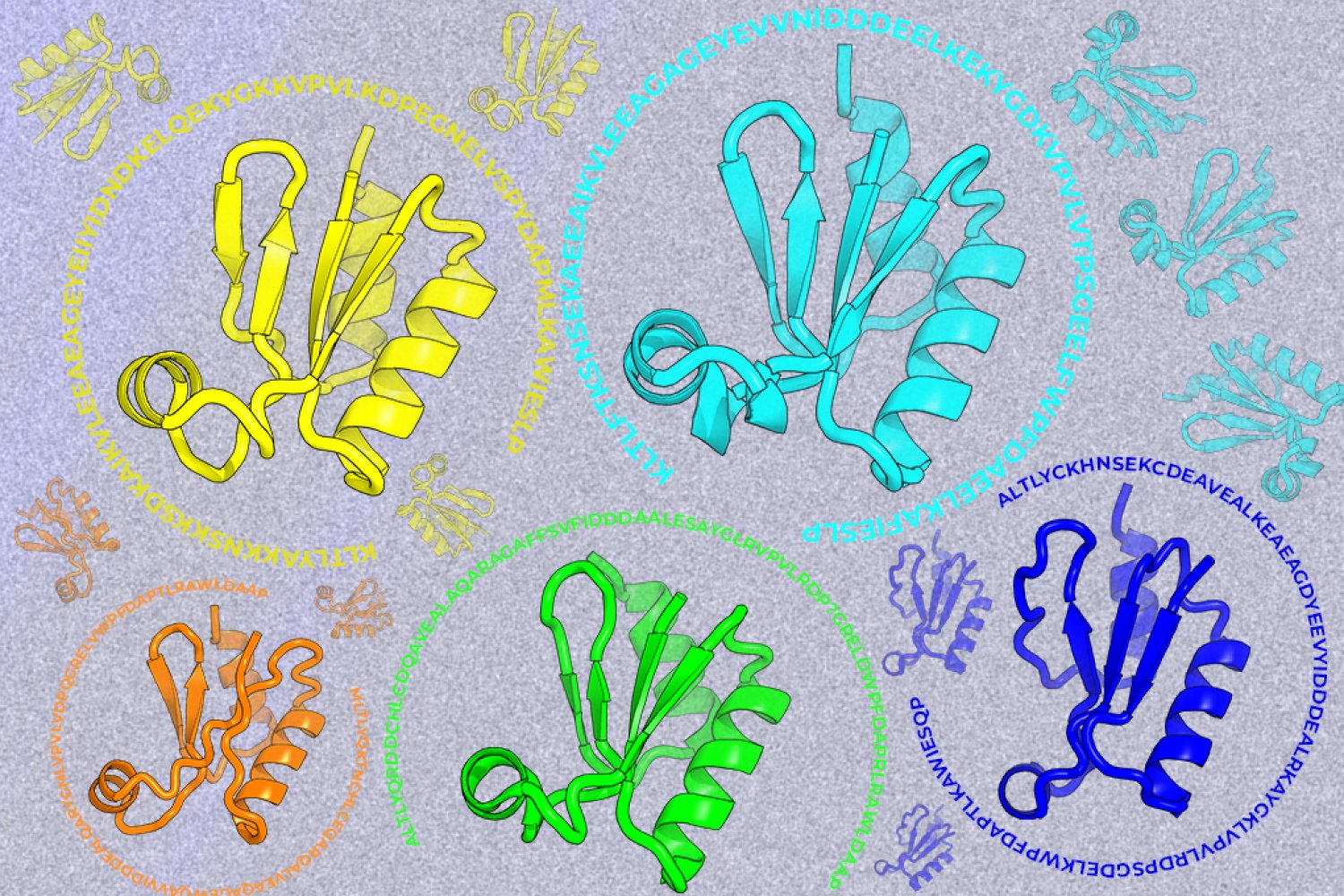
A new machine-learning framework aims to improve the success rate of computational protein design while moving away from results that reproduce sequences found in nature.