RoboPhys-3D, a 3D-grounded EWM benchmark built on RoboTwin 2.0, is introduced, and Average Full Score, a hierarchical score averaging all 50 metrics for comprehensive evaluation, and RoboPhyscore, a compact task-aligned score averaging the metrics most strongly correlated with task success are introduced.
Abstract
Video world models increasingly serve as data engines, action planners, and simulators for embodied AI, but conventional embodied world model (EWM) benchmarks lack a unified 3D-grounded protocol for establishing whether generated rollouts preserve the underlying 3D scene state or translate into executable actions. We introduce RoboPhys-3D, a 3D-grounded EWM benchmark built on RoboTwin 2.0, covering 50 manipulation tasks across four regimes, with 5,000 episodes and 25,000 multi-view ground-truth videos. A defining feature of RoboPhys-3D is that generated and ground-truth videos are processed through the same 3D reconstruction pipeline, enabling reconstruction-induced error to be distinguished from generation-induced error. The RoboPhys-3D benchmark organizes 50 complementary metrics into 18 sub-dimensions across four levels: pixel-level fidelity, 3D geometry consistency, state-level understanding, and task-level completeness. We further introduce Average Full Score, a hierarchical score averaging all 50 metrics for comprehensive evaluation, and RoboPhyscore, a compact task-aligned score averaging the metrics most strongly correlated with task success. Among the four representative video world models, Cosmos 3 achieves the highest RoboPhyscore (0.6330, 92.7% of ground truth), while state- and execution-grounded metrics reveal substantial failures that perceptual and vision-language model-based judgments fail to capture. RoboPhyscore further exhibits strong agreement with human evaluation (Pearson r = 0.9761 and Spearman \r{ho} = 0.8962), demonstrating the importance of grounded, execution-aware evaluation for EWM capability.

World models offer a data-driven alternative to traditional simulators for robotics, with applications spanning policy evaluation, improvement, and planning. All of these uses depend on faithful 3D geometry, yet current video-based world models are trained on RGB alone and produce rollouts that look correct frame-by-fr...
Jai Bardhan, Josef Sivic, Vladimír Petrík· 0 citations
Experiments show that Fysiverse-3D-SimReady improves input-view alignment, contact plausibility, and physical stability over existing single-image reconstruction and scene generation baselines, while enabling goal-conditioned physical interactions from a single image.
Lin-Tao Wang, Ming-Yang Sun, Yang Liu et al.· 0 citations
These readouts suggest that program-constructed scenes from current coding agents are a promising but not yet sufficiently precise representation of natural images, suggesting that program-constructed scenes from current coding agents are a promising but not yet sufficiently precise representation of natural images.
Xi-Rui Li, Peng Shi, Ming-Wen Dong et al.· 0 citations
This work presents a systematic compute-platform benchmark of neural 3D reconstruction methods, evaluating NeRF and 3D Gaussian Splatting training and rendering on GPU-enabled computing devices, and place Meta's SAM3D single-image reconstruction on the same axes to quantify its latency and fidelity gap relative to per-...
Yongho Kim, Meng-Jiao Han, Victor A. Mateevitsi et al.· 0 citations
Can vision-language models turn 2D observations into 3D understanding that supports precise action? This requires inferring object geometry, anticipating the effects of rotation, and refining actions through visual feedback. We introduce RoTA-Bench to evaluate these abilities through interactive 3D-to-2D projection ali...
Qing-Chuan Ma, Yue-Xiao Ma, Xiang Meng et al.· 0 citations
Fysiverse-3D-Vision is proposed, a unified vision-language-geometry framework for generative 3D scene reconstruction and executable asset construction from a single image that establishes a shared representation where spatial reasoning and geometric reconstruction mutually enhance each other, allowing object layouts to...
Ding-Kang Yang, Yi-Zhou Liu, Wen-Dong Cheng et al.· 0 citations
Related blog posts
MIT News · Artificial Intelligence· news.mit.eduJul 30, 2026
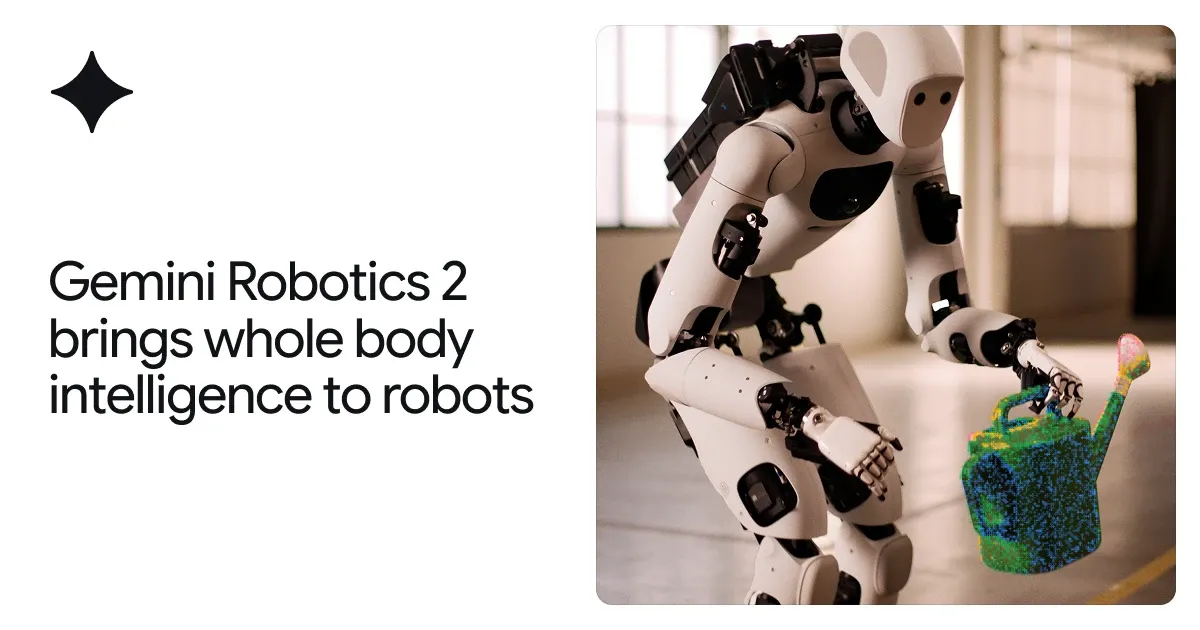
From feet to fingertips — we are teaching robots intelligent whole-body control, fine dexterity, and teamwork to complete a broad range of complex tasks.
Known for his clear and elegant writing style, Bertsekas shaped fields from control and optimization to large-scale computation and artificial intelligence.
We use cookies to run the site and, with your consent, for analytics and to show ads.
See our Cookie Policy.