Experiments on NSFW, artistic style, and object erasure, with a large-scale robustness-utility analysis over many CET baselines, show that PARSE erases multiple concepts robustly without sacrificing post-edit utility.

Abstract
Concept erasure techniques (CETs) edit text-to-image diffusion models to erase undesired targets such as NSFW content or copyrighted styles, while preserving model utility on benign concepts. Current CETs face a trade-off between erasure robustness and utility: stronger edits erase the target more reliably but degrade utility on non-target concepts, and vice versa. This stems from how existing methods define what to erase and what to preserve. Many CETs rely on static concept banks specified manually, generated by LLMs, or selected by CLIP image-text similarity. Such banks do not model how prompts steer the model during denoising, leaving it vulnerable to triggers that reintroduce the target while suppressing nearby benign concepts. We present Preservation-aware Adaptive Ranked Subspace Expansion (PARSE), a training-free framework for robust concept erasure in latent diffusion models. Given a target, PARSE queries the diffusion model with classifier-free guidance to dynamically discover target-inducing erase concepts and nearby retain concepts in the model vocabulary. It then edits the cross-attention value space with a preservation-aware projection that removes target directions while leaving retain directions intact. For triggers beyond this vocabulary-indexed space, PARSE iteratively searches for re-emergence triggers by textual inversion and adaptively expands the erased subspace only when a new trigger direction does not conflict with retain semantics. We also introduce the Balanced Erasure Utility Score (BEUS), which combines robustness (ASR under multiple attacks) and utility preservation (FID) via bounded monotone transforms and harmonic mean aggregation. Experiments on NSFW, artistic style, and object erasure, with a large-scale robustness-utility analysis over many CET baselines, show that PARSE erases multiple concepts robustly without sacrificing post-edit utility.
Gaussian Core LoRA, a distribution-aware low-rank adaptation framework that enables prototype-adaptive erasure with a single lightweight adapter, and shows robustness to adversarial prompts, scalability to multi-identity and multi-style erasure, and compatibility with SDXL and FLUX.
Qing Gong, Xun-Lei Chen, Yu-Xuan Zhang et al.· 0 citations
Across continual erasure of celebrities, artistic styles, and instances, CEASE achieves the most consistent erase-preserve trade-off, while existing methods either degrade general generation or insufficiently erase targets.
Yong-Liang Wu, Haori Lu, Jin-Qi Luo et al.· 0 citations
Concept erasure aims to remove a target concept, such as a copyrighted style, a recognizable character, or unsafe content, from a pretrained text-to-image diffusion model while preserving its ability to generate other content. Existing activation steering methods build an erasure direction mainly from the target concep...
Yong-Liang Wu, Haori Lu, Yu-Lun Wu et al.· 1 citation
This work proposes GRACE, a structured concept erasure framework designed to enable localized and selective intervention, and introduces a semantically weighted sensitive subspace estimation to precisely lock intervention directions, and employs lightweight subspace-constrained adapters to prevent global semantic distu...
Qing Gong, Yi-Huai Liang, Yuan-Lun Xie et al.· 0 citations
Removing copyrighted, unsafe, or user-specified concepts from a deployed text-to-image diffusion model is now a practical requirement. Weight-editing methods can suppress fixed targets, but they require per-target retraining and modify the model checkpoint. Training-free methods, on the other hand, are deployment-frien...
Chen-Di Dai, Gan-Yu Zou, Nathan Self et al.· 0 citations
This work proposes EraseSAE, a novel framework that leverages sparse autoencoders to achieve surgical concept erasure in DiT-based T2V diffusion models via a principled decompose-attribute-erase pipeline, and introduces the Partitioned Convolutional Sparse Autoencoder.
Xing-Hao Wang, Dong Li, Wei Yu et al.· 0 citations
Exploring how generative AI could make machine vision more accessible to businesses. The post GenEye in a Box: Making Machine Vision Something You Can Just Ask For appeared first on GPT-Lab.
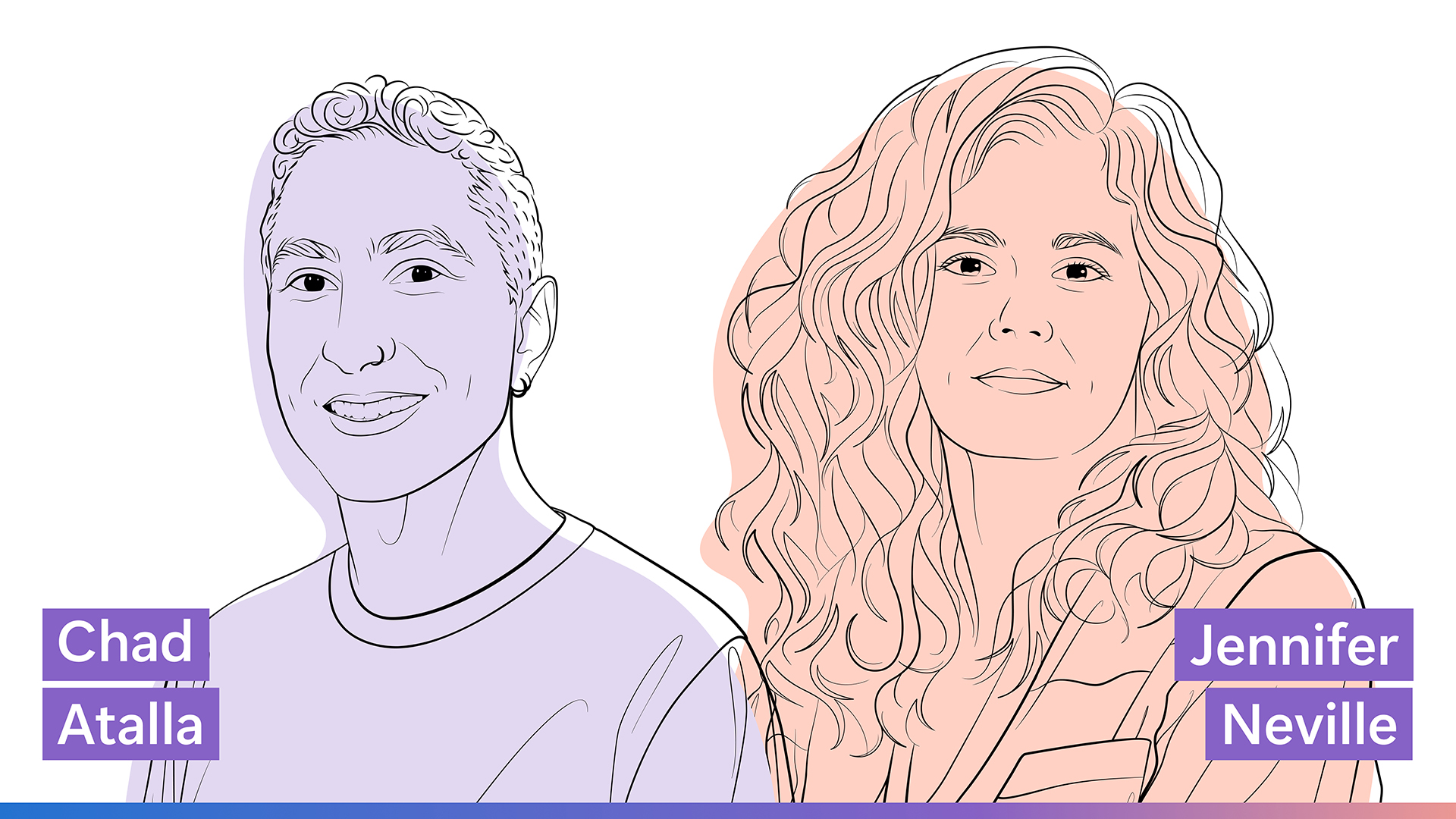
Jennifer Neville did not want to go into computer science—but that’s exactly where she landed. Neville discusses the starts and stops that led to her professional sweet spot and her work identifying “surprising failures” making it hard for AI to handle complexity. The post What AI gets wrong and what failure teaches us appeared first on Microsoft Research.