Aug 2026· IEEE Transactions on Signal Processing· 1 citation· 62 references
Engineering
Abstract
Tri-hybrid multiple-input multiple-output architectures have recently emerged as a promising enabler for next-generation wireless systems, as they potentially provide enhanced design flexibility without a proportional increase in hardware cost or power consumption. However, the resulting triple-domain coupling renders beamforming optimization challenging and computationally demanding. This paper develops a fast tri-hybrid beamforming framework for multiuser downlink systems employing dynamic metasurface antennas (DMAs). Based on the equivalence between weighted sum-rate maximization and weighted sum-minimum mean square error minimization, an iterative algorithm is first derived under per-DMA input power constraints, with all update equations available in closed form, but convergence inherently remains slow. To enable real-time operation, the algorithm is further unfolded into a trainable finite-iteration architecture using graph neural networks that ensure permutation equivariance and support varying numbers of users. Trained on ray-tracing channel data, the unfolded method achieves comparable or higher system sum-rates while reducing runtime by more than an order of magnitude. The method also demonstrates strong scalability, robustness, and generalization across various environments.
Stacked intelligent metasurfaces (SIMs) have recently emerged as a promising architecture for large-scale beamforming systems, including cell-free massive MIMO (CF-mMIMO), due to their cost-effective wave-domain signal processing capabilities. However, existing algorithms for the joint optimization of digital and SIM-e...
Eunhyuk Park, Seok-Hwan Park, Osvaldo Simeone et al.· IEEE International Symposium...· 0 citations
Stacked intelligent metasurfaces (SIMs) have emerged as a promising paradigm for wave-domain signal processing in next-generation wireless networks. In this paper, we investigate the joint optimization of antenna selection, SIM phase-shift design, and power allocation in SIM-assisted multiuser multiple-input single-out...
Shu-Mo Wang, Xiao-Qin Song, Jian-Cheng An et al.· IEEE Transactions on Communi...· 0 citations
Tri-hybrid multiple-input multiple-output (MIMO) architectures have been proposed as a promising solution for enabling energy-efficient communications systems in large-scale antenna arrays by replacing conventional antenna arrays in hybrid beamforming (HBF) systems with low-cost dynamic metasurface antennas (DMAs). In...
Tian-Yu Fang, Mengyuan Ma, Markku J. Juntti et al.· 0 citations
The phenomena of distance-dependent degrees of freedom (DoFs) and spherical wavefronts in the near-field region open new avenues for the development of integrated sensing and communication (ISAC). However, most existing works that employ hybrid beamforming architectures lack the flexibility to accommodate spatially var...
Yi-Fei Zhao, Yong Zhou, Hong-Lin Hu et al.· IEEE Transactions on Communi...· 0 citations
Transmissive reconfigurable intelligent surfaces (T-RISs) integrated into the transmitter provide a viable realization of tri-hybrid multiple-input multiple-output (MIMO), where spatial processing is distributed across the digital, analog radio-frequency (RF), and electromagnetic (EM) domains. However, unlike conventio...
Dynamic metasurface antennas (DMAs) have emerged as a promising solution for reducing the power consumption, hardware cost, and physical size of multiple-input multiple-output (MIMO) systems. This article investigates a DMA-enabled multistream multicast system with finite-alphabet inputs by exploiting statistical chann...
Assistant Professor Pat Pataranutaporn describes a new interface that lets everyday users glimpse inside an AI's neural network before their chatbot ever says a word.
Microsoft Research Blog· microsoft.comJul 13, 2026
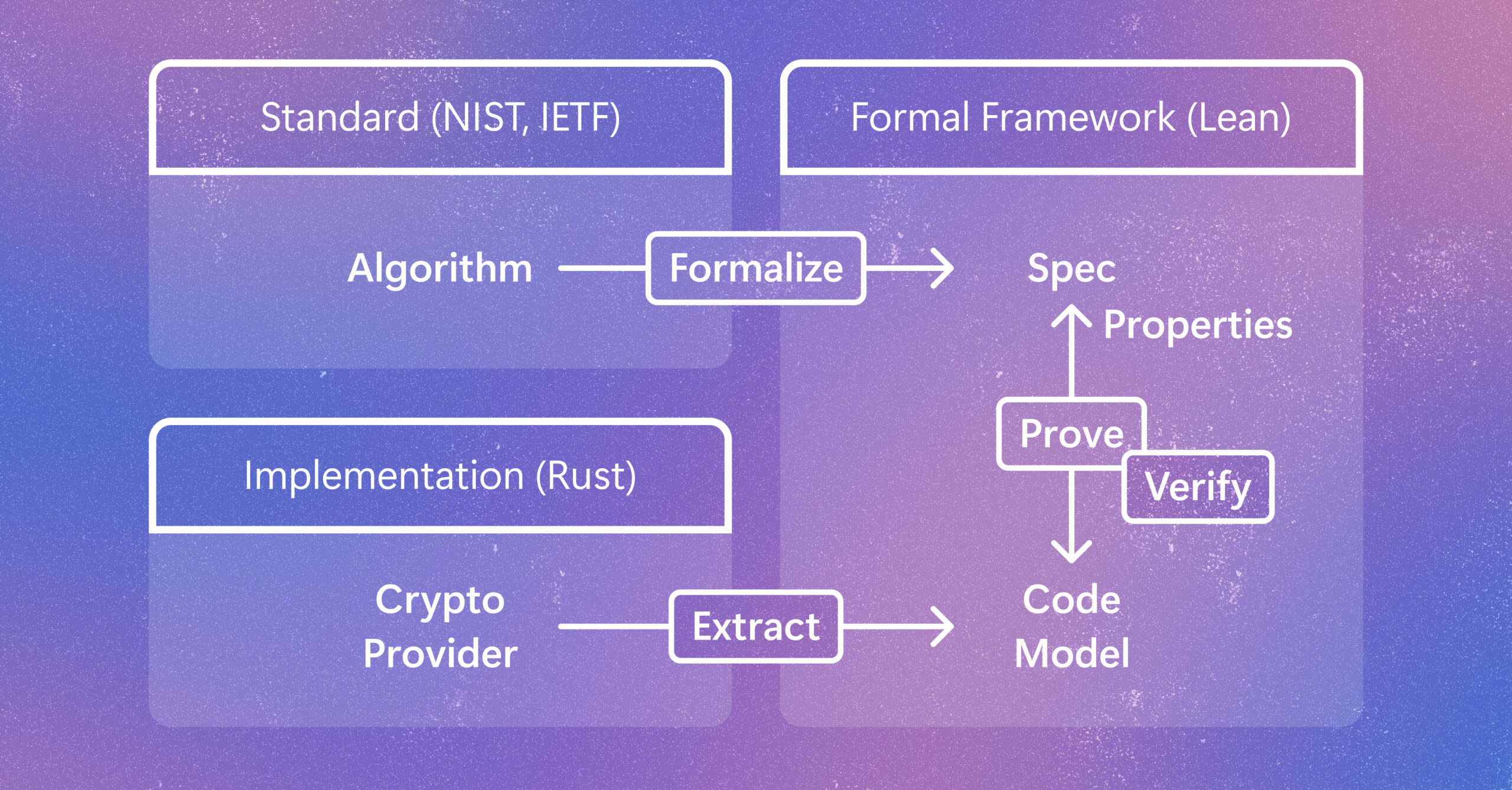
Cryptographic code supports vital protections in modern computing systems. Learn how a new method helps verify code as developers write it while preserving speed and adaptability as it gets implemented and evolves. The post Verifying Rust cryptography in SymCrypt, from standards to code appeared first on Microsoft Research.
MIT News · Artificial Intelligence· news.mit.eduJul 6, 2026
PhD student Rachel Sava, winner of the Envisioning the Future of Computing Prize, explores transformative improvements and dystopian risks of neural technology.