A physics-prior-driven decentralized deep reinforcement learning (DRL) framework Functioning as a scalable distributed computing paradigm via decentralized training with decentralized execution (DTDE), the framework mitigates the curse of dimensionality.
This work provides a feasible technical pathway and reproducible evaluation benchmark for the collaborative deployment of lightweight LLM planner, sub-goal guidance, sensor observations, cooperative reward, and reward shaping components and quantifies the indispensability of the LLM planner.
Yuting Cao, Zheng Zhao, Jiekai Wu et al.· Journal of King Saud Univers...· 0 citations
PILOT, a constraint-aware privileged imitation learning framework for vision-based end-to-end UAV motion planning under partial observability, is presented, demonstrating the practical feasibility and cross-domain generalization of the planner.
Qing-Rui Zhang, Feng Xue, Xiang Zhou et al.· 0 citations
Autonomous tugboating is central for automating maritime operations such as port logistics and vessel maneuvering, where multiple tugboats must cooperatively transport/manipulate a larger vessel. Collaborative pushing in this setting is challenging due to coupled hydrodynamics, low resistance, strong environmental dist...
Jun-Kai Lu, Jia-Dong Zhao, Jia-Cheng Zhang et al.· 0 citations
Introduction Dynamic multi-robot coordination demands real-time resilience against stochastic disruptions, yet existing planning methodologies often falter under the computational burden of high-dimensional state transitions. To address this challenge, we present a generative real-time mission planning framework that i...
Xin-Yi-Gao-Yong Zhang, Xin-Qi Li, Wen-Bo Li· Frontiers in Robotics and AI· 0 citations
The proposed framework demonstrates robust scalability and real-time coordination capability for dynamic environments, while providing a reliable decision-making paradigm for intelligent multi-agent systems operating in communication-intensive and electromagnetically complex application scenarios.
X.-H. Fang, K. Chen, Cheng-Hao Ren et al.· Advanced Electromagnetics· 0 citations
This paper proposes LSTP-Nav, a lightweight, decentralized navigation framework built on LSTP-Net that maps stacked 2D LiDAR observations, goal information, and velocity feedback directly to action and introduces an HS reward to provide smooth, heading-aware safety feedback, and develops PhysReplay-SimLab to improve tr...
Xingrong Diao, Zhi-Qiang Sun, Jian-Wei Peng et al.· IEEE Transactions on Automat...· 0 citations
Related blog posts
MIT News · Artificial Intelligence· news.mit.eduOct 2, 2026
Martin Trust Center Managing Director Bill Aulet introduces Dear Dreamer, a free platform for middle and high school students who want to learn about entrepreneurship.
Microsoft Research Blog· microsoft.comSep 30, 2026
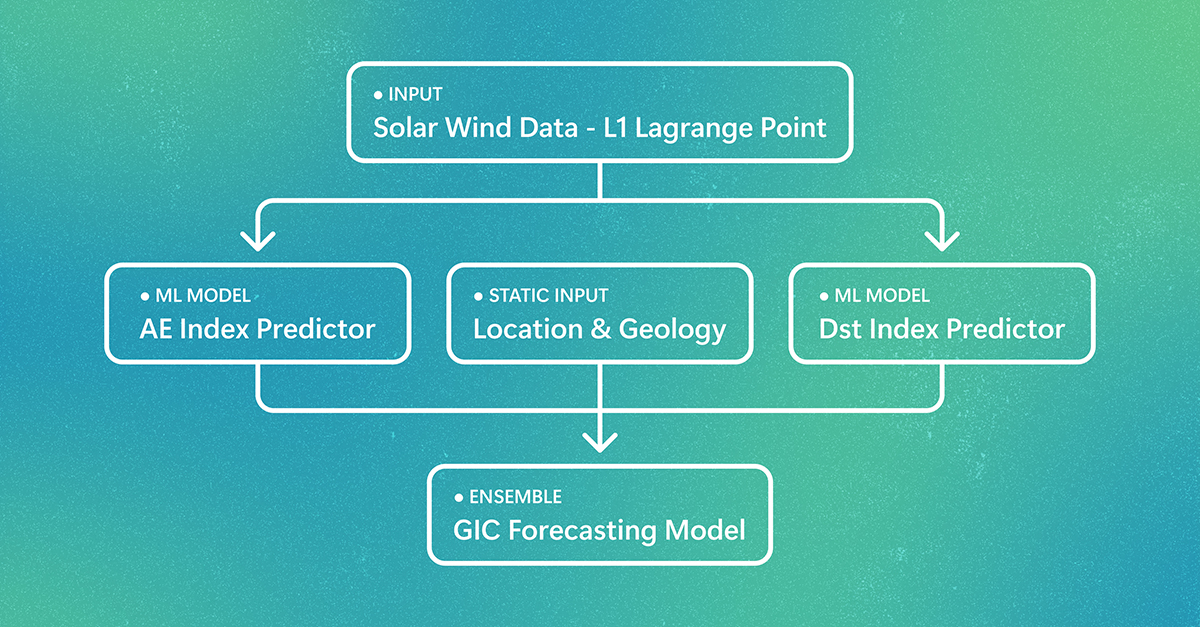
Extreme space-weather events can damage power systems on Earth and degrade GPS accuracy and satellite operations. A new machine learning system can predict where damage is likely to occur 30-60 minutes before a storm arrives. The post Forecasting space weather risks on power grids appeared first on Microsoft Research.
We use cookies to run the site and, with your consent, for analytics and to show ads.
See our Cookie Policy.