A scalable ML-assisted paradigm for realistic electrocatalyst screening is established and design principles for the discovery of next-generation dual-atom ORR catalysts are provided.
Abstract
Metal–nitrogen–carbon dual-atom catalysts (M1/M2–N–C DACs) have emerged as promising alternatives to Pt-based catalysts for the oxygen reduction reaction (ORR), yet their rational discovery is hindered by an enormous chemical and structural design space. Here, we develop a physics-informed machine learning (ML) framework integrated with high-throughput density functional theory (DFT) to systematically screen 22,599 M1/M2–N–C DAC structures spanning 729 transition-metal pairs and 31 structural configurations. Rather than relying on idealized bare-surface models, we construct voltage-dependent ab initio thermodynamic phase diagrams to identify realistic active-site structures and ORR limiting potentials under electrochemical operating conditions. To accelerate screening, we train equivariant transformer graph neural networks on DFT-generated adsorption energetics, achieving high predictive accuracy with mean absolute errors as low as 0.015 eV for adsorption energies and 0.022 V for derived ORR limiting potentials. We further introduce an experimentally relevant descriptor, the percentage of catalytically active structural configurations for each metal pair, which captures the ensemble nature of experimentally synthesized DACs and provides more reliable catalyst ranking than conventional single-configuration approaches. The framework identifies 3431 DAC structures with predicted ORR limiting potentials exceeding 0.8 V and reveals that only a small subset of metal pairs exhibits consistently high activity across configurations. Several top-performing candidates, including Co/Cr, Co/Ag, Co/Ru, Co/Ir, and Co/Zn, are validated by additional DFT calculations and show strong agreement with available experimental trends. In addition, stability screening uncovers multiple DACs predicted to possess both higher ORR activity and greater thermodynamic stability than benchmark Fe/Co–N–C catalysts. This work establishes a scalable ML-assisted paradigm for realistic electrocatalyst screening and provides design principles for the discovery of next-generation dual-atom ORR catalysts.
The electrocatalytic nitrogen reduction reaction (NRR) is a valuable green route for ammonia synthesis, yet it is still constrained by the lack of efficient catalysts and the impact of the competing hydrogen evolution reaction (HER). Density functional theory (DFT) is applied to explore the NRR and HER behaviors of m...
Na Zhou, Yan-Ning Wang, Bo-Sheng Zhang et al.· ACS Applied Energy Materials· 0 citations
Efficient electrochemical processes are essential for a sustainable, low-carbon energy economy, involving hydrogen production, oxygen evolution/reduction, and carbon dioxide valorisation, all of which require high-performing electrocatalysts. Traditional catalyst development methods, which involve sequential trial-and-...
F. Onyiriuka, Obojobo Donatus Obukeajeta, M. Oladosu et al.· International journal of sof...· 0 citations
Atomic clusters serve as the embryos of materials, yet their enormous and compositionally complex chemical space has long hindered systematic exploration of thermodynamic stability. Here, we show that a unified first-principles and machine-learning framework enables large-scale mapping of transition metal cluster therm...
Ning-Zheng Li, Zi-Yue Wang, Zi-Yu Li et al.· Nature Communications· 0 citations
Dual-atom catalysts (DACs) provide a powerful platform for oxygen electrocatalysis, yet rational design remains limited by the lack of transferable mechanistic principles. Machine learning (ML) has the potential to address this gap, yet its role in mechanistic discovery remains largely underexplored despite its wide us...
Shao-Bo Jia, Lu Yang, Chou Wu et al.· Advances in Materials· 0 citations
Molecular design of an active electrocatalyst can determine the primary product. Precise selection of the active metal center influences the adsorption of reactants, intermediates, and product selectivity and ultimately affects the efficiency of the process. Here, we predict a potent catalyst, namely, Fe@C6N6, with e...
Moumita Mukherjee, Arko Mohari, S. Dutta et al.· ACS Applied Energy Materials· 0 citations
DeGAT enables efficient and accurate prediction of partial atomic charges in MOFs while maintaining charge neutrality and physical consistency, providing a scalable parametrization scheme for high-throughput screening and molecular simulations of porous materials.
Yan-Hui Sun, Ze-Heng Yu, Yu-Hua Dong et al.· Journal of Chemical Theory a...· 0 citations
Related blog posts
MIT News · Artificial Intelligence· news.mit.eduJul 15, 2026
Assistant Professor Pat Pataranutaporn describes a new interface that lets everyday users glimpse inside an AI's neural network before their chatbot ever says a word.
Microsoft Research Blog· microsoft.comJul 13, 2026
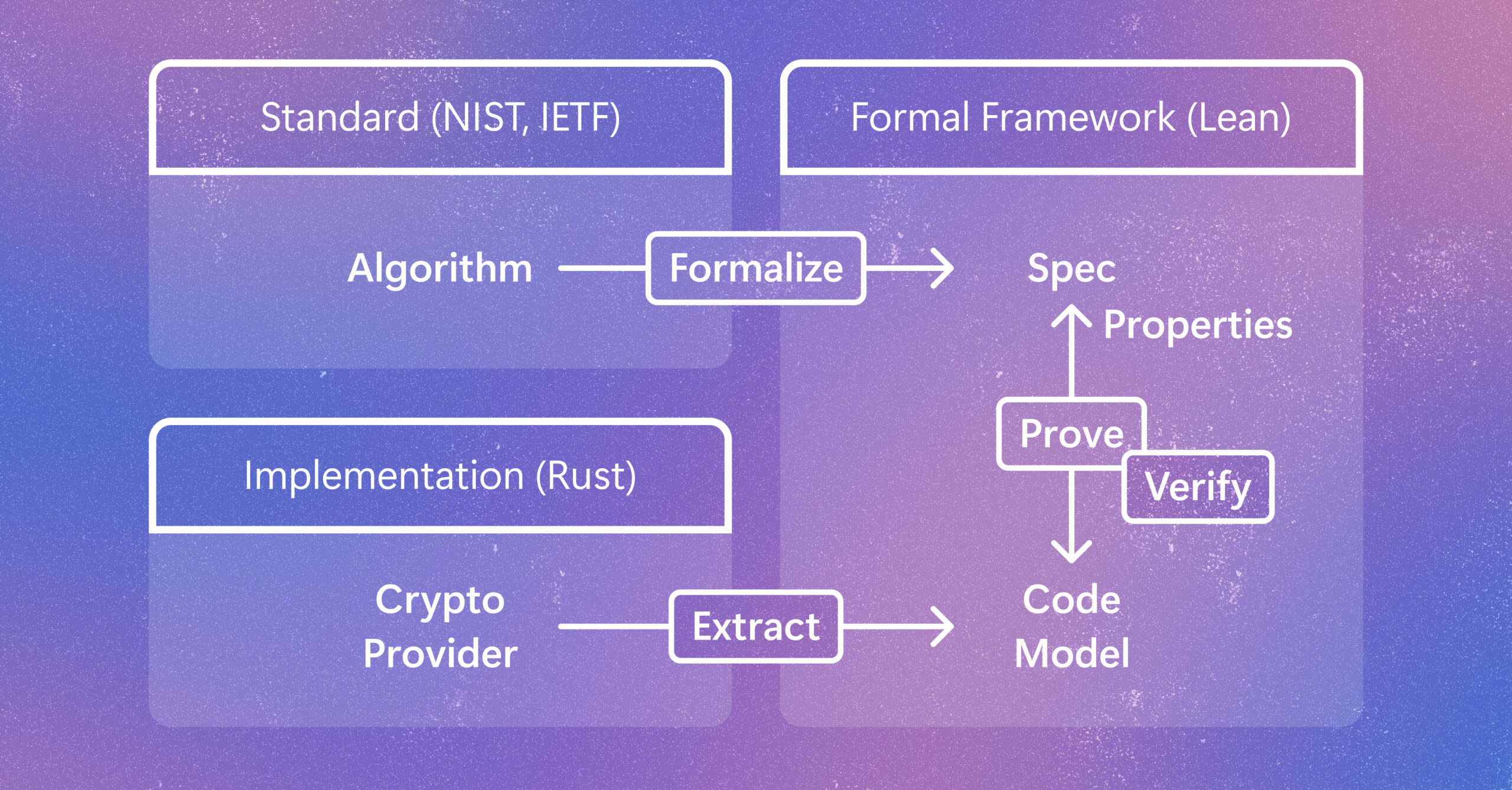
Cryptographic code supports vital protections in modern computing systems. Learn how a new method helps verify code as developers write it while preserving speed and adaptability as it gets implemented and evolves. The post Verifying Rust cryptography in SymCrypt, from standards to code appeared first on Microsoft Research.
MIT News · Artificial Intelligence· news.mit.eduJul 6, 2026
PhD student Rachel Sava, winner of the Envisioning the Future of Computing Prize, explores transformative improvements and dystopian risks of neural technology.