Sep 2026· WSEAS Transactions on Information Science and Applications· 0 citations· 10 references
TL;DR
A unified analytical framework is introduced that models inference latency, bandwidth, energy, computational complexity, throughput, and model compression, and is used to compare cloud versus edge execution.
Abstract
Edge AI brings artificial-intelligence inference from the cloud to resource-constrained devices at the network edge, enabling real-time, low-latency, and privacy-preserving decision-making. This review examines edge AI from a hardware-centric and quantitative perspective. We introduce a unified analytical framework that models inference latency, bandwidth, energy, computational complexity, throughput, and model compression, and use it to compare cloud versus edge execution. We benchmark the principal classes of AI hardware accelerators (VPU, GPU, NPU, and TPU) using public performance and efficiency figures, and present an explicit latency- and energy-aware placement algorithm. We further review representative real-world applications, the main deployment challenges, and future directions including federated learning, neuromorphic computing, and 6G-assisted inference.
This study underscores the critical role of such a generalized optimization system in preparing model deployment over resource-constrained heterogeneous hardware in a tactical environment, and proposes a comprehensive hardware (HW) and model-agnostic generalized optimization architecture that integrates these technique...
V. Dasari, Jakob A. Adams, V. Mishra et al.· 0 citations
A time-varying integer program to minimize the long-term total cost of the edge AI inference system, including the inference latency, the inference error rate, the query-dispatching communication cost, and the energy consumption, subject to resource and workload constraints is proposed.
Ming-Tao Ji, Hehan Zhao, Lei Jiao et al.· Science China Information Sc...· 0 citations
A structured narrative review of the latest breakthroughs achieved in the development of energy-efficient Edge AI, focusing specifically on hardware-software co-design practices aimed at improving inference quality, demonstrates that hardware-aware model optimization and heterogeneous computing significantly improve pe...
V. Govindaraj, Muthu Krishnammal P, S. S. Devi et al.· Discover Computing· 0 citations
In the evolving landscape of edge devices, unlocking artificial intelligence (AI) services via the cloud has consistently raised concerns related to energy consumption, latency, and privacy. Shifting these services locally onto edge devices powered by CPUs and GPUs have always been hindered by their limited storage a...
Doaa K. Hameed, Abdullah M. Zyarah· Journal of Forecasting· 0 citations
A scalable edge-to-cloud AI inference pipeline in which inference tasks are dynamically distributed across heterogeneous edge and cloud resources is examined, providing a basis for resilient real-time AI systems while highlighting unresolved challenges involving heterogeneous hardware, dynamic workloads, privacy-utilit...
Khalid Al-Mansour· International Journal of Com...· 0 citations
The exponential growth of artificial intelligence (AI) applications in edge devices, embedded systems, and data centers has intensified the demand for efficient and scalable processor architectures. This paper provides a comprehensive comparative analysis of RISC-V and ARM architectures in AI applications, examining th...
Andre Reges Souza Meira, E. Moreno, Calebe Micael Oliveira Conceição· Journal of Integrated Circui...· 0 citations
Related blog posts
MIT News · Artificial Intelligence· news.mit.eduOct 2, 2026
A weeklong summer workshop brought higher education faculty to campus to explore how AI and machine learning materials can be adapted for their classrooms.
MIT News · Artificial Intelligence· news.mit.eduAug 27, 2026
A new machine-learning framework aims to improve the success rate of computational protein design while moving away from results that reproduce sequences found in nature.
Microsoft Research Blog· microsoft.comAug 20, 2026
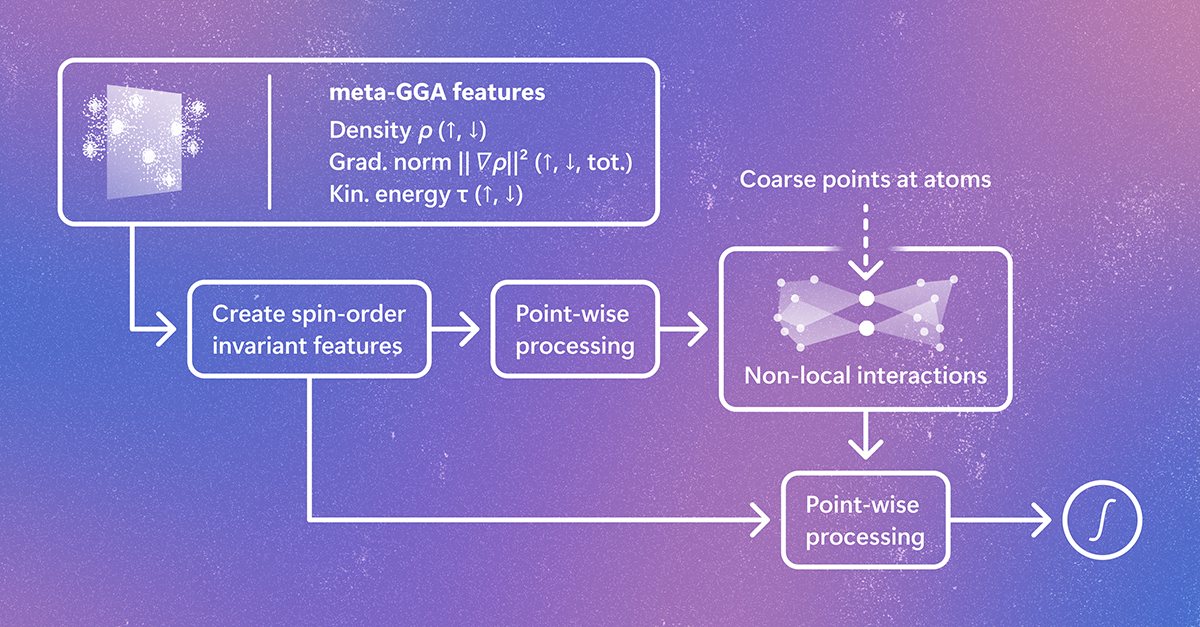
Skala 1.1, the updated deep-learning exchange-correlation functional from Microsoft Research, provides greater accuracy, expanded accessibility across the computational chemistry ecosystem, and a living benchmark to track computational performance. The post Broadening access to Skala creates a faster path to predictive DFT appeared first on Microsoft Research.
We use cookies to run the site and, with your consent, for analytics and to show ads.
See our Cookie Policy.