A systematic analysis of expressivity and trainability of Pauli Correlation Encoding and a multistage continuation framework that gradually transforms a smooth relaxed objective into a sharper objective that more closely approximates the target discrete problem are proposed.
Abstract
Quantum approaches for combinatorial optimization problems have attracted considerable attention in recent years. Among these approaches, Pauli Correlation Encoding (PCE) has emerged as a promising framework for quantum devices with limited qubit resources because it embeds optimization variables in expectation values of Pauli strings. However, the mechanisms underlying its performance and the reasons for its saturation remain unclear. In this work, we investigate these questions through a systematic analysis of expressivity and trainability. First, we compare PCE with classical surrogate models based on tensor networks whose structures progressively approach the topology of the PCE circuit. The results show that PCE attains comparable solution quality with substantially fewer trainable parameters, indicating strong parameter efficiency. Second, to determine whether the performance saturation of conventional PCE is caused by insufficient expressivity or by optimization difficulty, we perform a diagnostic expressivity test in which the circuit is trained toward reference configurations for Max-Cut. The results show that even shallow PCE circuits can represent strong solutions, indicating that the main bottleneck is not the representational power of the ansatz, but the trainability under the relaxed objective function. Motivated by this finding, we propose a multistage continuation framework that gradually transforms a smooth relaxed objective into a sharper objective that more closely approximates the target discrete problem. Numerical experiments on G-set instances with 800 vertices show that the proposed method consistently outperforms conventional PCE and is competitive with representative graph neural network (GNN) methods. These results clarify the main factors behind PCE performance and provide a practical strategy for improving PCE on quantum devices with limited qubit resources.
SCENT (Spectral Clustering for Entanglement miNimizing Trees) is a protocol that utilizes efficiently-computable pairwise entanglement metrics to determine a suitable tree tensor network (TTN) structure, which is efficiently approximated using tensor cross-interpolation (TCI) and substantially outperforms MPS methods a...
Matthew L. Sims-Goh, L. Cincio, Annina Z. Lieberherr et al.· 2 citations
The results indicate that symmetry compilation concentrates the expressive power of NQS on states relevant to the target problem, thereby reducing model size and training cost without sacrificing accuracy.
Turbasu Chatterjee, Manas Sajjan, Songbo Xie et al.· 0 citations
This work studies quantum random access optimization (QRAO), a special case of the Pauli correlation encoding (PCE) framework that assigns up to three binary variables to the Pauli observables of each qubit, with the packing choices determining the compressed Hamiltonian to be optimized.
The results show that heuristic GC methods substantially reduce the number of required measurement settings for QST and enable priority-based scheduling that maximizes the information gain per experiment, providing speedups of several orders of magnitude over brute-force methods already for these relatively small quant...
Sumukh S. Moudghalya, A. F. Kockum, Akshay Gaikwad· 0 citations
Encoding classical data into quantum systems is a foundational step in the execution of nearly all quantum algorithms, and a critical bottleneck in realizing practical quantum advantage. This review provides a comprehensive account of the concepts, algorithms, and practical considerations associated with quantum data e...
Xiao-Ming Zhang, Arthur G. Rattew, Bu-Jiao Wu et al.· 2 citations
This work establishes a general quantum score-matching framework with end-to-end theoretical guarantees for quantum states and achieves information-theoretically optimal sample complexity in the high-temperature regime for Hamiltonians with bounded locality and interaction degree.
Yu-Long Dong, Jia-Qi Leng· 0 citations
Related blog posts
MIT News · Artificial Intelligence· news.mit.eduJul 15, 2026
Assistant Professor Pat Pataranutaporn describes a new interface that lets everyday users glimpse inside an AI's neural network before their chatbot ever says a word.
Microsoft Research Blog· microsoft.comJul 13, 2026
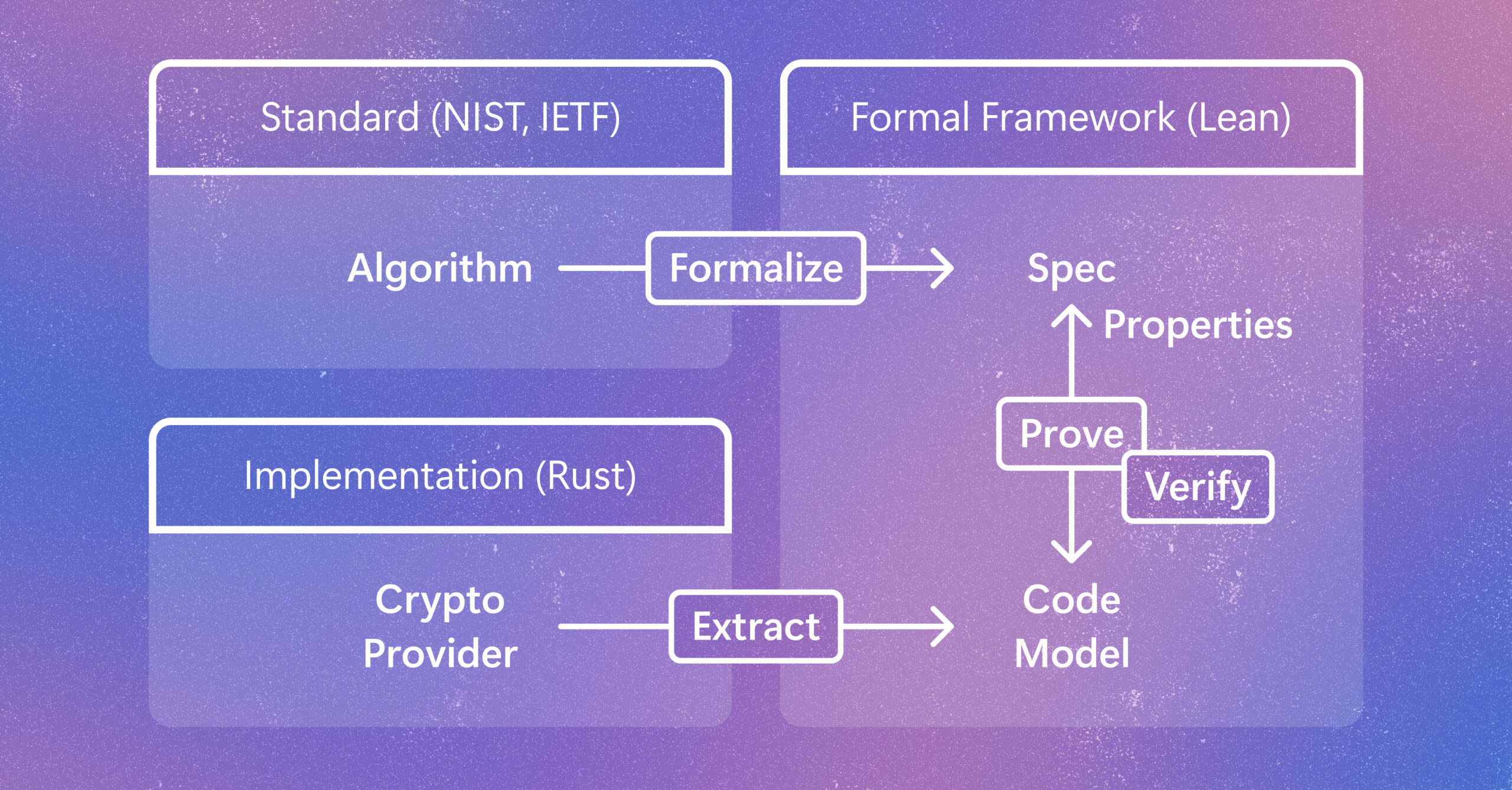
Cryptographic code supports vital protections in modern computing systems. Learn how a new method helps verify code as developers write it while preserving speed and adaptability as it gets implemented and evolves. The post Verifying Rust cryptography in SymCrypt, from standards to code appeared first on Microsoft Research.
MIT News · Artificial Intelligence· news.mit.eduJul 6, 2026
PhD student Rachel Sava, winner of the Envisioning the Future of Computing Prize, explores transformative improvements and dystopian risks of neural technology.