Deep neural networks often exploit spurious associations, a failure known as shortcut learning. Auditing for shortcuts requires testing many candidate concepts, such as acquisition settings or demographics. Current concept-based explainability methods test one concept at a time, asking whether it is decodable from a layer. These methods flag concepts that are merely correlated with the outcome or with each other, and their scores are not comparable across layers or concept types. We introduce ICON decomposition, which quantifies how much of a layer's variance each concept explains given all other concepts and the outcome, and how much none of them explains, yielding layer-comparable, calibrated scores that suppress false positives. On simulated data, ICON recovers concept importance more accurately than seven existing methods. On skin-cancer models with inserted artifacts, it detects induced shortcuts where baselines report false positives. On two brain-imaging models, ICON's sparse explanations are validated by retraining and out-of-distribution tests.
Roshan Prakash Rane, Marco Simnacher, Manuel Pfeuffer et al.· 0 citations
Agentic assistants capable of proactive, personalized interactions require structured models of user intent and workflow. However, building these models from raw, unstructured screen activity remains an open challenge. We present SERUM, a multi-pass framework that extracts finite-state behavioral models directly from unstructured egocentric video using hierarchical VLM annotation. Processing screen recordings through a sliding window, SERUM alternates between activity-recognition and intent-inference passes, with each pass refining labels using accumulated prior context to reduce hallucination and temporal conflation seen in single-pass annotation. Synonymous states are then merged via sentence embeddings and human-calibrated thresholds into a compact, coherent taxonomy. We evaluate behavioral structure by fitting first-order Markov models over the resulting label sequences (both actions and intents) and measuring predictive accuracy against frequency baselines. Across 61 egocentric videos in four domains (coding, cooking, physical activities, and daily life), we find: (1) iterative label refinement converges to a stable state vocabulary, which we term schematic equilibrium, after several passes; (2) normalized Markov models achieve substantially lower perplexity and higher action predictions than frequency baselines, with the largest gains on structured tasks like coding; and (3) human annotators rate final-pass labels as accurate and meaningfully improved over first-pass labels. To our knowledge, SERUM is the first system to produce interpretable process models from unstructured egocentric screen video without manual annotation, opening a scalable pathway for user modeling and behavioral understanding in the wild. Our demo, code, and results are publicly available
Andy J. Phu, Karin de Langis, James Mooney et al.· 0 citations
Recent reinforcement learning (RL) post-training approaches primarily optimize the final output policy using sparse outcome-level rewards, while largely overlooking predictive signals encoded in intermediate representations. In this paper, we introduce a new paradigm called on-policy internal self-distillation and propose the OISD framework, which improves reasoning by transferring on-policy predictive signals from the final layer to intermediate representations. During rollout and Group Relative Policy Optimization (GRPO) optimization, the final layer acts as both the policy and a detached internal teacher for selected intermediate layers, which are guided to align with it through two complementary mechanisms: logit alignment, which transfers high-level reasoning behaviors (how to think), and attention alignment, which enforces consistent attention patterns (where to look) from the final layer to the selected intermediate layer, both without requiring external privileged information. Our OISD, together with GRPO, employs signed advantage-weighted Jensen--Shannon alignment to distill informative intermediate representations while preserving policy consistency under a unified acting policy. Experimental results demonstrate the effectiveness of OISD, with substantial and consistent improvements over strong reasoning RL baselines across four mathematical reasoning tasks. The code will be released at https://github.com/THE-MALT-LAB/OISD
Xinyu Liu, Darryl Cherian Jacob, Yang Zhou et al.· 0 citations
Efficient selection among multiple generative models is increasingly important in modern generative AI, where sampling from suboptimal models is costly. This problem can be viewed as a multi-armed bandit (MAB) task. Under diversity-aware evaluation scores, a non-degenerate mixture of generators can outperform any individual model, distinguishing this MAB setting from classical best-arm identification. Prior approaches incorporate an Upper Confidence Bound (UCB) exploration bonus into the mixture objective. However, across multiple datasets and evaluation metrics, we observe that the UCB term consistently slows convergence and reduces sample efficiency. In contrast, a simple Mixture-Greedy strategy without explicit UCB-type optimism converges faster and achieves even better performance, particularly for widely used metrics such as FID and Vendi where tight confidence bounds are difficult to construct. We provide theoretical insight explaining this behavior: under structural conditions, diversity-aware objectives induce implicit exploration by favoring interior mixtures, leading to sampling of all arms and sublinear regret guarantees for diversity-based objectives. These results suggest that in diversity-aware multi-armed bandits, e.g., for generative model selection, exploration can arise intrinsically from the objective's geometry.
Bahar Dibaei Nia, Farzan Farnia· 0 citations
Reach audiences
Advertise in front of researchers, engineers, and readers.
Generative models based on the Flow Matching objective, particularly Rectified Flow, have emerged as a dominant paradigm for efficient, high-fidelity image synthesis. However, while existing research heavily prioritizes generation quality and architectural scaling, the underlying dynamics of how RF models memorize training data remain largely underexplored. In this paper, we systematically investigate the memorization behaviors of RF through the test statistics of Membership Inference Attacks (MIA). We progressively formulate three test statistics, culminating in a complexity-calibrated metric that successfully decouples intrinsic image spatial complexity from genuine memorization signals. This calibration yields a significant performance surge -- boosting attack AUC by up to 15% and the privacy-critical TPR@1%FPR metric by up to 45% -- establishing the first non-trivial MIA specifically tailored for RF. Leveraging these refined metrics, we uncover a distinct temporal pattern: under standard uniform temporal training, a model's susceptibility to MIA strictly peaks at the integration midpoint, a phenomenon we justify via the network's forced deviation from linear approximations. Finally, we demonstrate that substituting uniform timestep sampling with a Symmetric Exponential (U-shaped) distribution effectively minimizes exposure to vulnerable intermediate timesteps. Extensive evaluations across three datasets confirm that this temporal regularization suppresses memorization while preserving generative fidelity.
Safety evaluation of multimodal large language models requires tracking not only whether an attack succeeds, but also how the interaction unfolds across turns and input modalities. We present MUSE (Multimodal Unified Safety Evaluation), an open-source, browser-based, run-centric platform for multimodal safety evaluation. MUSE treats each attack run as the persistent unit of execution, inspection, and analysis, preserving its configuration, multi-turn trajectory, delivered modalities and media, target responses, and safety judgments. A five-level response taxonomy further distinguishes full Compliance from Partial Compliance and refusal behavior, yielding hard ASR, soft ASR, and gray-zone width (GZW).
Across 11,700 evaluations on six multimodal LLMs, direct text-only requests yield only 3.1% macro hard ASR and 4.4% soft ASR, while iterative attack procedures are substantially more effective. Attack effectiveness also varies substantially with the attacker backbone. In contrast, Inter-Turn Modality Switching (ITMS), evaluated as a controlled delivery-modality probe, does not consistently increase attack success. These results demonstrate the value of run-centric, fine-grained evaluation for characterizing multimodal safety behavior beyond a single binary success metric.
Zhongxi Wang, Yueqian Lin, Jingyang Zhang et al.· 0 citations
Class-incremental learning (CIL) requires a model to incrementally learn tasks that contain new classes without accessing earlier training data while preserving the ability to recognize all seen classes. Recently, pretrained-model-based approaches have become prevalent by adapting a frozen backbone with additional lightweight trainable modules. Existing methods, however, exhibit limitations: task-specific adapters learn explicit per-task representations but are parameter- and computation-inefficient, while LoRA-based merging methods combine per-task LoRA parameters into a single model whose static aggregated weights cause representation interference during inference. To address these problems, we present \textbf{FACET}: task-conditioned \textbf{F}e\textbf{A}ture transformation with \textbf{C}ondition\textbf{E}d feature consis\textbf{T}ency, achieving excellent parameter efficiency while producing highly discriminative features during inference. When continually trained on a task sequence, FACET learns a single shared adapter that employs a dynamic task-conditioned feature transformation, shaping the overall feature distribution of the adapter into a mixture of overlap-reduced task-specific components. On the other hand, we propose an efficient replay-free task-conditioned feature consistency loss, aiming to mitigate catastrophic forgetting of the learned mixture distribution in the adapter's feature space. Even when maintaining only a single adapter, FACET demonstrates robust scalability. On both very long task sequences (e.g., 200 tasks) and standard short task sequences (e.g., 20 tasks), our method achieves superior performance while using significantly fewer trainable parameters and GFLOPs. The code will be made open source upon acceptance.
Semantic segmentation decomposes an image into distinct mask regions corresponding to different object categories, such as people, cars, signs or buildings. Advances in machine learning (ML) have shifted this task away from traditional rule-based heuristics such as edge detection, towards deep neural networks (DNN) that learn to classify pixels directly. However, semantic segmentation DNNs crucially depend on expertly designed mask targets to learn from, and imperfect or misaligned masks can interfere with a model's ability to learn effectively.
This paper presents a comparative study of segmentation architectures, ranging from convolutional backbones to vision transformers, applied to the B.O.V.I.D. dataset, a corpus of high-resolution bovid dental photographs paired with hand-made segmentation masks not originally designed for ML-based training. We evaluate a range of preprocessing and alignment techniques to mitigate the resulting label imperfections. We find that while these preprocessing choices have limited effect on quantitative metrics such as Dice score and mIoU, their qualitative impact on predicted masks is substantial.
Keith G. Mills, Evan B. Sanders, Gregory J. Matthews et al.· 0 citations
End-to-end autonomous driving models plan future trajectories from raw sensor input. While earlier driving benchmarks often measured deviation from the human trajectory, current benchmarks such as NAVSIM and Bench2Drive evaluate models with richer simulation-based metrics intended to capture safe and compliant driving. A high benchmark score should reflect that a model can understand the scene in front of it and act accordingly. But how much of that score specifically comes from reacting to the dynamic part of that scene? To probe this, we remove a model's camera input and replace it with memories from prior drives at the same location. The retrieved memories can provide persistent scene information, including road layout and location-conditioned regularities, but not the current traffic state. Surprisingly, memory is nearly sufficient on NAVSIM, reaching or even exceeding the performance of leading end-to-end methods without actually observing the evaluated scene. Our results suggest that a high NAVSIM score does not require a planner to react to the current traffic scene and should be treated with caution. This effect is benchmark-dependent: driving from memory causes substantially larger performance drops on Bench2Drive and RealEngine. We provide our code at https://github.com/boschresearch/MemoryDrivoR .
Christian Löwens, Thorben Funke, Alexandru Condurache· 0 citations
Multimodal Large Language Models (MLLMs) are increasingly deployed in multi-image scenarios requiring complex reasoning across visual contexts. However, current MLLMs remain fundamentally limited by object hallucination-generating plausible yet factually inconsistent descriptions about objects. Existing benchmarks, designed primarily for single-image settings or providing only high-level multi-image assessments, cannot systematically diagnose how visual complexity and reasoning demands trigger hallucination. To address this gap, we introduce MIOH, a fine-grained multi-image object hallucination benchmark that systematically evaluates object hallucination across four foundational tasks (existence, counting, attribute, position) through three multi-image reasoning patterns (comprehensive, comparative, selective) under three controlled adversarial pressures (visual context scale, perceptual difficulty, contextual bias). Through evaluation of 29 models, we reveal that even state-of-the-art systems like GPT-5 and Gemini-2.5-Pro exhibit distinct failure patterns across different reasoning patterns and tasks. Our evaluation reveals that hallucination stems not merely from perceptual failures but from integration-stage limitations when maintaining object representations across multiple images. MIOH provides a controlled framework for analyzing multi-image object hallucination and serves as a critical evaluation tool for developing more reliable multimodal AI systems.
Joonki Min, Chaeyun Kim, Hyungwook Choi et al.· 0 citations
Timely post-disaster building damage assessment from satellite imagery is a critical engineering decision support task, yet it remains constrained by class imbalance, ambiguous intermediate damage states, and limited cross-event transferability. This study presents, to our knowledge, the first application of Grassmann-Plucker (GP) token mixing to computer vision and introduces two extensions for image classification: the Quantum-inspired Grassmann-Plucker (QGP) head and the Hybrid Quantum Machine Learning Grassmann-Plucker (HQML-GP) head. The GP head represents multiscale relationships among image patch tokens by encoding subspaces formed by token pairs with Plucker coordinates; QGP enriches these coordinates with amplitude-derived probability features, whereas HQML-GP incorporates expectation values generated by a simulated quantum circuit into the geometric token representation. Paired pre- and post-event image patches from the xBD tornado dataset were processed using a frozen six-channel Vision Transformer base encoder with 16 x 16-pixel patches. The three GP-based heads were compared with multilayer perceptron and Transformer baselines under identical training, checkpoint selection, and evaluation protocols. Joplin and Moore tornado samples were used for model development and seen-event testing, while Tuscaloosa was reserved for unseen-event evaluation. QGP led both test sets in accuracy and macro-F1: 83.46% and 64.50% for the seen events, and 66.45% and 52.70% for the unseen event. Although HQML-GP obtained the highest validation macro-F1 of 65.63%, it did not surpass QGP on either test set and required substantially more training time per epoch. These results establish GP token mixing as a competitive attention-free alternative to conventional Transformer-based token mixing for paired satellite image damage classification.
Kooroush Farahkhah, Umut Lagap, Taha Rezaei et al.· 0 citations
Rapid mineral characterization is essential for applications ranging from mineral exploration to industrial ore processing. To this end, Hyperspectral Imaging (HSI) has emerged as a promising sensing modality thanks to its fine spectral resolution, enabling mineral discrimination in both close-range and remote sensing settings. However, the scarcity of publicly available datasets with reliable ground-truth labels hinders the development and evaluation of HSI-based mineral identification methods. We release Minerals in the Wild, a multi-purpose dataset comprising 1,132 rock specimens collected across Europe. For each specimen, we provide an HSI acquisition together with an elemental characterization obtained via an XRF sensor. We define the task of elemental characterization on our dataset and propose a pruning mechanism that removes distant signatures from the USGS dictionary prior to a convex optimization approach for matching HSI pixels with USGS spectral signatures. Finally, we empirically show that our approach outperforms simpler baselines.
Eleftheria Tetoula-Tsonga (Institute of Communication and Computer Systems, Athens, Greece) et al.· 0 citations
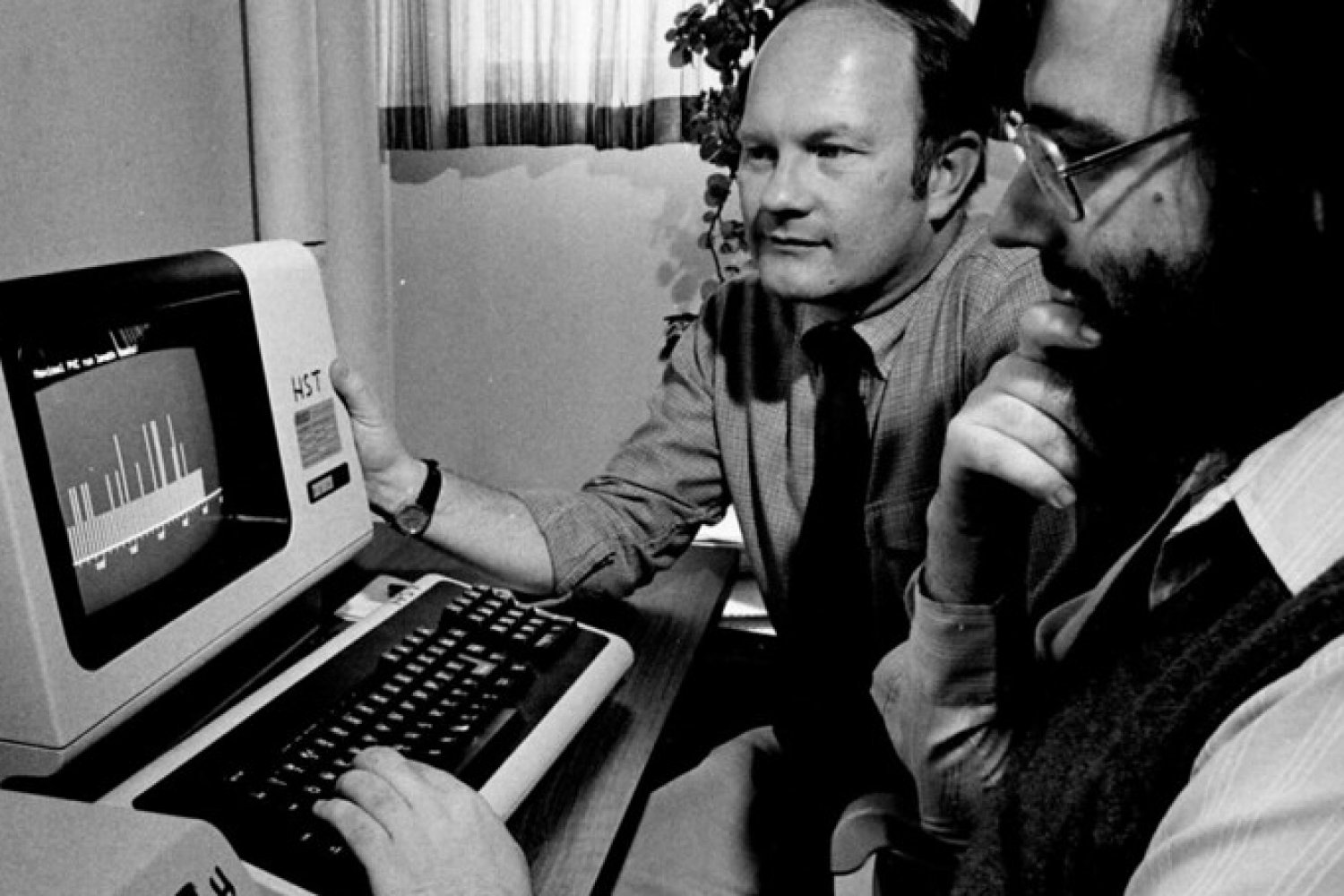
The visionary PhysioNet platform launched 25 years ago, based on a system developed at MIT in the 1970s. It has become one of the most comprehensive biomedical and clinical data repositories in existence.
Known for his clear and elegant writing style, Bertsekas shaped fields from control and optimization to large-scale computation and artificial intelligence.
MIT News · Artificial Intelligence· news.mit.eduJul 6, 2026
PhD student Rachel Sava, winner of the Envisioning the Future of Computing Prize, explores transformative improvements and dystopian risks of neural technology.
MIT News · Artificial Intelligence· news.mit.eduJun 30, 2026
Computer scientist Phillip Isola cuts through the hype to explain how AI agents work and what the future might hold for this rapidly advancing technology.
We use cookies to run the site and, with your consent, for analytics and to show ads.
See our Cookie Policy.